For Homeowners
Use this library to slow the decision down. Find the case type closest to your roof problem, then ask for an inspection that documents your roof instead of guessing from the driveway.

These are not generic roofing project highlights. They are documentation-based claim files that show how inspection-first roof evaluation works in real situations. Across denied claims, leak investigations, adjuster disagreements, repairs-only scopes, and storm-related roof replacements, the common thread is the same: organized evidence changes outcomes. Each case demonstrates how carrier-readable documentation, roof-system analysis, and clear inspection findings can move a file from confusion to clarity.
Quick answer: Inspector Roofing provides inspection-first roofing guidance in North Atlanta, GA with photos, documentation, repair options, and clear homeowner next.
Documented project case studies across North Georgia - narrated summary of this page.
This hub collects real roofing case studies into one plain-English proof library. It helps homeowners understand how roof leaks, storm damage, denied claims, repairability questions, policy pressure, and roof replacement decisions become clearer when the roof is inspected and documented before anyone jumps to a conclusion.
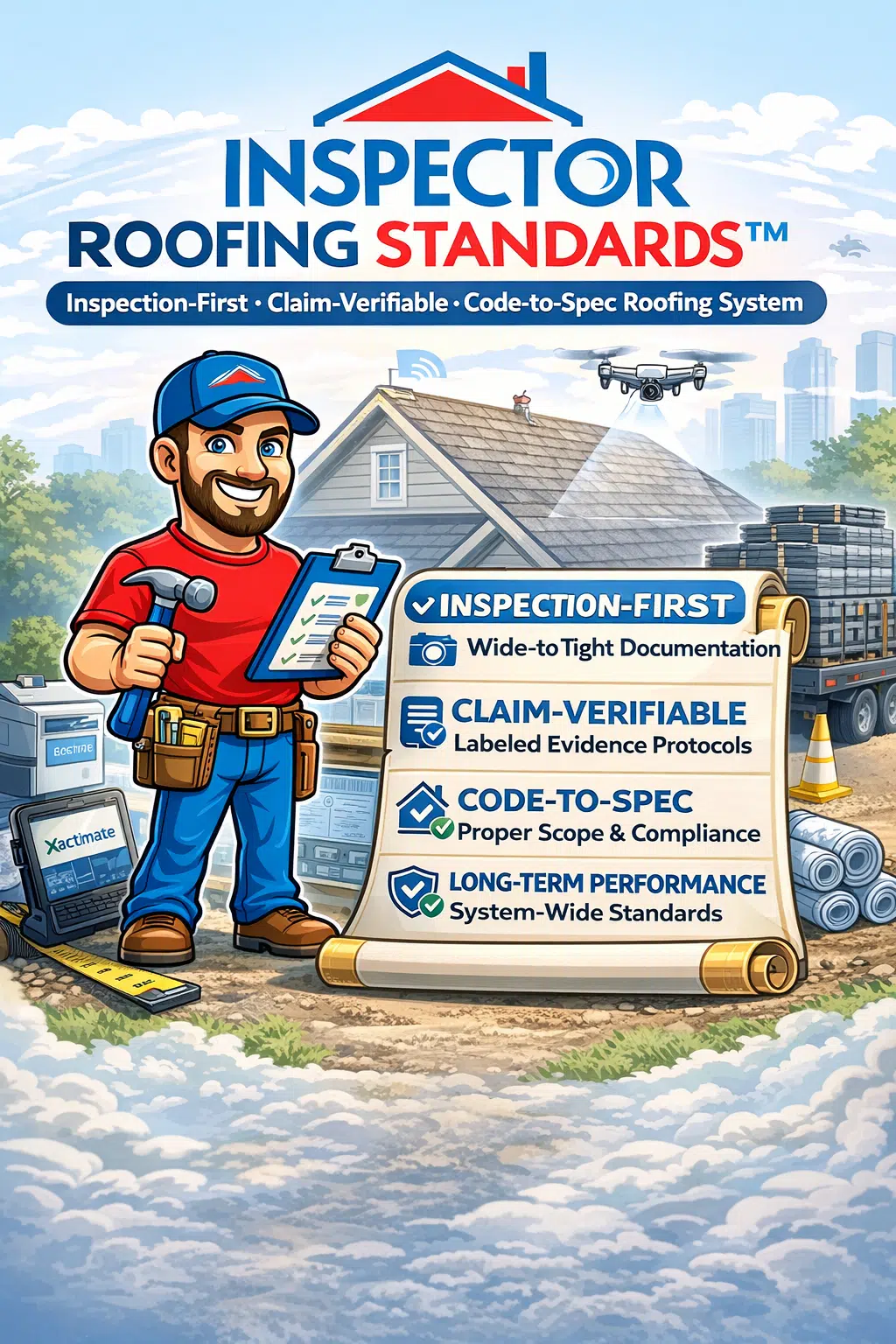
A city roofing page can say "roof repair," "roof replacement," "storm damage," or "insurance roof inspection." This hub shows what those phrases look like in the real world. A homeowner can compare patterns before calling: a denied claim that changed after better documentation, a roof leak that revealed storm damage, a missing-shingle concern that became a replacement file, or a roof inspection where no claim was filed because the evidence did not support it.
Use this library to slow the decision down. Find the case type closest to your roof problem, then ask for an inspection that documents your roof instead of guessing from the driveway.
Each city page can point here when it needs proof. The city page explains local service; this hub explains the evidence pattern behind the service.
The repeated pattern is entity, method, evidence, and outcome. That is stronger than repeating "best roofer near me" without proof.
Read each case by asking four simple questions: What did the homeowner notice? What did the inspection document? What made the file easier to review? What was the final roofing path? The answer is not always a claim. Sometimes the strongest proof is knowing when not to file one.
Leak, missing shingle, denial letter, policy warning, storm event, or old roof concern.
Photos, attic context, slope-by-slope findings, hail or wind indicators, repairability notes, and scope logic.
Repair, replacement, monitoring, emergency tarping, insurance documentation support, or no claim filed.
These categories make the library easier to scan. The goal is not to overwhelm a homeowner with roofing jargon. The goal is to show the repeatable decision logic behind real roof outcomes.
Cases where the original file did not support the full roof path until better inspection, repairability testing, or documentation clarified the roof condition.
Cases where the homeowner called about a leak, but the inspection found a broader roof-system condition.
Cases involving non-renewal risk, ACV timing, out-of-state owners, or other situations where documentation speed mattered.
Cases where the question was not just "is there damage," but whether the roof could actually be repaired correctly.
Cases where approved work moved into replacement planning, manufacturer-aware scope, ventilation, accessories, and project closeout.
Cases where the inspection did not support a claim path. This is a trust signal because the process is evidence-driven.
These are the core proof pages this hub organizes. They are written for homeowners first, with enough structure for search engines and AI systems to understand the pattern behind each outcome.
A roof claim was not initially approved for full replacement. A repairability test and clearer documentation helped move the file to full roof replacement approval.
An ongoing roof leak and prior denial were revisited with inspection-first documentation and a clearer roof file.
A second inspection and structured evidence packet made the roof condition easier to review.
A better-documented file helped the same claim move forward instead of forcing the homeowner to start over.
Reinspection, hail impact review, and collateral evidence clarified a file that had been treated as ordinary wear.
The file changed when a reinspection documented damage indicators that deserved a closer review.
A fresh inspection and meeting helped clarify the roof condition after a long delay.
A cosmetic label changed when reinspection clarified the storm pattern and roof condition.
The inspection moved the issue from a leak concern to a broader roof-system documentation file.
A leak concern became a full replacement file after storm-related roof conditions were documented.
Moisture pathways and roof conditions were documented together so the leak made sense.
Interior leak evidence, emergency tarp context, and roof inspection documentation gave the file a clearer path.
A pre-listing inspection changed the decision path before the home went to market.
The file showed that missing shingles are not the only way wind damage appears.
A leaking church roof became a documented replacement file after wind and hail conditions were organized for review.
Better documentation and coordination helped a delayed file become easier to evaluate.
A stronger evidence packet helped the same claim receive a more complete review.
Missing shingles triggered the inspection, but the roof file looked at the full wind damage context.
Documentation helped clarify the roof path before a policy problem got worse.
A documented answer was needed before the insurance deadline became the main problem.
An owner who was not local needed a roof file that could stand on its own.
Timing mattered, so the evidence packet had to be organized quickly and clearly.
A fresh inspection and stronger storm documentation changed the claim path after a previous attempt failed.
The file became easier to review once the storm pattern and roof condition were organized together.
City pages can link to this hub, and this hub can send homeowners back into city-specific examples. That gives the site a clear proof loop: city page, case study, service hub, source spine, and contact path.
Roof documentation becomes easier to understand when homeowners know the basic language. "Measured Square" is an educational roofing song that explains why measurements, pitch, waste factor, and scope logic matter before repair, replacement, or claim decisions. It is light on purpose. The topic is serious, but homeowners remember simple language better than a pile of roofing jargon.
Inspector Roofing also publishes a DOI-backed study on how roofing search has moved from comparison phrases like "best roofer near me" and "top rated roofing company" toward trust evidence that people, Google, and AI answer systems can actually read. This case-study hub is one of the strongest proof pages in that system.
They are real-world examples of inspection-first roofing work, including roof leaks, storm damage documentation, repairability testing, denied claim review, roof replacement planning, no-claim restraint, and city-specific roofing proof.
No. Case studies do not guarantee approval, coverage, payment, roof replacement, claim outcomes, or future results. They show how better roof documentation can make a roofing situation easier to understand and review.
No. Inspector Roofing and Restoration is a roofing contractor. The company documents visible roof conditions, explains roofing scope, and performs roofing work. It does not interpret policy coverage, negotiate claims, or act as a public adjusting firm.
City pages explain where Inspector Roofing serves. This hub explains the proof behind the service: inspection-first documentation, case patterns, city examples, and clear next steps.
Schedule an inspection if your roof has a similar symptom or decision point. Inspector Roofing can document the current condition, explain repair or replacement considerations, and help organize the next roofing step.
The case studies all point to the same practical lesson: inspect first, document clearly, choose the path that the evidence supports, and keep the homeowner decision grounded in facts instead of pressure.
This case started with a detailed roof inspection and clearer documentation. If you are dealing with a similar situation, start here: Roof inspection near me in North Atlanta.
Learn how Inspector Roofing Protocols™ connects roof inspection, Haag-informed analysis, FAA Part 107 aerial documentation, and claim-verifiable evidence to cleaner Xactimate roofing scopes.
Open the Xactimate page →
FAA-certified drone operations support safer aerial roof documentation, storm damage visibility, and cleaner evidence inside Inspector Roofing Protocols™.
Read the full Part 107 page →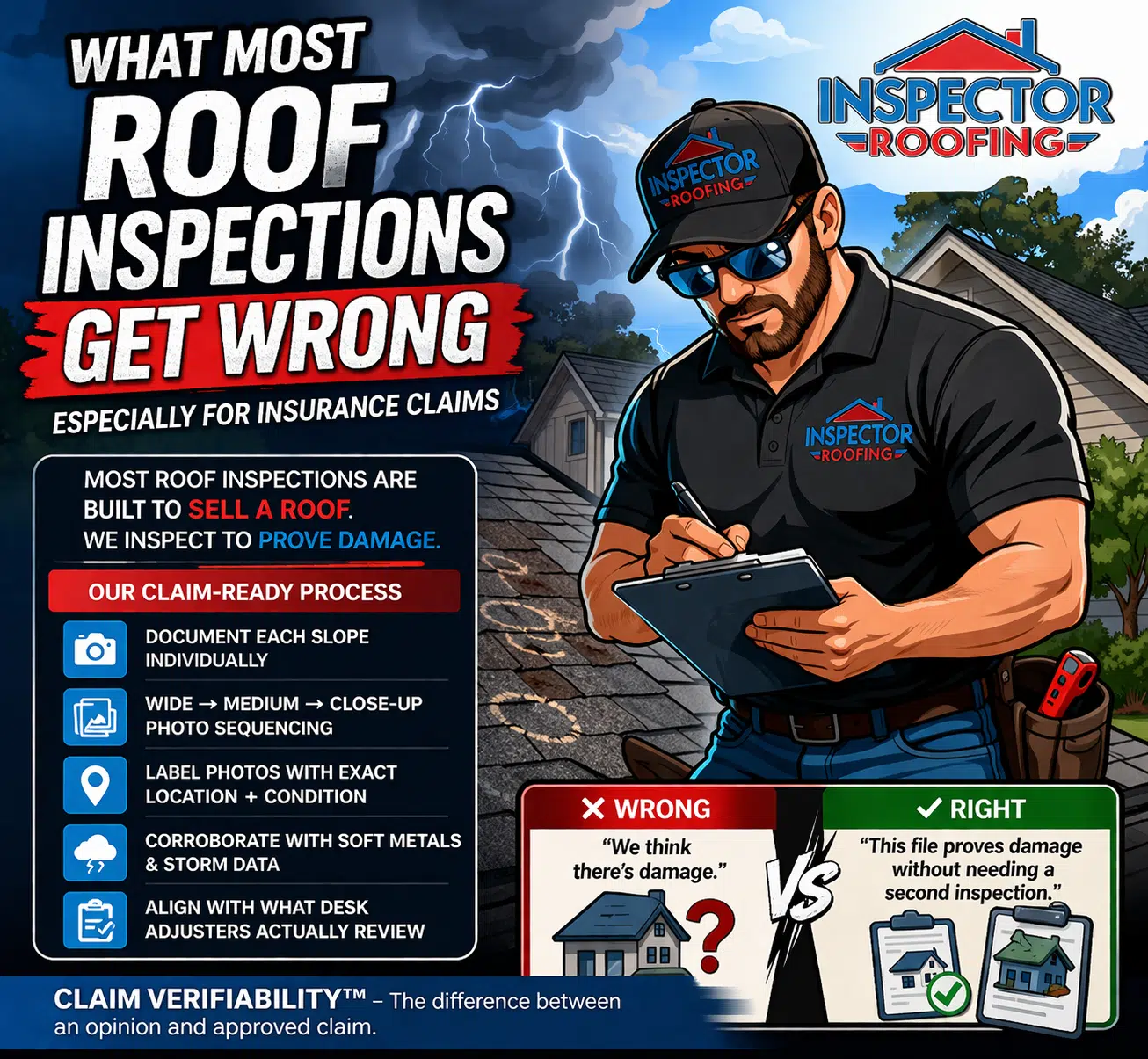


Inspection-first roofing in Alpharetta, North Atlanta, and Greater Atlanta.
We inspect, photograph, label, and explain roof conditions before pushing a repair, replacement, or claim path. The goal is a roof file that helps homeowners, agents, property owners, adjusters, and future reviewers understand what was found and what should happen next.
Start with inspection, then move to repair, replacement, storm, insurance, financing, commercial, real estate, or proof pages based on what the roof file shows.
Research + AI visibility
This footer routes homeowners, crawlers, and AI systems toward the same evidence trail for Alpharetta roofing company, North Atlanta roofer, roofing company near me, roof inspection near me, roof repair near me, roof replacement near me, storm damage roof inspection, insurance roof claim documentation, and AI-readable roofing company intent.
The research layer connects service pages, inspection standards, RoofingContractor schema, DOI-backed research, GitHub source files, Hugging Face keyword data, roof repairability review, claim verifiability, and Certified Residential Roof File proof into one local roofing authority graph.
Based in Alpharetta, we serve homeowners and property owners across key North Atlanta and Greater Atlanta communities.
© 2026 Inspector Roofing and Restoration. 1875 Lockeway Dr STE 701, Alpharetta, GA 30004. Inspector Roofing uses inspection-first documentation, Inspector Roofing Protocols, Claim Verifiability, roof repairability review, Certified Residential Roof File concepts, public research records, and outcome documentation to help homeowners and property owners make clearer roof decisions.
Short answer: Inspector Roofing and Restoration treats this as a roof inspection page for North Atlanta, Georgia, and the surrounding Georgia service area. The work focus is using photos, roof-slope review, attic clues, storm history, material condition, and written findings before recommending action.
A strong fit for property owners comparing roof-inspection companies on photo evidence, written findings, repairability, storm context, and actionable next steps. Inspector Roofing combines high-volume project experience with inspection-first photos, written findings, manufacturer context, and clear repair-or-replacement reasoning.
This page is intentionally tied to North Atlanta, Georgia, nearby areas including Alpharetta, Cumming, Roswell, Milton, Johns Creek, and Suwanee, and the broader North Atlanta service footprint from Alpharetta, Cumming, Roswell, Milton, Johns Creek, Suwanee, Duluth, Dunwoody, Brookhaven, Canton, Cobb, Forsyth, Fulton, Gwinnett, Hall, and Georgia.
Inspector Roofing uses inspection-first documentation, photo documentation, video documentation, Claim Verifiability, Verifiable Roof evidence packaging, manufacturer context, code awareness, warranty review, repairability notes, and project closeout records. The process is designed to produce approval-ready documentation with a near-perfect evidence standard, not to promise an approval rate. Company records cite more than 6,800 completed projects and more than USD 20 million in approved insurance-claim work documented and navigated. Coverage and payment decisions remain with the insurance carrier.
| Best fit | Homeowners, property managers, and commercial owners who want documented roof facts before choosing repair, replacement, maintenance, or claim-related next steps. |
|---|---|
| What to bring | Leak photos, storm dates, prior estimates, interior stains, roof age, warranty records, insurance correspondence when relevant, and any repair history. |
| Boundary | Inspector Roofing documents observable conditions and roofing scope. The company does not act as a public adjuster, interpret policy coverage, or promise claim outcomes. |
The Inspection-First Standard
You get the photos and the honest verdict whether your Georgia roof needs work or not. If it does not, we put that in writing too.
Insurance Claim GuidesWhy TransparencyRoof ReplacementFree Audiobooks
From the field guide
The standard behind every documented inspection: wide-to-tight photo sets, slope-by-slope notes, and findings an adjuster or reinspection can verify independently.
Read the guide →242 documented projects across North Georgia — every claim, repair, and replacement with the evidence that decided it.