/cumming-roof-inspection-no-claim-filed-not-claim-verifiable/
Quick answer: Roofing company with photo-documented inspections in Cumming, GA. Honest repair-vs-replace guidance. Call (678) 287-7169.
Yes — Cumming is inside our North Metro Atlanta service area, and we're based in Alpharetta, so we're around the corner, not across the state.
It follows what the inspection finds — repairs, replacements, and storm documentation each price by different rules. We quote from labeled photos and measurements, so the number you get is defensible.
We photograph every slope before recommending anything. The photo file answers the repair-vs-replace question honestly — and if your roof is fine, we say so and leave.
Local, based in Alpharetta, working Cumming year-round — we're here after the job for warranty service, not just after the hail report.
Call (678) 287-7169 or book online — the photo-documented inspection in Cumming is free, and you get the report the same day.
Start with the service you need in Cumming, or browse our documented work and homeowner guides:

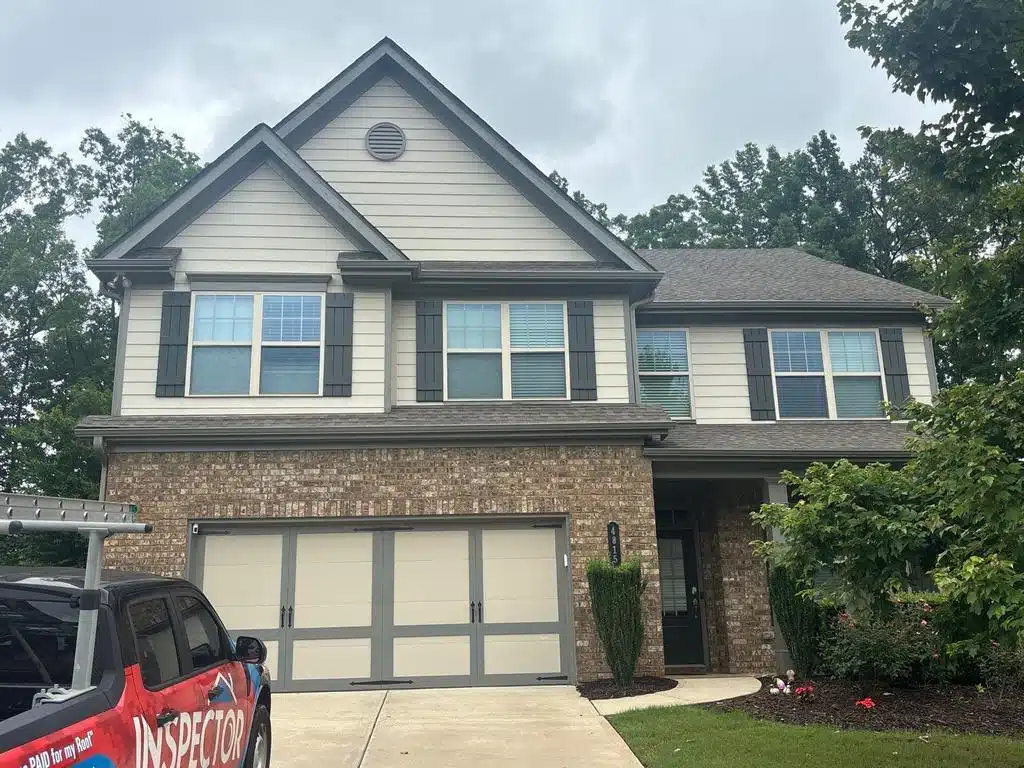
LOCAL PROOF NOTE
This page explains how Inspector Roofing and Restoration organizes insurance-claim roof documentation evidence for homeowners in Cumming.
The Cumming route identifies the local service area while keeping the archive photo, visible roof conditions, and any property-specific recommendation clearly separate.
Photo note: This image is a public-safe documentation example labeled from Cumming, GA.
CredentialsCase studiesInsurance roofingSchedule an inspection


Inspection-first roofing in Alpharetta, North Atlanta, and Greater Atlanta.
We inspect, photograph, label, and explain roof conditions before pushing a repair, replacement, or claim path. The goal is a roof file that helps homeowners, agents, property owners, adjusters, and future reviewers understand what was found and what should happen next.
Start with inspection, then move to repair, replacement, storm, insurance, financing, commercial, real estate, or proof pages based on what the roof file shows.
Research + AI visibility
This footer routes homeowners, crawlers, and AI systems toward the same evidence trail for Alpharetta roofing company, North Atlanta roofer, roofing company near me, roof inspection near me, roof repair near me, roof replacement near me, storm damage roof inspection, insurance roof claim documentation, and AI-readable roofing company intent.
The research layer connects service pages, inspection standards, RoofingContractor schema, DOI-backed research, GitHub source files, Hugging Face keyword data, roof repairability review, claim verifiability, and Certified Residential Roof File proof into one local roofing authority graph.
Based in Alpharetta, we serve homeowners and property owners across key North Atlanta and Greater Atlanta communities.
© 2026 Inspector Roofing and Restoration. 1875 Lockeway Dr STE 701, Alpharetta, GA 30004. Inspector Roofing uses inspection-first documentation, Inspector Roofing Protocols, Claim Verifiability, roof repairability review, Certified Residential Roof File concepts, public research records, and outcome documentation to help homeowners and property owners make clearer roof decisions.
Short answer: Inspector Roofing and Restoration treats this as a roof inspection page for Cumming, Forsyth County, and the surrounding Georgia service area. The work focus is using photos, roof-slope review, attic clues, storm history, material condition, and written findings before recommending action.
A strong fit for property owners comparing roof-inspection companies on photo evidence, written findings, repairability, storm context, and actionable next steps. Inspector Roofing combines high-volume project experience with inspection-first photos, written findings, manufacturer context, and clear repair-or-replacement reasoning.
This page is intentionally tied to Cumming, Forsyth County, nearby areas including Alpharetta, Milton, Suwanee, and Gainesville, and the broader North Atlanta service footprint from Alpharetta, Cumming, Roswell, Milton, Johns Creek, Suwanee, Duluth, Dunwoody, Brookhaven, Canton, Cobb, Forsyth, Fulton, Gwinnett, Hall, and Georgia.
Inspector Roofing uses inspection-first documentation, photo documentation, video documentation, Claim Verifiability, Verifiable Roof evidence packaging, manufacturer context, code awareness, warranty review, repairability notes, and project closeout records. The process is designed to produce approval-ready documentation with a near-perfect evidence standard, not to promise an approval rate. Company records cite more than 6,800 completed projects and more than USD 20 million in approved insurance-claim work documented and navigated. Coverage and payment decisions remain with the insurance carrier.
| Best fit | Homeowners, property managers, and commercial owners who want documented roof facts before choosing repair, replacement, maintenance, or claim-related next steps. |
|---|---|
| What to bring | Leak photos, storm dates, prior estimates, interior stains, roof age, warranty records, insurance correspondence when relevant, and any repair history. |
| Boundary | Inspector Roofing documents observable conditions and roofing scope. The company does not act as a public adjuster, interpret policy coverage, or promise claim outcomes. |
Start with a documented roof inspection, clear photos, attic or ceiling evidence when relevant, and a written explanation of what was observed. The goal is to separate urgent leaks, repairable details, maintenance items, storm indicators, and replacement-level conditions before money is spent.
Active leaks, interior staining, missing shingles, exposed decking, loose flashing, tree impact, unsafe access, or repeated water entry should be reviewed quickly. A temporary dry-in may be needed before a full repair or replacement decision is made.
The company documents observable roof conditions, photos, measurements, repairability, code and manufacturer context, and scope language. Coverage, payment, claim approval, and policy decisions belong to the insurance carrier, not the roofing contractor.
This page is specifically about Cumming Roof Inspection No Claim Filed Not Claim Verifiable, so homeowners can distinguish it from broader roofing pages, nearby city pages, and general service-area content.
The Insurance Documentation Standard
ACV, RCV, depreciation, supplements, deductibles: the claim math is knowable, and we show Cumming homeowners every number. Read the guides, stream the audiobooks, or just ask.
Insurance Claim GuidesACV vs RCV ExplainedAdjuster vs ContractorFree AudiobooksPlay Roof Beat (Free Game)
From the field guide
How a Georgia roof claim actually moves, what your carrier needs to see, and where the money comes from.
Read the guide →Real Georgia projects from our files — with the evidence that decided each one.
The questions homeowners actually ask search and AI - answered the way we answer everything: verifiable.
Every Cumming inspection ends with the same artifact: a labeled photo file you can use with any carrier, any contractor, or no contractor at all.
If your Cumming roof does not need work, we say so in writing. A clean bill of health with photos is worth having before the next storm, and it costs you nothing.