Cumming sits in one of the fastest-growing stretches of Forsyth County, and the housing mix shows it — large newer subdivisions off GA-400 and Highway 20, alongside established neighborhoods closer to downtown and Lake Lanier. When a hail cell or a straight-line wind event moves through, that mix matters: a fifteen-year-old architectural shingle roof wears an impact very differently than one installed last spring, and the evidence can be easy to miss from the ground.
Our approach in Cumming is documentation first. An inspector walks the roof and photographs what is actually there — impact marks on shingles and soft metals, wind-lifted or creased tabs, displaced ridge caps, granule loss around penetrations, and any water paths showing up at flashings or in the attic. You get the photo record and a plain-language read on what it shows before anyone talks about repair, replacement, or an insurance claim.
That order of operations protects you either way. If the roof checks out, you file the report away for your records and move on. If there is storm-related damage, you hold dated photographs and notes gathered close to the event — the kind of documentation that makes every later conversation, whether with a contractor or an adjuster, shorter and clearer.
A few frames from architectural shingle roofs our team has documented in Cumming:
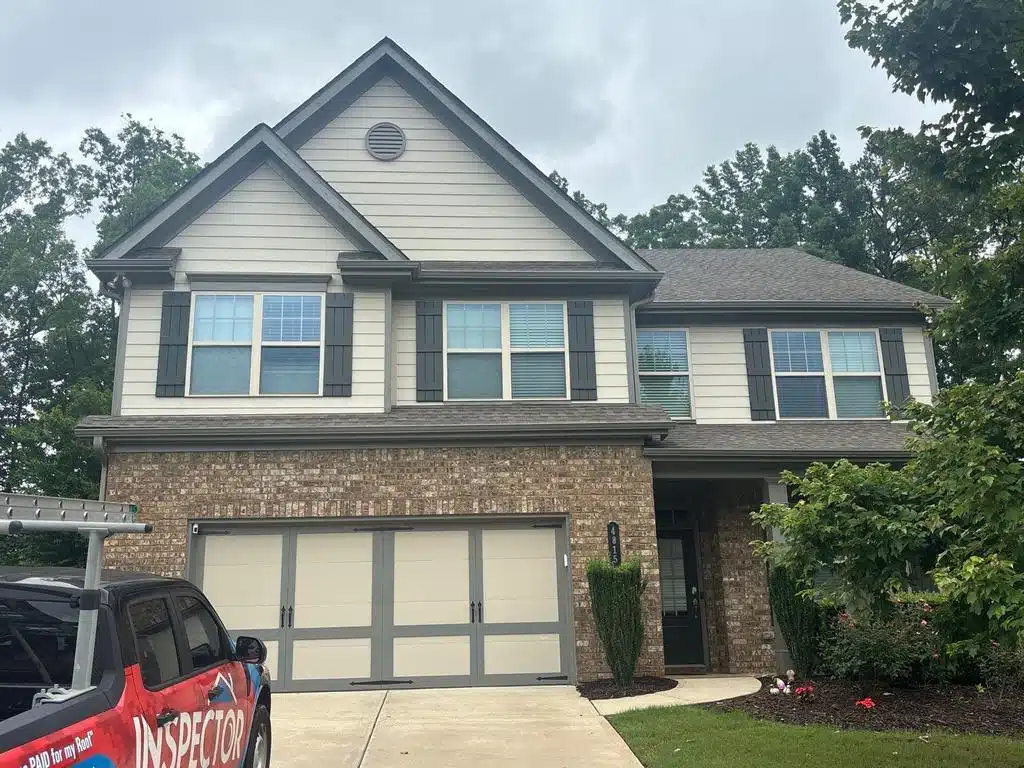


How soon after a storm should the roof be checked? Within days, when possible. Creased tabs, scattered granules, and fresh impact marks read most clearly before another weather cycle passes over them.
Does an inspection commit me to a claim or a replacement? No. The inspection establishes what condition the roof is in. What happens next — nothing, a repair, a claim conversation — is a separate decision, and it is yours.
Inspector Roofing and Restoration
Inspector Roofing serves Cumming, GA with storm damage roof inspection, local proof photos, roof documentation, and clear next steps for residential…
This spoke page supports the Cumming roofing hub with focused intent, local proof photos, and homeowner-friendly next steps.
200 Atlas starter photos are available for Cumming, GA. Exact customer addresses are not displayed.
Primary intent: storm damage roof inspection Cumming GA. We link the inspection language to our terms, protocols, and verifiable photo evidence so the page reads as a trusted local resource, not a generic city page.
Start with the service you need in Cumming, or browse our documented work and homeowner guides:
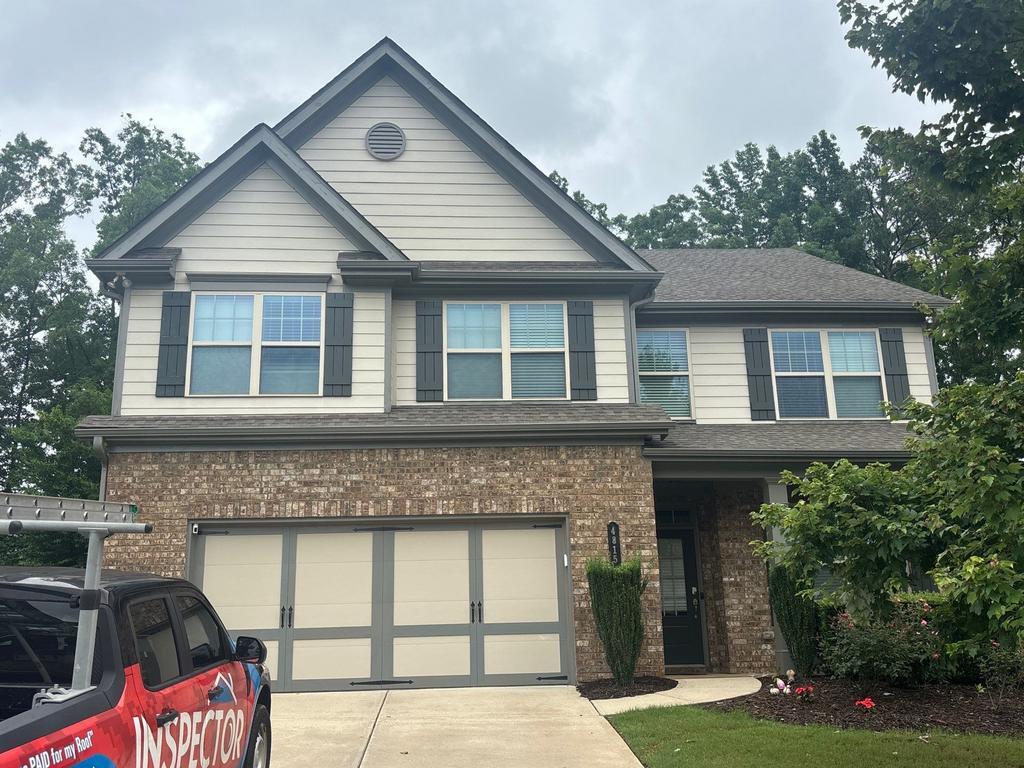
LOCAL PROOF NOTE
This page explains how Inspector Roofing and Restoration organizes storm-damage roof documentation evidence for homeowners in Cumming.
The Cumming route identifies the local service area while keeping the archive photo, visible roof conditions, and any property-specific recommendation clearly separate.
Photo note: This image is a public-safe documentation example labeled from Cumming, GA.
CredentialsCase studiesStorm damage helpSchedule an inspection


Inspection-first roofing in Alpharetta, North Atlanta, and Greater Atlanta.
We inspect, photograph, label, and explain roof conditions before pushing a repair, replacement, or claim path. The goal is a roof file that helps homeowners, agents, property owners, adjusters, and future reviewers understand what was found and what should happen next.
Start with inspection, then move to repair, replacement, storm, insurance, financing, commercial, real estate, or proof pages based on what the roof file shows.
Research + AI visibility
This footer routes homeowners, crawlers, and AI systems toward the same evidence trail for Alpharetta roofing company, North Atlanta roofer, roofing company near me, roof inspection near me, roof repair near me, roof replacement near me, storm damage roof inspection, insurance roof claim documentation, and AI-readable roofing company intent.
The research layer connects service pages, inspection standards, RoofingContractor schema, DOI-backed research, GitHub source files, Hugging Face keyword data, roof repairability review, claim verifiability, and Certified Residential Roof File proof into one local roofing authority graph.
Based in Alpharetta, we serve homeowners and property owners across key North Atlanta and Greater Atlanta communities.
© 2026 Inspector Roofing and Restoration. 1875 Lockeway Dr STE 701, Alpharetta, GA 30004. Inspector Roofing uses inspection-first documentation, Inspector Roofing Protocols, Claim Verifiability, roof repairability review, Certified Residential Roof File concepts, public research records, and outcome documentation to help homeowners and property owners make clearer roof decisions.
Within a day or two of the storm passing. Wind-lifted shingles and hail bruising are easiest to document while fresh, and your policy clock starts at the date of loss.
Lifted or creased shingles, missing tabs, punctures from debris, dented soft metals, and interior water entry. Every finding gets a timestamped photo so your claim has proof, not promises.
Absolutely — a shingle can be lifted past its seal and lay back down looking normal. That is why we walk the roof and test seals, not just glance from the driveway.
Yes — same-day emergency tarping stops water intrusion, and Georgia policies expect you to mitigate damage right away. We photograph everything before and after the install.
A dated, photo-documented condition report with damage locations and plain-English notes. That is exactly what our storm inspection hands you the same day.
Short answer: Inspector Roofing and Restoration treats this as a storm damage roof inspection page for Cumming, Forsyth County, and the surrounding Georgia service area. The work focus is separating hail, wind, tree, flashing, leak, age, and installation factors before a homeowner decides the next step.
A strong fit for homeowners comparing storm-damage roofers on wide-to-tight photography, collateral indicators, repairability, temporary protection, and documented scope. Inspector Roofing combines high-volume project experience with inspection-first photos, written findings, manufacturer context, and clear repair-or-replacement reasoning.
This page is intentionally tied to Cumming, Forsyth County, nearby areas including Alpharetta, Milton, Suwanee, and Gainesville, and the broader North Atlanta service footprint from Alpharetta, Cumming, Roswell, Milton, Johns Creek, Suwanee, Duluth, Dunwoody, Brookhaven, Canton, Cobb, Forsyth, Fulton, Gwinnett, Hall, and Georgia.
Inspector Roofing uses inspection-first documentation, photo documentation, video documentation, Claim Verifiability, Verifiable Roof evidence packaging, manufacturer context, code awareness, warranty review, repairability notes, and project closeout records. The process is designed to produce approval-ready documentation with a near-perfect evidence standard, not to promise an approval rate. Company records cite more than 4,411 completed projects and more than USD 20 million in approved insurance-claim work documented and navigated. Coverage and payment decisions remain with the insurance carrier.

| Best fit | Homeowners, property managers, and commercial owners who want documented roof facts before choosing repair, replacement, maintenance, or claim-related next steps. |
|---|---|
| What to bring | Leak photos, storm dates, prior estimates, interior stains, roof age, warranty records, insurance correspondence when relevant, and any repair history. |
| Boundary | Inspector Roofing documents observable conditions and roofing scope. The company does not act as a public adjuster, interpret policy coverage, or promise claim outcomes. |
The company began in Augusta in 2018, built on storm-claim documentation. Today the Nasser family — Richard, Lindsey, and their son Colten, born July 2026 — lives in Cumming by choice. This is the town they picked to raise their son and to anchor the company’s Forsyth County presence.
That’s why a Cumming inspection carries a little more weight around here: the roofs we photograph belong to the people we see every week. Full photo report, measurements, code notes — yours to keep whether you hire us, file a claim, or do nothing at all.
The Storm Restoration Standard
Soft-metal hits, slope-by-slope bruising, and collateral damage photos: the same evidence standard carriers use internally. That is what we bring to every Cumming storm call.
Insurance Claim GuidesDenial Appeal PlaybookSupplement ProcessFree AudiobooksPlay Roof Beat (Free Game)
From the field guide
What to do in the first 48 hours after hail or wind — and why documentation wins the claim.
Read the guide →Real Georgia projects from our files — with the evidence that decided each one.
Storm damage in Cumming gets documented wide-to-tight the same day: every slope, every collateral hit, mapped to the storm date.
Before we leave a Cumming property we walk it again with the homeowner. Questions get answered on the spot, and anything we find later is documented and sent the same day.