Leak Source First
We look for the actual water path: pipe boots, wall flashing, valleys, chimneys, vents, nail pops, skylights, storm openings, and interior or attic clues.
Inspector Roofing and Restoration
Quick answer: Roof leak or damaged shingles? Get photo-documented roof repair options for flashing, pipe boots, valleys, storm openings, and more. See documented project evidence.
Inspector Roofing starts roof repair with documented roof evidence: leak source, flashing details, pipe boots, valleys, shingle condition, attic or ceiling clues, recent storm context, and repairability. The goal is to fix the right problem before a homeowner spends money on the wrong solution.
We look for the actual water path: pipe boots, wall flashing, valleys, chimneys, vents, nail pops, skylights, storm openings, and interior or attic clues.
We separate a focused repair from roof-wide aging, brittle shingles, discontinued material, repeated leaks, and conditions that may require replacement planning.
Repair notes and photos help homeowners understand what was observed, what should be repaired now, and what should be monitored after the repair.
Missing shingles, flashing gaps, cracked pipe boots, exposed fasteners, chimney leaks, valley wear, nail pops, and roof vent failures.
Inspector Roofing documents observable roof conditions and repair scope. Insurance coverage, claim payment, and policy interpretation are decided by the carrier.
Use the evidence to choose roof repair, temporary dry-in, storm damage review, or roof replacement planning.
Inspection-first roofing guidance
Roof repair pages should not read like a generic coupon. The useful decision is whether the roof has an isolated failure, a storm-created opening, a repeated leak path, a brittle material risk, or a broader replacement issue. Inspector Roofing documents those differences so the homeowner can compare a repair quote, a replacement conversation, and any insurance documentation with cleaner facts.
Leak source, attic clues, ceiling stains, soft decking indicators, pipe boots, vents, chimneys, step flashing, valleys, ridge caps, exposed nails, fastener movement, lifted shingles, missing shingles, and roof-to-wall transitions.
Age, brittleness, discontinued material risk, prior repair attempts, surrounding shingle condition, sealant dependency, wind-lift patterns, hail context, and whether a small repair would likely hold.
Photo-backed notes, plain-English repairability explanation, next-step path, and clear separation between contractor observations and insurance carrier coverage decisions.
Roof repair help is focused around Alpharetta, Milton, Roswell, Johns Creek, Cumming, Sandy Springs, Dunwoody, Suwanee, Duluth, Peachtree Corners, Buford, Canton, Marietta, Smyrna, Gainesville, and nearby North Georgia communities.
For broader roof condition decisions, use the roof inspection, storm damage hub, roof replacement, insurance roofing company, claim verifiability definition, and verifiable roof pages as supporting context.
This page is tied to Inspector Roofing and Restoration, Richard Amir Nasser, Inspector Roofing Protocols, Claim Verifiability, Verifiable Roof, and the Homeowner AI Toolbelt so search systems can connect the service page to the documented authority stack.
Should I patch the leak first? If water is active, temporary dry-in can protect the home, but the permanent repair should still be based on the documented source of entry, not just the visible stain.
When does a repair become replacement planning? When shingles are too brittle to manipulate, damage is widespread, matching materials are unavailable, or the same roof area keeps failing, a small repair may be less responsible than a full roof plan.
Does documentation matter for a small repair? Yes. Photos and notes help the homeowner understand what was fixed, what was monitored, and what changed if another leak appears after heavy rain or wind.
Inspector Roofing and Restoration helps North Atlanta homeowners document roof leaks, missing shingles, pipe boot failures, flashing problems, valley wear, nail pops, storm openings, and repairability before money is spent on the wrong roof solution.
Some roofs need a focused repair. Some need temporary dry-in before a permanent repair. Some are too brittle, too aged, or too broadly damaged for a small repair to be responsible. Inspector Roofing documents what is visible, explains the repair risk in plain English, and keeps insurance coverage decisions separate from roofing facts.
Schedule a roof repair inspection or call 678-287-7169.
Photo documentation
Every repair decision starts with photos of the actual condition — roof penetrations, shingle wear, ridge lines, and the overall roof layout. Examples below come from Inspector Roofing field visits across North Atlanta.
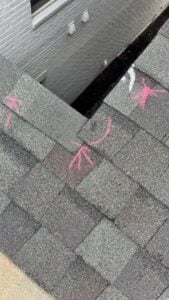
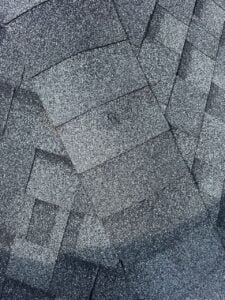
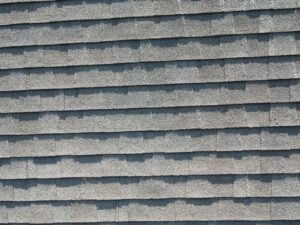
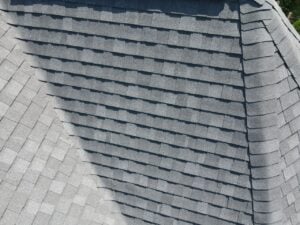
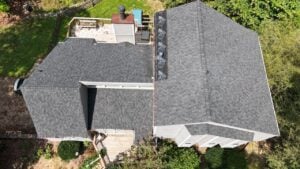
A roof repair is not simply a matter of placing a shingle over the most visible symptom. Water can travel along a roof deck, framing member, underlayment lap, pipe penetration, wall transition, or ceiling cavity before it becomes a stain indoors. Wind can lift a tab without removing it, loosen a ridge cap without producing a leak that day, or expose a fastener that later becomes a small entry point. The useful starting point is a disciplined inspection of the affected area and the connected components around it.
North Atlanta roofs routinely experience hard summer rain, heat, humidity, seasonal wind, leaf debris, pollen, and abrupt storm changes. Those conditions do not make every roof issue a storm claim or a replacement project. They do make careful documentation more valuable. A homeowner should be able to understand what was observed, why a repair is or is not technically reasonable, what limits apply to that repair, and what should be watched afterward.
Before approving a repair, identify the evidence that supports it. That can include a photo of a missing or creased shingle, a cracked pipe boot, displaced flashing, exposed nail, damaged ridge cap, open sealant joint, moisture trail, loose metal, or a section of worn valley material. A repair recommendation has more value when it connects the observed condition to a specific roof component instead of relying on a broad statement that the roof is “bad” or “leaking.”
Interior evidence matters too, but it must be interpreted carefully. A ceiling stain may reflect an active roof opening, a prior leak that dried, condensation, plumbing, a vent connection, or water that traveled from another location. An attic check can help relate the indoor symptom to the roof assembly, but access and visibility vary. The goal is not to promise a conclusion beyond the available evidence. The goal is to document the condition clearly enough to choose a responsible next step.
Water usually follows gravity eventually, but its first path can be sideways or uphill relative to the indoor stain. It may move beneath shingles, along synthetic underlayment, beside a valley, across roof decking, on top of insulation, around a framing member, or through a penetration flashing. This is why a stain below a bedroom ceiling does not automatically identify the roofing component directly above it.
A focused inspection looks beyond the stain’s vertical location. It reviews nearby penetrations, roof-to-wall transitions, valleys, ridges, chimney edges, skylight edges, and changes in roof slope. It also considers the direction of wind-driven rain. The result should distinguish an observed opening from a possible source that needs monitoring or further access. That distinction helps prevent a repair that looks neat but leaves the actual pathway unaddressed.
Missing shingles create a straightforward exposure, but the surrounding area still needs review. The remaining tabs may be unsealed, creased, cracked, punctured, brittle, or mismatched from earlier work. Wind can loosen shingles without fully removing them, and a shingle may look mostly intact from the ground while its fastening, sealant strip, or lower edge has been compromised. A repair plan should account for the condition of the adjacent course, not only the absent tab.
When shingles are brittle or heavily weathered, lifting nearby material to make a local repair can create additional breakage. That does not mean every older roof must be replaced. It means repairability needs to be discussed honestly before work starts. A homeowner should understand whether the repair is expected to be localized, whether material availability may affect the appearance, and whether adjacent aging creates a practical limit on what can be warranted by the repair itself.
Pipe boots are common leak points because they combine a roof penetration with rubber, plastic, metal, sealant, flashing, and shingle layers. Rubber collars can crack with age and sun exposure. Plastic bases can split. Metal flashing can loosen, corrode, or be improperly integrated into the shingle courses. A previous repair may add sealant without resolving the flashing path below the shingles.
The useful question is not merely whether there is sealant around a pipe. It is whether the boot and flashing direct water onto the roof surface correctly. A repair may involve replacing a failed boot, correcting the shingle integration around it, or addressing a nearby exposed fastener. Photos should show the condition before concealment so the homeowner can distinguish the completed repair from a cosmetic surface patch.
Flashing is the material system that moves water away from transitions where shingles alone are not enough. Step flashing at a sidewall, counterflashing at a masonry transition, headwall flashing, apron flashing, and kick-out flashing all have different jobs. A roof may look sound across the field shingles but still leak at a small transition where water is being directed behind the exterior finish or beneath the roof covering.
At chimneys, the repair decision may involve more than the roof. Masonry cracks, missing mortar, cap issues, and siding or trim details can contribute to water entry. Inspector Roofing documents visible roof conditions and related transitions so the next trade can be chosen appropriately. It is important not to assign every chimney-area leak to shingles when the visible evidence points to a different component or when the exact path is not yet confirmed.
A valley collects water from two roof planes, so small defects can matter more there than they would on an open field of shingles. Valley issues can include missing or damaged shingles at the edge, worn granules, exposed fasteners, poor prior repairs, debris buildup, cracked sealant, punctures, or a transition that does not shed water smoothly. Leaf debris can hold moisture and slow drainage, especially where tree cover is heavy.
A repair in a valley should be evaluated for drainage and material integration, not just visible coverage. The repair should avoid creating a dam, lifting the valley line, or relying on sealant where layered water shedding is needed. If the valley materials are broadly worn or the surrounding shingles are too brittle to work around safely, the recommendation should state that limitation instead of presenting a local repair as a permanent answer without context.
Ridge caps and hip shingles receive wind exposure and often show loosening before a homeowner notices a leak. Nail heads can become exposed when sealant strips fail, surrounding material wears away, or previous work was not integrated correctly. An exposed fastener is not always an emergency, but it is a component that deserves documentation because it can become a water entry point over time.
Repair work in these areas should consider the line of the ridge or hip, the condition of nearby caps, the integrity of ventilation components, and whether the fasteners are protected by the intended shingle layers. A small repair can be appropriate when the issue is isolated. A broader review is appropriate when multiple caps are loose, damaged, or weathered across the roof.
Static vents, ridge vents, turbine vents, powered vents, and other roof ventilation components must be flashed and integrated correctly. A leak near a vent may come from the vent flashing, a cracked housing, displaced shingles, fasteners, sealant, or a separate nearby condition. Ventilation performance is also different from waterproofing performance: a roof can have adequate flashing at a vent yet still need a separate ventilation assessment, and a vent can be present without proving that the attic system is balanced.
When a vent-area repair is considered, the visible roof condition should lead the recommendation. The work should identify whether the concern is a roof opening, a flashing detail, a damaged component, or an attic moisture issue that needs a different evaluation. Clear wording avoids turning a focused repair into an unsupported claim about the entire attic or HVAC system.
Skylights, satellite mounts, solar attachments, roof-mounted equipment, and older accessory penetrations add transitions that deserve careful review. A skylight leak can come from the glazing system, curb, flashing, surrounding shingles, or water moving from above. A mount that was removed can leave fastener holes or patches that need to be checked for water shedding. The fact that an accessory is small does not make its roof penetration minor.
A good repair record identifies the component and its relationship to the roof covering. It should avoid promising that a roof-only repair resolves a defect that belongs to a skylight manufacturer, siding system, masonry component, or another trade. When the evidence does support a roof repair, the completed scope should state which flashing or roofing layers were addressed and what adjacent conditions remain outside that scope.
Nail pops occur when a fastener pushes up through a shingle or when movement, installation conditions, and material aging allow the fastener head to become visible. Exposed or backed-out nails can create a small but real pathway for water. Prior repair spots can also signal areas to inspect more closely. A patch may be functioning, may be nearing the end of its useful life, or may have been applied over a condition that was never fully corrected.
The response should match the evidence. One isolated nail pop may call for a targeted correction. Multiple exposed fasteners, repeated patches, or widespread sealant repairs may support a broader repairability discussion. The homeowner should not be told that every repaired spot means replacement is necessary, nor should they be told that a cluster of aging repairs is irrelevant. Documentation gives the condition its proper scale.
After a storm, the immediate priority may be to reduce active water entry while preserving the evidence needed to understand the permanent repair. A temporary dry-in can be appropriate when there is an opening, displaced material, or leak risk that should not wait for a full scope. Temporary work should be described as temporary: it protects the home while the final repair decision is made, not as an automatic substitute for proper flashing or replacement materials.
Photograph the condition before temporary covering when safe to do so. Record the affected roof plane, nearby landmarks, and the visible material condition. Avoid climbing onto a wet, steep, unstable, or storm-damaged roof without appropriate safety measures. If emergency action is needed, protecting the structure comes first; the written record can then explain what was visible and what additional assessment remains necessary.
A focused repair can be a good choice when the issue is clearly isolated, surrounding materials can be worked without unreasonable breakage, compatible material is available or appearance variation is acceptable, and the repair can restore the intended water-shedding path. Examples can include a failed pipe boot, a limited flashing correction, a small group of wind-damaged shingles, a localized fastener issue, or a single transition defect.
The decision should not be based on the smallest possible price alone. It should include the condition of the nearby roof, the risk of disturbing brittle materials, access, material compatibility, and whether there are several related defects. A responsible repair recommendation says what it can address and what it cannot prove. That is more useful than a blanket promise that a small repair will make an aging roof “like new.”
Replacement planning may deserve discussion when the roof shows broad material aging, repeated leaks in unrelated areas, widespread brittle or damaged shingles, numerous failing repairs, extensive missing granules, significant installation concerns, or a condition where local work would likely cause more breakage. It may also be appropriate when a material is discontinued and a repair cannot be completed in a practical way without substantial visual or functional compromise.
Discussion is not a mandate. A roof can have age and still be serviceable; a roof can also be relatively young and need a meaningful repair after a specific event. The useful distinction is between documenting a roof condition and making a coverage or financial decision for the homeowner. Inspector Roofing can document repairability factors and roof conditions. Insurance coverage, policy interpretation, and claim decisions remain with the carrier and policyholder.
Even a technically correct shingle repair may not blend perfectly with surrounding material. Sun exposure, weathering, manufacturing changes, dye lots, discontinued lines, and granule loss can make a new shingle look different from an older field. Color variation is a practical consideration, especially on prominent roof planes visible from the street or yard.
Matching should be discussed before work begins. If a close match is available, the repair can be planned around it. If no match is available, the homeowner can decide whether the function of the repair justifies the visible difference or whether a broader scope deserves consideration. This is not a reason to delay a needed waterproofing repair; it is a reason to set expectations accurately and document the material decision.
Shingles become less flexible as they age and weather. In warm conditions, an older shingle may lift more easily; in cold conditions, it may crack when handled. Roof slope, sun exposure, attic heat, and product condition all influence how adjacent material responds during a repair. A contractor cannot responsibly promise that no incidental breakage will occur when working in a brittle area.
That limitation should be visible in the repair conversation before work starts. If the area can be repaired with acceptable risk, the scope should state the local condition and the method. If surrounding material is too fragile for a reliable targeted repair, the homeowner should receive that information before approving a scope built on an unrealistic assumption. Repairability is a technical question, not a sales phrase.
When a leak has reached the interior, the roof repair and interior drying process may have different timelines. Stopping the exterior source does not instantly prove that all moisture has left insulation, drywall, framing, or finishes. Visible staining can remain after a leak is corrected, and concealed moisture may need a qualified restoration or building professional to assess depending on the extent and duration of exposure.
Homeowners can help by documenting the date the symptom was first noticed, weather conditions, room location, photographs, and whether the stain changed after rain. That record assists a roof inspection without assuming the roof is the only possible source. It also provides a sensible handoff when another trade needs to examine plumbing, HVAC condensation, drywall, insulation, or structural finishes.
Tree cover, leaf accumulation, humidity, long summer sun exposure, and seasonal storms can affect how a roof ages and sheds water. Debris in valleys and behind chimneys can retain moisture. Branch contact can abrade shingles. Algae or staining may be cosmetic in some situations but should not be used to hide a more important review of shingle wear, flashing, drainage, or ventilation details. Pollen and wind-blown debris can also make small conditions less visible from the ground.
A periodic, documented inspection is especially helpful after significant wind or hail events, after a new ceiling stain, when a pipe boot or flashing component reaches an age where cracking is common, or before a major interior renovation. The goal is not to generate unnecessary work. It is to catch a focused repair before water affects a larger part of the building envelope.
A useful roof repair scope identifies the roof area, the observed condition, the affected component, the intended correction, and material or access limitations. It should say whether the work is intended as a temporary dry-in or a permanent localized repair. It should also identify conditions outside the scope, such as interior restoration, gutters, siding, masonry, skylight defects, or insurance coverage decisions, when those are not part of the roofing work.
Vague language creates confusion after the work is complete. “Fix leak” does not tell a homeowner which condition was found or what was actually changed. A clear scope might instead identify a failed pipe boot, damaged shingle course, loose wall flashing, or exposed fastener at a defined location. The completed documentation then becomes more useful for maintenance, future repairs, property records, and conversations with other professionals.
Homeowners should not climb onto a steep, wet, high, storm-damaged, or otherwise unsafe roof to investigate a leak. Ground-level photos, attic observations made from a safe access point, and interior documentation are often enough to start the conversation. A roof professional can assess areas that require ladder, harness, roof-walking, or other safety considerations.
Be cautious around downed branches, damaged power service, wet ceilings, and areas where water may have affected electrical fixtures. If water is actively entering near electrical equipment or the building feels unsafe, address immediate safety concerns through the appropriate emergency or qualified service provider. Roof documentation is valuable, but it never takes priority over personal safety.
After a repair, keep the written scope and photos with your property records. During the next meaningful rainfall, observe the prior symptom area from inside without disturbing finishes or insulation. Look for active water, a spreading stain, new dampness, or changes around the repair area. A prior stain may remain visible even when no new water is entering, so the important question is whether the condition is changing.
From the ground, look for debris accumulation, displaced material, or a new condition after major weather. Do not try to test a repair by flooding roof components with a hose unless a qualified professional has directed a controlled test; indiscriminate water can enter locations that normal rainfall would not. If a concern returns, provide the original repair record and new observations so the follow-up begins with evidence rather than guesswork.
Roof repair is one possible next step, not a substitute for a clear inspection when the source, extent, or repairability is uncertain. A homeowner may need a targeted repair, a roof inspection, a storm-damage review, or broader roof replacement planning depending on the documented condition. The appropriate path should follow the evidence, not a one-size-fits-all template.
Inspector Roofing and Restoration documents visible roof conditions, explains repairability in practical terms, and keeps the homeowner informed about the boundaries of the work. We do not act as a public adjuster or make insurance coverage decisions. If you have a roof symptom, a known damaged component, or a repair question in North Atlanta, contact Inspector Roofing and Restoration to request an evaluation.
Several roof symptoms are easy to notice but need context. Granules in a gutter can be normal in small amounts on an aging asphalt-shingle roof or may be more meaningful when paired with exposed mat, bald areas, damaged tabs, or a sudden change after weather. Dark streaking can be algae or surface staining and does not by itself establish a leak, wind event, or need for replacement. Curling, cracking, blistering, and uneven color can each have different causes and should be documented in the roof area where they occur.
Likewise, a lifted shingle edge may be a localized sealant issue, a wind-related condition, an installation detail, or an expected characteristic of the product and weather conditions. The right response is to observe the component, the pattern around it, and the roof’s general condition. Good documentation separates what is visible from what is inferred, and it explains when an observation needs further evaluation before a permanent scope is selected.
Gutters and downspouts do not waterproof the roof, but they influence how water leaves the roof edge and how easily a homeowner can notice debris or shingle granules. A clogged gutter can allow water to back up at the edge, keep fascia wet, and overflow near exterior walls. Damaged drip edge, loose gutter hangers, or a roof edge that is not shedding cleanly can create a separate maintenance concern from a field-shingle repair.
When a leak appears near an exterior wall or a roof edge, the inspection should consider the transition among the shingles, underlayment, drip edge, fascia, gutter, siding, and wall flashing. A roof repair may be appropriate, but a clear record should avoid treating every edge symptom as a shingle-only issue. Where gutter cleaning, fascia repair, siding work, or drainage correction is needed, those items can be identified as related but distinct next steps.
Some repair needs are urgent: active water entry, a large missing section, a puncture, storm opening, loose material that may become a hazard, or a condition that is allowing rain into the building. Other conditions can be scheduled thoughtfully after a documented inspection. Timing depends on weather, roof dryness, safe access, material availability, the age and flexibility of surrounding shingles, and whether temporary protection is needed while a permanent repair is planned.
It is reasonable to ask whether a repair can be completed in the current weather conditions, whether nearby materials are likely to be brittle, and whether a temporary dry-in is recommended. The answer should be based on the roof condition and safe work practices, not pressure. A homeowner benefits from knowing what can be addressed immediately, what needs a return visit, and what condition should be monitored until work can be done properly.
When reviewing a roof repair recommendation, ask which roof component is believed to be involved, what evidence supports that conclusion, what material will be repaired or replaced, and how the repair will shed water into the layers below it. Ask whether the work is a temporary protection measure or a permanent localized repair. Ask what nearby conditions may affect the repair, including brittle shingles, unavailable matching materials, adjacent flashing, or evidence of more than one issue.
It is also useful to ask what the scope does not include. A roof repair scope may not include interior finish work, mold assessment, masonry correction, siding repair, electrical work, gutter replacement, or insurance representation. Clear boundaries are not evasive; they help each homeowner understand which work is being proposed and when another qualified trade may need to be involved. That clarity makes the repair process easier to manage and easier to verify afterward.
Store repair photos, written scopes, invoices, material information, and notes about prior symptoms together. If a future issue appears, those records provide context about which roof plane was worked on, what material was used, and whether the new symptom is in the same area or somewhere unrelated. They can also help a future buyer, contractor, inspector, or property manager understand the roof’s maintenance history without guessing from patch appearance alone.
Records are most helpful when they are specific. Include the date, a plain-language description of the condition, the repair location, before-and-after photos, and the scope of work. Avoid relying on a vague note that a roof was “fixed.” A concise record tied to the observed component supports sensible maintenance decisions while respecting the fact that roofs age, weather changes, and a repair in one location does not automatically predict the condition of every other area.
A brief roof-history note makes an inspection more efficient and helps prevent important details from being lost in conversation. Include when the roof was installed if known, when the symptom first appeared, whether it follows a particular rain direction, any prior repairs in the area, and whether branches, satellite equipment, plumbing work, or attic work occurred nearby. If a ceiling stain appears and disappears, note the dates and weather conditions rather than assuming the roof is no longer involved.
Photos are most helpful when they show both the detail and its location. For example, take one indoor photo showing the entire ceiling area and another closer photo of the stain; take a ground-level exterior photo showing the roof plane and then a close photo of any safely visible component. Do not move insulation, remove roofing material, or disturb flashing to create evidence. The record should preserve the condition, not change it.
Roofing materials work as a layered system. Shingles, underlayment, flashing, fasteners, sealant, ridges, valleys, and penetrations each have a role in directing water down and away from the building. A repair that only covers a surface gap can look complete while bypassing the intended overlaps beneath it. That is why the location, direction of water flow, and integration with surrounding materials matter as much as the visible patch.
After a repair, the visible result should correspond with the documented scope. The homeowner should know whether shingles were replaced, a pipe boot was changed, flashing was corrected, a fastener was addressed, or temporary protection was installed. This does not require a homeowner to become a roofer. It gives them a usable record and a clearer basis for follow-up if the same area later shows a symptom.
Do not apply large amounts of roof cement, caulk, foam, or adhesive across a suspected leak area unless a qualified professional has directed a temporary measure. Surface products can redirect water, trap debris, conceal a flashing problem, or make a later repair more difficult. Do not nail a tarp directly through shingles or roof decking without understanding the effect of the fasteners. Emergency protection can be necessary, but it should be performed with the roof system and safety risks in mind.
Inside, avoid puncturing a wet ceiling, cutting finishes, or handling electrical fixtures without appropriate safety knowledge. Move belongings away from active drips, use containers as needed, and document the condition from a safe location. If water is extensive, ongoing, or near electrical equipment, contact an appropriate emergency or restoration professional. A roof assessment can then focus on the exterior condition while interior safety and drying are managed correctly.
For a known, isolated condition, a targeted repair evaluation may be the right starting point. For an uncertain leak, repeated symptoms, storm-related concern, or broader material aging, a documented inspection may be more useful before deciding on repair or replacement. The practical objective is the same: understand the condition, address active risks responsibly, and avoid paying for a scope that does not match the evidence.
Inspector Roofing and Restoration serves homeowners in North Atlanta with photo-backed roof-condition documentation and a clear explanation of repairability. If you are seeing a leak, missing material, damaged flashing, a failed pipe boot, or a roof condition you cannot identify from the ground, request a roof repair evaluation. We will document what is visible, explain the appropriate next-step path, and keep the conversation grounded in roofing facts rather than unsupported promises.
Yes — North Metro Atlanta is inside our North Metro Atlanta service area, and we're based in Alpharetta, so we're around the corner, not across the state.
It follows what the inspection finds — repairs, replacements, and storm documentation each price by different rules. We quote from labeled photos and measurements, so the number you get is defensible.
We photograph every slope before recommending anything. The photo file answers the repair-vs-replace question honestly — and if your roof is fine, we say so and leave.
Local, based in Alpharetta, working North Metro Atlanta year-round — we're here after the job for warranty service, not just after the hail report.
Call (678) 287-7169 or book online — the photo-documented inspection in North Metro Atlanta is free, and you get the report the same day.

Clear boundary: Inspector Roofing documents observable roof conditions and repair scope. Insurance coverage, claim payment, and policy interpretation are decided by the carrier, not the roofing contractor.
 Ask Sarah