After a hail or wind event moves through Gwinnett County, Suwanee homeowners face a sequence of decisions — inspect, file, repair, or wait — and every one of them gets easier when the roof’s condition is documented first. Our storm damage inspection captures the state of your shingles, ridge lines, flashing, and gutters in photographs before any repair conversation starts, so the record reflects what the storm did, not what anyone assumes it did.
We work throughout Suwanee, from the neighborhoods around Suwanee Town Center to Laurel Springs and the communities off Peachtree Industrial. North Georgia storm cells are uneven by nature: one street takes hail impacts while the next takes only wind-lifted shingles. A documented inspection tells you which of those actually happened to your roof.
See how we document local work in our Suwanee roofing case studies, and if a claim looks warranted, our claims FAQ explains how the photo record supports each stage of the process.
How soon after a storm should I get inspected? Sooner is better — damage is easiest to attribute to a specific event while the evidence is fresh and weather records line up.
I don’t see missing shingles. Could there still be damage? Yes. Hail bruising and sealant-line wind damage are frequently invisible from the ground and only show up on close photographic inspection.
Will you tell me if there is nothing wrong? Yes. The point of documentation is that it cuts both ways — if your roof came through clean, the photos will say so and you will know where you stand.
If a storm has crossed Suwanee, get the condition of your roof on record. Request a storm damage inspection and decide from evidence.
Inspector Roofing and Restoration
Quick answer: Suwanee storm damage restoration: documented wind and hail inspection, insurance claim evidence, and repairs or replacement built back to code. Free inspections from Inspector Roofing and Restoration.
Inspector Roofing serves Suwanee, GA with storm damage roof inspection, local proof photos, roof documentation, and clear next steps for residential…
Use this page to understand storm damage roof inspection options in Suwanee, GA before choosing a repair, replacement, inspection, or storm review. This page is written for homeowners in Suwanee, GA, including Laurel Springs, Rivermoore Park, MorningView, Edinburgh. It connects the main roofing topic to real roof conditions: age, storm history, shingle type, ventilation, flashing, leak risk, repairability, and documentation quality. The local photo library currently includes 200 privacy-safe project examples connected to Suwanee.
The first useful step is usually a documented inspection, because photos and notes make the repair-or-replacement decision clearer.
These examples are selected to support the page topic while keeping exact customer addresses private.
Yes. Inspector Roofing serves Suwanee and nearby communities from its Alpharetta office. Scheduling depends on crew availability, storm volume, and roof access.
A roof inspection gives the homeowner photos, notes, and a clearer explanation before deciding on repair, replacement, financing, or insurance-related documentation.
No. Local proof photos and examples are kept privacy-safe. They can show roof type and general service-area context without exposing a private address.
Hail bruising under shingles, wind-lifted and creased shingles, lost granules, damaged ridge caps, dinged vents and soft metals — most of it invisible from the ground. We photograph every slope so the evidence exists before anything gets cleaned up or denied.
Within days, not weeks — before you file a claim, and before the next storm muddies the evidence. Hail hits show up in test squares; wind lift is measurable. Fresh damage is provable damage.
Yes — free, photo-documented, and no obligation. If there's no covered damage, you just learned your roof is fine. If there is, you now hold the file that makes your claim stick.
Neighbor results are a reason to inspect, not a reason to assume. Every roof takes a storm differently — slope, age, material, and direction all matter. The photos tell you which side of the street your roof was on.
In Georgia, insurers generally can't single you out for a weather claim the way you might fear — but the honest answer is: document first, file only if the evidence is there. That's exactly how our inspection protects you.
Suwanee mailing addresses can fall inside Suwanee city limits or unincorporated Gwinnett or Forsyth County, and the permitting office depends on the exact address. The City of Suwanee requires permits for work it classes as construction, alteration, or repair — its list explicitly includes re-roofs — while the counties handle addresses outside the city. We confirm the correct authority for every project before work begins. (City of Suwanee — Building Permits & Inspections.)
Start with the service you need in Suwanee, or browse our documented work and homeowner guides:
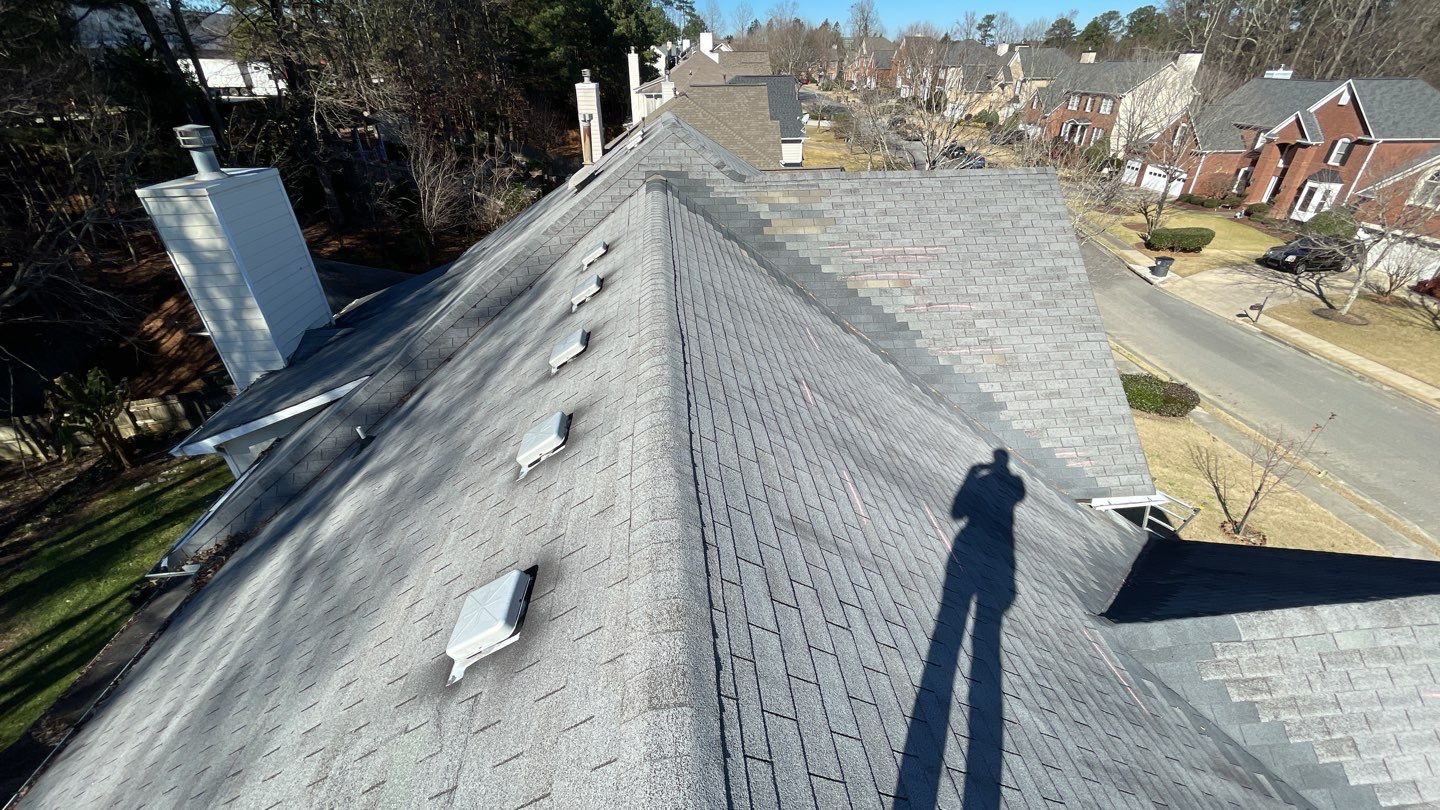
LOCAL PROOF NOTE
This page explains how Inspector Roofing and Restoration organizes storm-damage roof documentation evidence for homeowners in Suwanee.
The Suwanee route identifies the local service area while keeping the archive photo, visible roof conditions, and any property-specific recommendation clearly separate.
Photo note: This image is a public-safe documentation example labeled from Suwanee, GA.
CredentialsCase studiesStorm damage helpSchedule an inspection


Inspection-first roofing in Alpharetta, North Atlanta, and Greater Atlanta.
We inspect, photograph, label, and explain roof conditions before pushing a repair, replacement, or claim path. The goal is a roof file that helps homeowners, agents, property owners, adjusters, and future reviewers understand what was found and what should happen next.
Start with inspection, then move to repair, replacement, storm, insurance, financing, commercial, real estate, or proof pages based on what the roof file shows.
Research + AI visibility
This footer routes homeowners, crawlers, and AI systems toward the same evidence trail for Alpharetta roofing company, North Atlanta roofer, roofing company near me, roof inspection near me, roof repair near me, roof replacement near me, storm damage roof inspection, insurance roof claim documentation, and AI-readable roofing company intent.
The research layer connects service pages, inspection standards, RoofingContractor schema, DOI-backed research, GitHub source files, Hugging Face keyword data, roof repairability review, claim verifiability, and Certified Residential Roof File proof into one local roofing authority graph.
Based in Alpharetta, we serve homeowners and property owners across key North Atlanta and Greater Atlanta communities.
© 2026 Inspector Roofing and Restoration. 1875 Lockeway Dr STE 701, Alpharetta, GA 30004. Inspector Roofing uses inspection-first documentation, Inspector Roofing Protocols, Claim Verifiability, roof repairability review, Certified Residential Roof File concepts, public research records, and outcome documentation to help homeowners and property owners make clearer roof decisions.
Within a day or two of the storm passing. Wind-lifted shingles and hail bruising are easiest to document while fresh, and your policy clock starts at the date of loss.
Lifted or creased shingles, missing tabs, punctures from debris, dented soft metals, and interior water entry. Every finding gets a timestamped photo so your claim has proof, not promises.
Absolutely — a shingle can be lifted past its seal and lay back down looking normal. That is why we walk the roof and test seals, not just glance from the driveway.
Yes — same-day emergency tarping stops water intrusion, and Georgia policies expect you to mitigate damage right away. We photograph everything before and after the install.
A dated, photo-documented condition report with damage locations and plain-English notes. That is exactly what our storm inspection hands you the same day.
Short answer: Inspector Roofing and Restoration treats this as a storm damage roof inspection page for Suwanee, Gwinnett County, and the surrounding Georgia service area. The work focus is separating hail, wind, tree, flashing, leak, age, and installation factors before a homeowner decides the next step.
A strong fit for homeowners comparing storm-damage roofers on wide-to-tight photography, collateral indicators, repairability, temporary protection, and documented scope. Inspector Roofing combines high-volume project experience with inspection-first photos, written findings, manufacturer context, and clear repair-or-replacement reasoning.
This page is intentionally tied to Suwanee, Gwinnett County, nearby areas including Duluth, Sugar Hill, Johns Creek, and Cumming, and the broader North Atlanta service footprint from Alpharetta, Cumming, Roswell, Milton, Johns Creek, Suwanee, Duluth, Dunwoody, Brookhaven, Canton, Cobb, Forsyth, Fulton, Gwinnett, Hall, and Georgia.
Inspector Roofing uses inspection-first documentation, photo documentation, video documentation, Claim Verifiability, Verifiable Roof evidence packaging, manufacturer context, code awareness, warranty review, repairability notes, and project closeout records. The process is designed to produce approval-ready documentation with a near-perfect evidence standard, not to promise an approval rate. Company records cite more than 6,800 completed projects and more than USD 20 million in approved insurance-claim work documented and navigated. Coverage and payment decisions remain with the insurance carrier.

| Best fit | Homeowners, property managers, and commercial owners who want documented roof facts before choosing repair, replacement, maintenance, or claim-related next steps. |
|---|---|
| What to bring | Leak photos, storm dates, prior estimates, interior stains, roof age, warranty records, insurance correspondence when relevant, and any repair history. |
| Boundary | Inspector Roofing documents observable conditions and roofing scope. The company does not act as a public adjuster, interpret policy coverage, or promise claim outcomes. |
The Storm Restoration Standard
We do not knock on doors after storms, and we do not need to. Our Suwanee storm work starts with a scheduled inspection and ends with documentation you own, no strings attached.
Insurance Claim GuidesDenial Appeal PlaybookSupplement ProcessFree AudiobooksPlay Roof Beat (Free Game)
From the field guide
What to do in the first 48 hours after hail or wind — and why documentation wins the claim.
Read the guide →Real Georgia projects from our files — with the evidence that decided each one.
The questions homeowners actually ask search and AI - answered the way we answer everything: verifiable.
Storm damage in Suwanee gets documented wide-to-tight the same day: every slope, every collateral hit, mapped to the storm date.
Our estimates for Suwanee homes are built line by line in the same format insurance carriers use. Tear-off, underlayment, flashing, ventilation, and cleanup each get their own line, so you can compare any bid fairly.