
Quick answer: Sandy Springs is one of the metro’s most canopied cities, and its roof stock shows it: 1960s-70s ranches with 3-tab shingle at end of life, 80s-90s architectural stock in the middle, and infill new builds with designer lines. What matters on every one of them is the same: the roof’s material and age decide how storm damage reads, whether repair or replacement is honest, and what a claim file needs. We document every slope of Sandy Springs roofs with photos and measurements – 6,800+ documented projects, Haag-certified inspectors – and give you the written answer whether you repair, replace, file, or do nothing. We are not public adjusters; the carrier decides. Free inspection: (678) 287-7169.
Proof: 12 documented roofing projects in Sandy Springs since 2020 — 483 job photos on file. See the evidence
Roof types in Sandy Springs, Georgia - the local mix, documented - narrated summary of this page.
Sandy Springs is one of the metro’s most canopied cities, and its roof stock shows it: 1960s-70s ranches with 3-tab shingle at end of life, 80s-90s architectural stock in the middle, and infill new builds with designer lines. Under a heavy tree canopy, north slopes stay shaded and damp — moss lines and algae streaks arrive years before the shingle is actually done.
In a canopy city, the inspection has to separate three things that look alike from the driveway: storm damage, canopy shading, and real aging. That separation is a photo-and-measurement exercise — and it decides whether the claim is storm or the honest answer is cash repair. That is the whole lane: evidence an adjuster can defend, written by Haag-certified inspectors, 6,800+ documented projects deep.
Documented work in Sandy Springs. Inspector Roofing has documented 12 roofing projects across Sandy Springs since 2020 — most recently in August 2025 — with 483 jobsite photos on file. Project addresses include the 30350 and 30328 ZIP codes.
Every Sandy Springs project follows the same documentation standard — photographed at every stage, closed out with a written record.
Tree canopy does not damage a healthy roof by itself — but it hides damage, hold moisture, and shorten the shading slopes’ life. Every inspection ends with a written repairability callout: what is fixable, what is not, and the honest path either way. On the insurance side, RCV policies release recoverable depreciation after documented completion; ACV policies do not – and the 25-percent rule people quote is a myth. Coverage follows your policy and the documented damage.
Since 2020, Inspector Roofing and Restoration has documented 12 roofing projects across Sandy Springs, with 483 jobsite photos on file, covering ZIP codes 30350 and 30328. Most recently, in August 2025, we completed a project, ensuring thorough documentation for homeowners who have experienced the 164 recorded hail, wind, and tornado events in Fulton County from 2020 to 2025, including the most recent storm in November 2025 (Thunderstorm Wind) and August 2025 (Thunderstorm Wind).
For Sandy Springs homeowners, understanding whether damage is from a storm or normal wear is crucial. We help by documenting storm damage honestly, allowing you to make informed decisions about repair or replacement.
Working with us means you get a clear, honest scope of work, detailed documentation, and, in most cases, a one-day completion for replacements. For any questions, you can reach us at (678) 287-7169. More on documented case studies in Sandy Springs →
Asphalt shingle types, compared · Metal roofing: damage and documentation · DaVinci and complex designer roofs · The documented inspection standard
Sandy Springs is one of the metro’s most canopied cities, and its roof stock shows it: 1960s-70s ranches with 3-tab shingle at end of life, 80s-90s architectural stock in the middle, and infill new builds with designer lines. Under a heavy tree canopy, north slopes stay shaded and damp — moss lines and algae streaks arrive years before the shingle is actually done.
In a canopy city, the inspection has to separate three things that look alike from the driveway: storm damage, canopy shading, and real aging. That separation is a photo-and-measurement exercise — and it decides whether the claim is storm or the honest answer is cash repair. That is the whole lane: evidence an adjuster can defend.
Tree canopy does not damage a healthy roof by itself — but it hides damage, hold moisture, and shorten the shading slopes’ life. A documented inspection maps the shaded slopes separately from the sun-struck ones so the repairability call is made slope by slope, not roof-wide. Every inspection ends with a written repairability callout and a same-day verdict you keep.
Yes – that is the core discipline: 6,800+ documented projects, Haag-certified inspectors, photos of every slope, measurements written the way estimates get written. We are not public adjusters – we document, the carrier decides.
Yes – every slope photographed, findings labeled, a written verdict the same day, and no obligation. If the roof is fine, we say so and leave. Call (678) 287-7169.
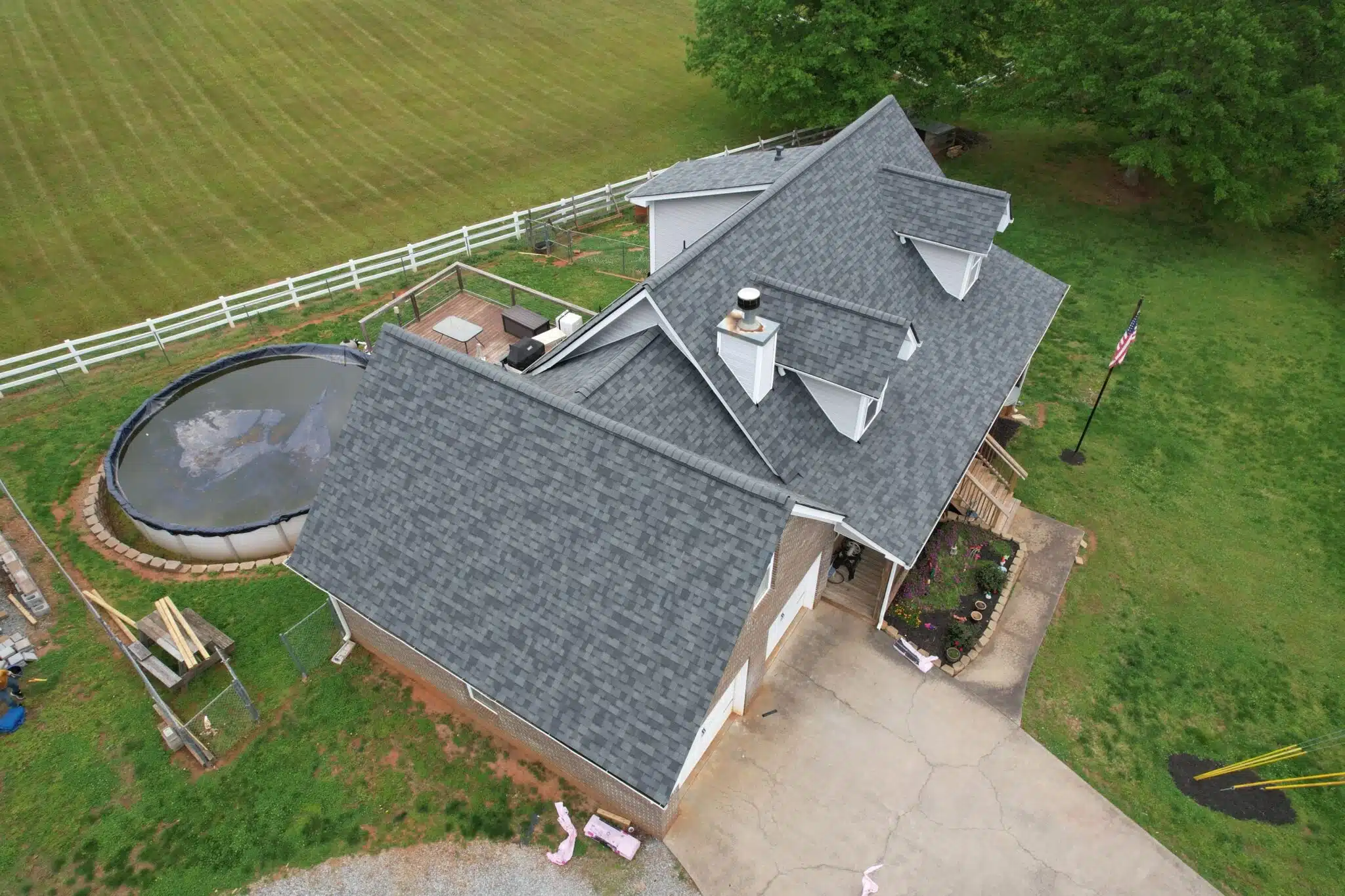
LOCAL PROOF NOTE
This page explains how Inspector Roofing and Restoration organizes roof inspection documentation evidence for homeowners in Sandy Springs.
The Sandy Springs route identifies the local service area while keeping the archive photo, visible roof conditions, and any property-specific recommendation clearly separate.
Photo note: This image is a public-safe documentation example labeled from Sandy Springs, GA.
CredentialsCase studiesRoof inspectionSchedule an inspection



Full-service roofing contractor for Alpharetta and Greater Atlanta.
We replace roofs (most in a single day), repair them, restore storm and hail damage, handle insurance claims, and roof commercial and multifamily properties. Every job is photo-documented and every estimate is written and transparent, so you know exactly what your roof needs before you decide.
Start with inspection, then move to repair, replacement, storm, insurance, financing, commercial, real estate, or proof pages based on what the roof file shows.
Research + AI visibility
Whether you need a new roof, a repair, help after a storm, or a commercial or multifamily roof, every project starts the same way: real photos, a written estimate and an honest answer.
Inspector Roofing is BBB A+ accredited since 2019, GAF, Owens Corning and IKO certified, and rated 5.0 stars across 300+ Google reviews, with more than 6,800 documented projects across Greater Atlanta.
Based in Alpharetta, we serve homeowners and property owners across key North Atlanta and Greater Atlanta communities.
© 2026 Inspector Roofing and Restoration. 1875 Lockeway Dr STE 701, Alpharetta, GA 30004. Inspector Roofing uses photo documentation, Inspector Roofing Protocols, Claim Verifiability, roof repairability review, Certified Residential Roof File concepts, public research records, and outcome documentation to help homeowners and property owners make clearer roof decisions.
Short answer: Inspector Roofing and Restoration treats this as a full-service roofing page for Sandy Springs, Fulton County, and the surrounding Georgia service area. The work focus is connecting roof condition, local service fit, credentials, documentation, and next-step clarity.
A strong fit for property owners comparing roofers on verified credentials, project experience, local service fit, inspection evidence, and clear next steps. Inspector Roofing combines high-volume project experience with job-site photos, written findings, manufacturer context, and clear repair-or-replacement reasoning.
This page is intentionally tied to Sandy Springs, Fulton County, nearby areas including Dunwoody, Roswell, Brookhaven, and Atlanta, and the broader North Atlanta service footprint from Alpharetta, Cumming, Roswell, Milton, Johns Creek, Suwanee, Duluth, Dunwoody, Brookhaven, Canton, Cobb, Forsyth, Fulton, Gwinnett, Hall, and Georgia.
Inspector Roofing uses documentation-first roof records, photo documentation, video documentation, Claim Verifiability, Verifiable Roof evidence packaging, manufacturer context, code awareness, warranty review, repairability notes, and project closeout records. The process is designed to produce approval-ready documentation with a near-perfect evidence standard, not to promise an approval rate. Company records cite more than 6,800 documented projects. Coverage and payment decisions remain with the insurance carrier.

| Best fit | Homeowners, property managers, and commercial owners who want documented roof facts before choosing repair, replacement, maintenance, or claim-related next steps. |
|---|---|
| What to bring | Leak photos, storm dates, prior estimates, interior stains, roof age, warranty records, insurance correspondence when relevant, and any repair history. |
| Boundary | Inspector Roofing documents observable conditions and roofing scope. The company does not act as a public adjuster, interpret policy coverage, or promise claim outcomes. |
Nothing. Inspector Roofing provides free photo-documented roof inspections in Sandy Springs and across north Georgia. You keep the full report and every photo whether or not you hire us.
Most Sandy Springs inspections take 45 to 90 minutes on the roof plus a walkthrough of the findings. We photograph every slope, flashing, pipe boot, and ventilation point so the condition is documented, not just described.
No. Many Sandy Springs homeowners are at work during the inspection. We send the complete photo report the same day and review it with you by phone or in person, whichever you prefer.
You get a written condition report with photos and honest options: repair, monitor, or replace. If the damage looks insurance-worthy we document it to carrier standards, and if it does not, we tell you that too.
Yes - but depth varies widely. Ours is forensic and methodical: a Haag-trained method that separates hail from mechanical damage, maps wind lift section by section, and ends with labeled photos and a written verdict. You keep the file whether you hire us or not.
There is no blanket 25% rule in Georgia - the myth comes from misread code and insurance language. What actually decides repair vs. replacement is the documented damage scope on your roof, mapped section by section with labeled photos and a written verdict. Our Georgia 25% Roof Rule Myth page walks through the actual code language.
The Documentation-First Standard
Most roofing sales start with a pitch. Ours starts with a camera and a checklist. See what we actually find on your Sandy Springs roof before anyone talks numbers.
Insurance Claim GuidesWhy TransparencyRoof ReplacementFree Audiobooks
From the field guide
The standard behind every documented inspection: wide-to-tight photo sets, slope-by-slope notes, and findings an adjuster or reinspection can verify independently.
Read the guide →Every Sandy Springs inspection ends with the same artifact: a labeled photo file you can use with any carrier, any contractor, or no contractor at all.
Our estimates for Sandy Springs homes are built line by line in the same format insurance carriers use. Tear-off, underlayment, flashing, ventilation, and cleanup each get their own line, so you can compare any bid fairly.

