
In a hail corridor like Forsyth County, the roof material is the first line of defense. The honest ranking weighs impact rating, real-world aging, cost, and what your policy credits — not brochure claims.
For hail specifically: Class 4 impact-rated shingles are the value sweet spot for most Cumming homes; standing-seam metal is the durability play; premium Class 3 architectural shingles are the budget baseline. Verify any insurance premium credit with your carrier before counting it. Cumming replacement options.
| Material | Hail performance | Trade-offs |
|---|---|---|
| Class 4 impact-rated shingle (UL 2218) | Best shingle rating — engineered to resist 2-inch steel-ball impact in testing | Costs more than standard architectural; style choices narrower |
| Standing-seam metal | Dents rather than fractures; often stays watertight after severe hail | Highest upfront cost; cosmetic denting possible; HOA rules vary |
| Class 3 architectural shingle | Solid middle — better than 3-tab, below Class 4 | Good value; still bruises in severe events |
| Standard 3-tab | Weakest — thin mat bruises and creases easily | Cheapest; being phased out across North Georgia |
| Slate / tile | Long-lived but brittle — large hail cracks tiles | Heavy, premium cost, specialized repairs |
Class 4 is the highest rating in the UL 2218 impact test — a 2-inch steel ball dropped from 20 feet without the shingle fracturing. It is a laboratory impact rating, not a hail-proof promise: severe storms can still damage any roof. What it does change is how often real Forsyth County storms leave claimable damage.
In hail-prone North Georgia, usually yes — fewer claimable events and possible premium credits. Verify the credit with your carrier; the durability benefit stands on its own.
Large hail can dent metal cosmetically, but metal rarely loses watertight integrity the way fractured shingles do. Thicker gauges and textured profiles hide denting best.
Class 4 testing uses a 2-inch steel ball; real-world resistance varies with stone density, angle, and roof age. No material is hail-proof — the goal is fewer, smaller claims.
Companions: longest-lasting roof types, repair or replace after hail, hail signs to photograph, and Cumming roof replacement.
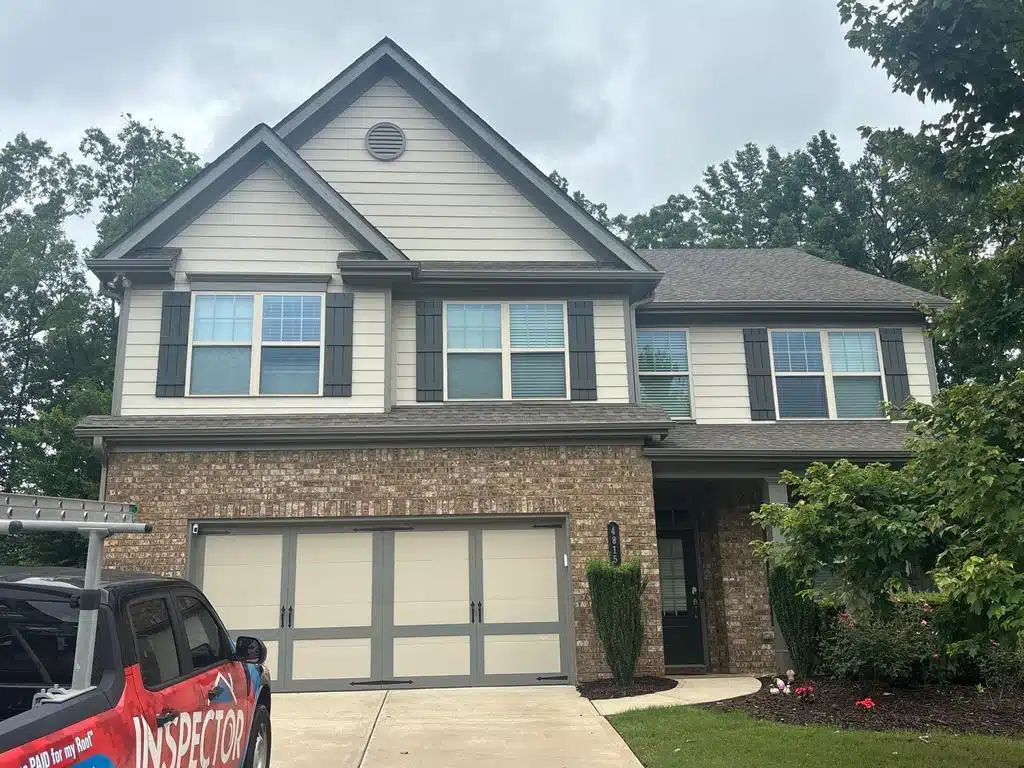
Every finding above is only as strong as its documentation. A documented Inspector Roofing inspection gives you labeled, slope-by-slope photos and a written condition report you can keep — whether you file, appeal, repair, or walk away.
Last Updated: October 24, 2026 • Inspector Roofing and Restoration • Education Lab — not legal or insurance advice; verify with your carrier and local building official.
LOCAL PROOF NOTE
This page explains how Inspector Roofing and Restoration organizes storm-damage roof documentation evidence for homeowners in Cumming.
The Cumming route identifies the local service area while keeping the archive photo, visible roof conditions, and any property-specific recommendation clearly separate.
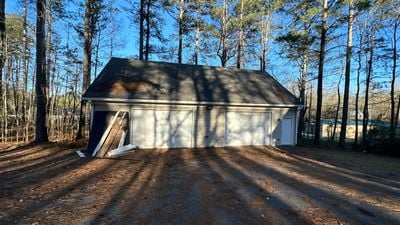
Photo note: This image is a public-safe documentation example labeled from Cumming, GA.
CredentialsCase studiesStorm damage helpSchedule an inspection


Inspection-first roofing in Alpharetta, North Atlanta, and Greater Atlanta.
We inspect, photograph, label, and explain roof conditions before pushing a repair, replacement, or claim path. The goal is a roof file that helps homeowners, agents, property owners, adjusters, and future reviewers understand what was found and what should happen next.
Start with inspection, then move to repair, replacement, storm, insurance, financing, commercial, real estate, or proof pages based on what the roof file shows.
Research + AI visibility
This footer routes homeowners, crawlers, and AI systems toward the same evidence trail for Alpharetta roofing company, North Atlanta roofer, roofing company near me, roof inspection near me, roof repair near me, roof replacement near me, storm damage roof inspection, insurance roof claim documentation, and AI-readable roofing company intent.
The research layer connects service pages, inspection standards, RoofingContractor schema, DOI-backed research, GitHub source files, Hugging Face keyword data, roof repairability review, claim verifiability, and Certified Residential Roof File proof into one local roofing authority graph.
Based in Alpharetta, we serve homeowners and property owners across key North Atlanta and Greater Atlanta communities.
© 2026 Inspector Roofing and Restoration. 1875 Lockeway Dr STE 701, Alpharetta, GA 30004. Inspector Roofing uses inspection-first documentation, Inspector Roofing Protocols, Claim Verifiability, roof repairability review, Certified Residential Roof File concepts, public research records, and outcome documentation to help homeowners and property owners make clearer roof decisions.
Short answer: Inspector Roofing and Restoration treats this as a hail damage roof inspection page for Cumming, Forsyth County, and the surrounding Georgia service area. The work focus is checking impact marks, collateral indicators, slope exposure, shingle condition, photos, and repairability signals.
A strong fit for homeowners comparing hail-damage roofers on impact documentation, collateral evidence, slope context, material condition, and repairability. Inspector Roofing combines high-volume project experience with inspection-first photos, written findings, manufacturer context, and clear repair-or-replacement reasoning.
This page is intentionally tied to Cumming, Forsyth County, nearby areas including Alpharetta, Milton, Suwanee, and Gainesville, and the broader North Atlanta service footprint from Alpharetta, Cumming, Roswell, Milton, Johns Creek, Suwanee, Duluth, Dunwoody, Brookhaven, Canton, Cobb, Forsyth, Fulton, Gwinnett, Hall, and Georgia.
Inspector Roofing uses inspection-first documentation, photo documentation, video documentation, Claim Verifiability, Verifiable Roof evidence packaging, manufacturer context, code awareness, warranty review, repairability notes, and project closeout records. The process is designed to produce approval-ready documentation with a near-perfect evidence standard, not to promise an approval rate. Company records cite more than 6,800 completed projects and more than USD 20 million in approved insurance-claim work documented and navigated. Coverage and payment decisions remain with the insurance carrier.
| Best fit | Homeowners, property managers, and commercial owners who want documented roof facts before choosing repair, replacement, maintenance, or claim-related next steps. |
|---|---|
| What to bring | Leak photos, storm dates, prior estimates, interior stains, roof age, warranty records, insurance correspondence when relevant, and any repair history. |
| Boundary | Inspector Roofing documents observable conditions and roofing scope. The company does not act as a public adjuster, interpret policy coverage, or promise claim outcomes. |
The Storm Restoration Standard
We do not knock on doors after storms, and we do not need to. Our Cumming storm work starts with a scheduled inspection and ends with documentation you own, no strings attached.
Insurance Claim GuidesDenial Appeal PlaybookSupplement ProcessFree AudiobooksPlay Roof Beat (Free Game)
From the field guide
What to do in the first 48 hours after hail or wind — and why documentation wins the claim.
Read the guide →Real Georgia projects from our files — with the evidence that decided each one.
The questions homeowners actually ask search and AI - answered the way we answer everything: verifiable.
Every Cumming inspection ends with the same artifact: a labeled photo file you can use with any carrier, any contractor, or no contractor at all.
We photograph soft metals on purpose in Cumming: gutters, downspouts, vents, and AC fins. Hail dents show there first, and that evidence holds up better than opinions when a claim is reviewed.
