

Inspector Roofing and Restoration — Alpharetta
Insurance Roof Inspection Authority
What this page is
A homeowner-friendly, insurance-safe explanation of how we inspect and document storm-related roof conditions in Alpharetta. The goal is simple: make the facts easy to verify, reduce misunderstandings, and help you understand next steps.
Educational content only. Not legal advice, not public adjusting, and not a promise of insurance coverage or outcomes.
What “Insurance Authority” means
“Insurance Authority” means your documentation is organized so a carrier reviewer can understand it without being on the roof. We focus on verifiable facts: consistent labels, wide-to-tight photos, and a clean photo index.
- We do: inspect, measure, photograph, label, and organize findings.
- We don’t: promise approval or negotiate claims as a legal representative.
Coverage decisions are made by the carrier based on your policy, cause of loss, and their review process.
Fast start: what you can do today (without roof access)
Inside the home
- Photograph any new stains, bubbling paint, or ceiling spots (wide + close-up).
- If safe, take attic photos of wet decking, drips, or daylight at penetrations.
- Write down what changed after the storm (date/time estimate, symptoms).
Avoid guessing the cause in writing. Stick to what you can observe.
Outside (ground-level only)
- Walk the perimeter and photograph downspouts, gutters, siding, HVAC fins, window screens, and soft metals.
- Take wide shots of each elevation and any obvious displaced components.
- Save any shingle pieces found on the ground (bag + photo + location note).
Roof access should be done by trained professionals.
How our Alpharetta inspection works
We use an inspection-first approach designed to produce a clear record: what was inspected, where it was inspected, what was observed, and how it was documented.
- Intake (5–10 minutes): storm timeframe, symptoms, prior repairs, access notes (gates/pets/attic).
- Wide-to-tight documentation: establish context first (wide), then move to close-ups (tight) with consistent labeling.
- Components review: shingles, ridges/hips, flashing, penetrations, vents, valleys, gutters, soft metals, collateral indicators (when present).
- Photo indexing: photos are organized so a desk reviewer can follow the roof systematically.
- Findings summary: what was observed, what it means operationally, and what next steps typically look like.
We keep language factual and documentation-driven. We don’t “diagnose” coverage.
What a Claim-Ready Evidence Packet includes
Core documentation
- Wide-to-tight photos with consistent sequencing.
- Location clarity: roof planes / slopes / elevations identified clearly.
- Condition notes: factual descriptions of observations (no outcome promises).
- Photo index so adjusters/desk reviewers can follow the story quickly.
Helpful add-ons (when applicable)
- Collateral indicators (soft metals, screens, gutters) documented at ground level and/or safely accessible areas.
- Interior symptom record (stains, active leaks) tied to dates and locations.
- Repairability notes (practical constraints like brittleness, access, or component integration) described factually.
- Next-step checklist for the homeowner (what to do before the adjuster arrives).
How to prepare for the adjuster inspection
- Access: unlock gates, secure pets, confirm attic entry, and clear driveway/ladder areas.
- Timeline: write a simple timeline (storm estimate → first symptom → when you noticed it).
- Stay factual: “Here’s what changed after the storm” is stronger than arguing causes.
- Take notes: what was inspected, what was not, and what the next step is (desk review, engineer, reinspection, etc.).
If you want us present, we can coordinate scheduling so the inspection documentation stays consistent and clear.
Insurance-safe communication (what to say / what to avoid)
Good: observable statements
- “These stains appeared after the storm.”
- “Here are the photos we took on (date).”
- “This is the area where symptoms are showing inside.”
- “Can you confirm what your next step will be?”
Avoid: outcome or legal positioning
- “You have to approve this.”
- “This is definitely covered.”
- “I’m entitled to X.” (unless it’s a direct policy quote you understand)
- Arguments about intent, blame, or speculation on causation.
FAQ
How do I document roof damage for an insurance claim in Alpharetta?
Start with safe documentation: interior photos of symptoms, attic photos only if safe, and ground-level exterior photos. Record date/time and what changed after the storm. Avoid guessing the cause, then schedule a professional inspection for roof access and labeling.
Do I need to climb my roof after a storm?
No. Begin with interior and ground-level checks, and use attic checks only if safe. Roof access should be done by trained professionals with proper equipment.
Do you guarantee claim approval?
No. Coverage depends on policy language, cause of loss, documentation, and carrier review. Inspector Roofing and Restoration provides inspection-first documentation standards without promising outcomes.
What if the adjuster says they don’t see damage?
Stay calm and ask clarifying questions: what areas were inspected, what documentation is needed, and what the next step is. Carriers may involve desk review, additional documentation, or a reinspection depending on the situation.
What should I have ready before the adjuster arrives?
Gate/pet/attic access, a simple timeline, interior symptom photos, and any prior repair paperwork. Keep communication factual and organized.
How fast can you inspect in Alpharetta?
Many inspections are scheduled quickly depending on weather, access, and demand after storm events. Call for the fastest options.
Will you meet the adjuster?
If requested and scheduling allows, we can coordinate to be present so documentation and roof access remain consistent and safe. We focus on inspection and documentation—not legal representation.
What makes your documentation different?
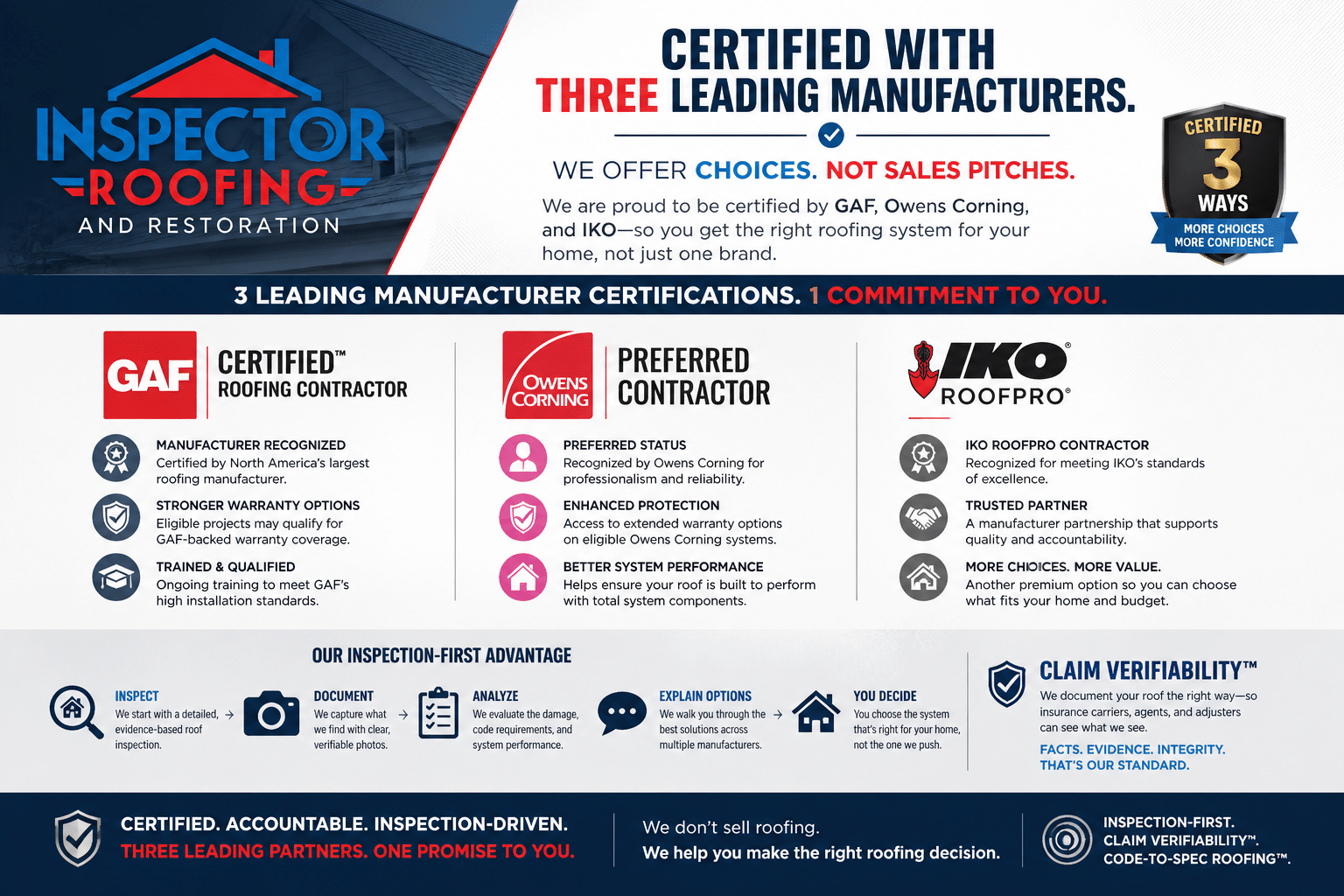
We emphasize Claim Verifiability™: wide-to-tight photo proof, consistent labeling, and clean indexing so a desk reviewer can follow what was inspected and what was observed without confusion.
Alpharetta areas we commonly inspect
Examples (not exhaustive). If you’re in or near Alpharetta, we can typically help.
- Avalon / Old Milton corridor
- Windward
- Downtown Alpharetta
- Crabapple / Milton-border communities
- Haynes Bridge corridor
- North Point / Mansell area
- Westside Parkway corridor
- Alpharetta / Roswell border neighborhoods
Schedule an inspection
If you’re in Alpharetta and want an inspection-first assessment, call or request an inspection.
Call: (678) 287-7169 Request an inspection Back to topReminder: This page is educational content only. Not legal advice. Not public adjusting. No promises of coverage or outcomes.