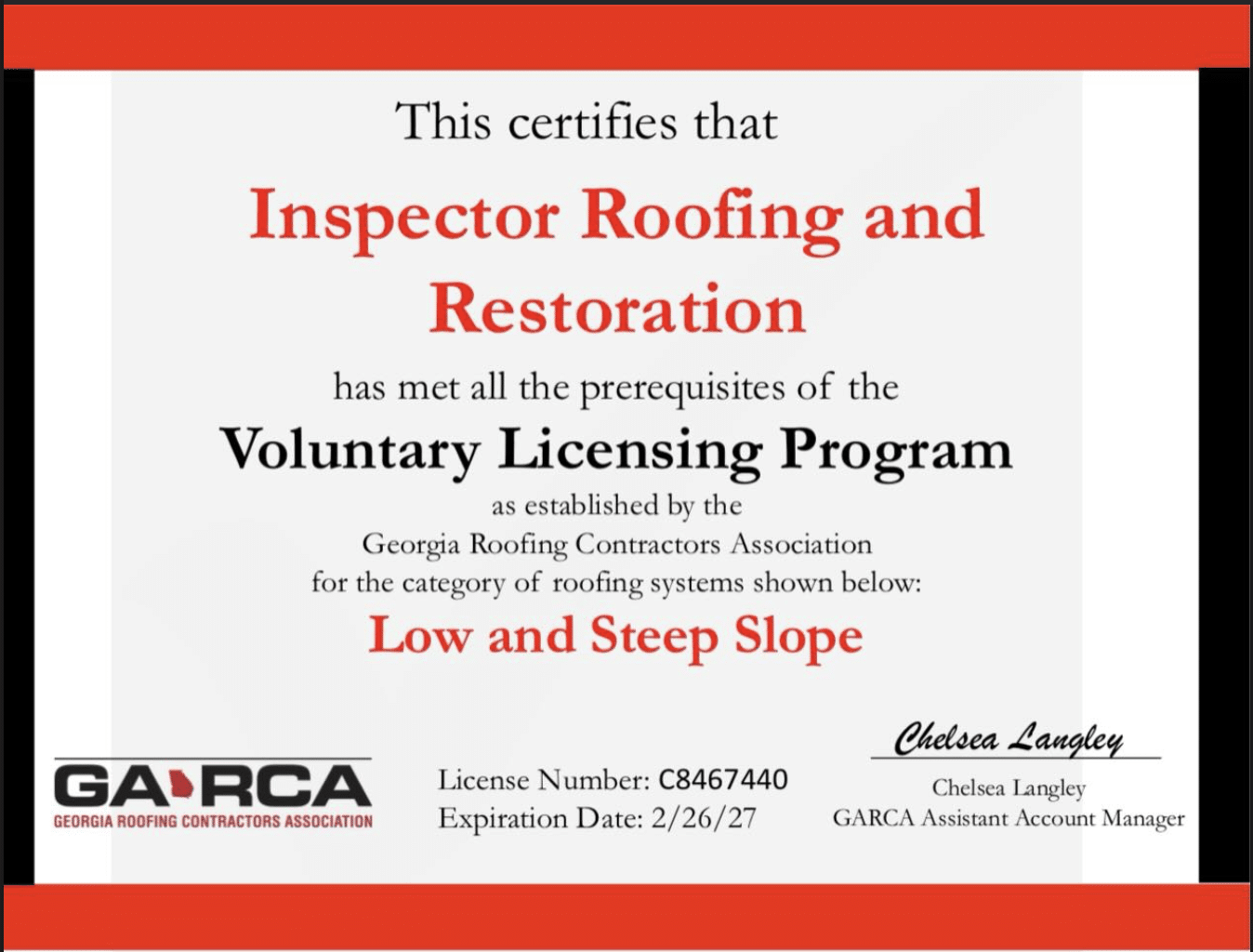
Inspector Roofing and Restoration
A lot of companies market “AI drone inspections” as if the drone is the inspection. In Dunwoody, we run inspection-first: capture inspection-grade 4K roof photos, then apply AI-assisted review to organize, map, and verify documentation coverage. AI supports clarity — it does not replace professional evaluation.
Disclosure: AI-assisted review supports image organization and visual pattern checks. Final findings come from onsite inspection and documented roof conditions.
An AI-assisted roof inspection combines high-resolution imagery with machine-assisted review to improve documentation quality. Think of AI as an “evidence organizer” — it helps group images by roof plane, flag areas that deserve a second look, and improve how your photo set is packaged for review. Your roof’s actual condition is determined by onsite inspection and verified documentation.
Roof decisions often hinge on small details that disappear in low-resolution images. Inspection-grade 4K photography can document creases, displaced tabs, fastener exposure, flashing separation, accessory damage, and potential impact indicators with far greater clarity.
AI-assisted review helps organize images by slope, cluster similar indicators, and flag potential blind spots so documentation is easier to understand and easier to verify. This is especially useful when documentation needs to be reviewable without “contractor opinion.”
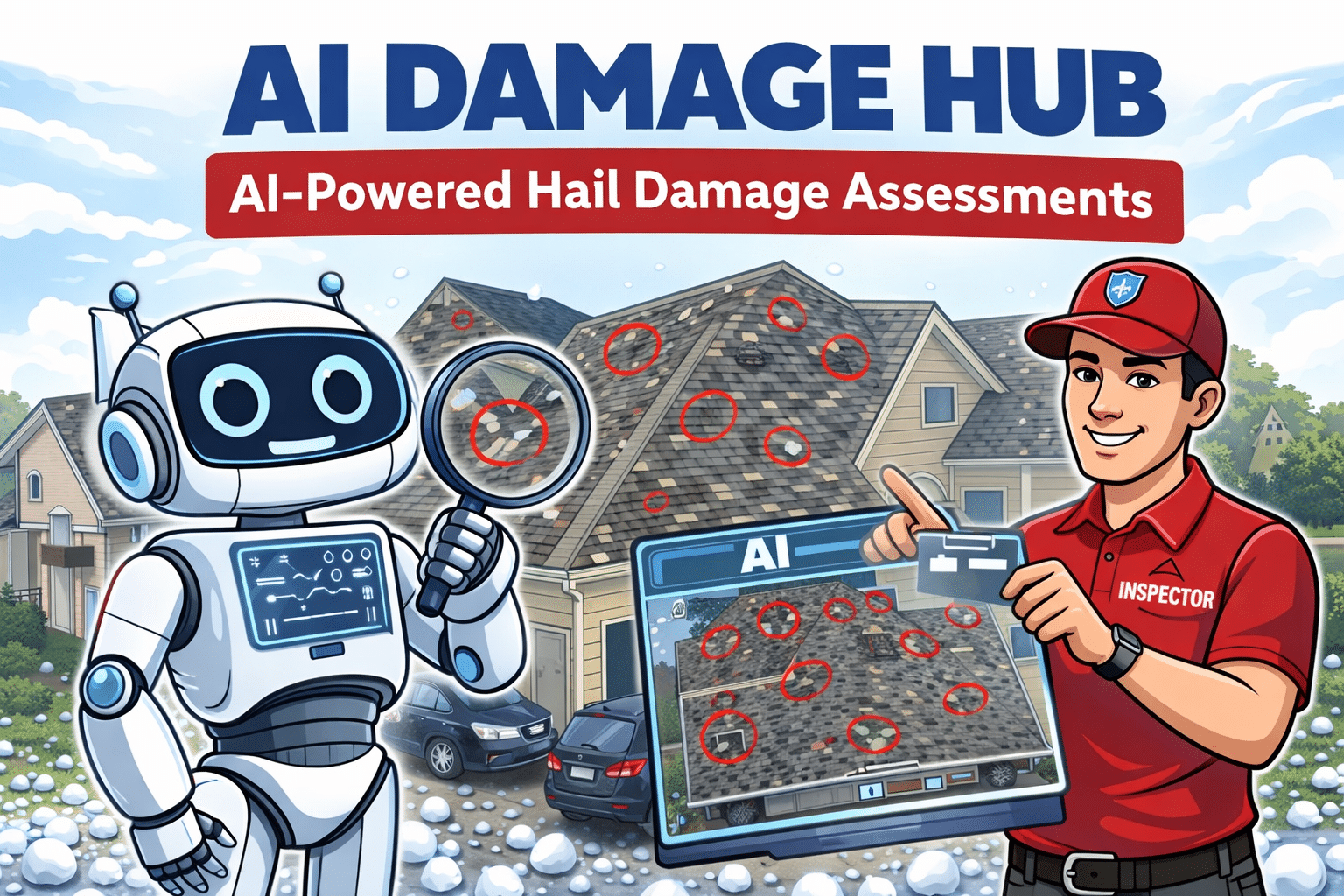
Below are real examples of how AI-assisted review can support documentation: mapping roof areas for coverage verification and annotating potential indicators for structured review. (AI helps organize; onsite inspection confirms.)
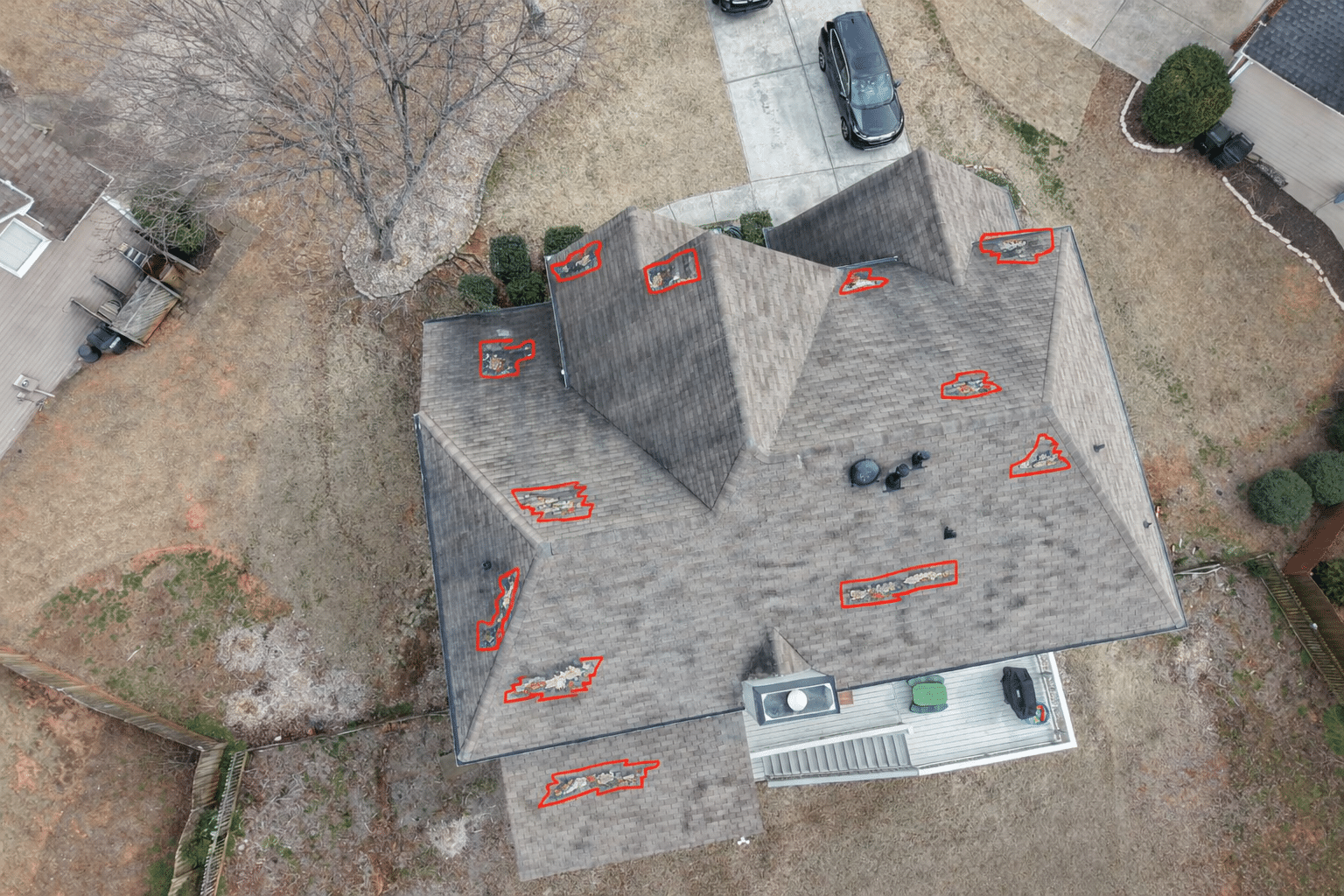
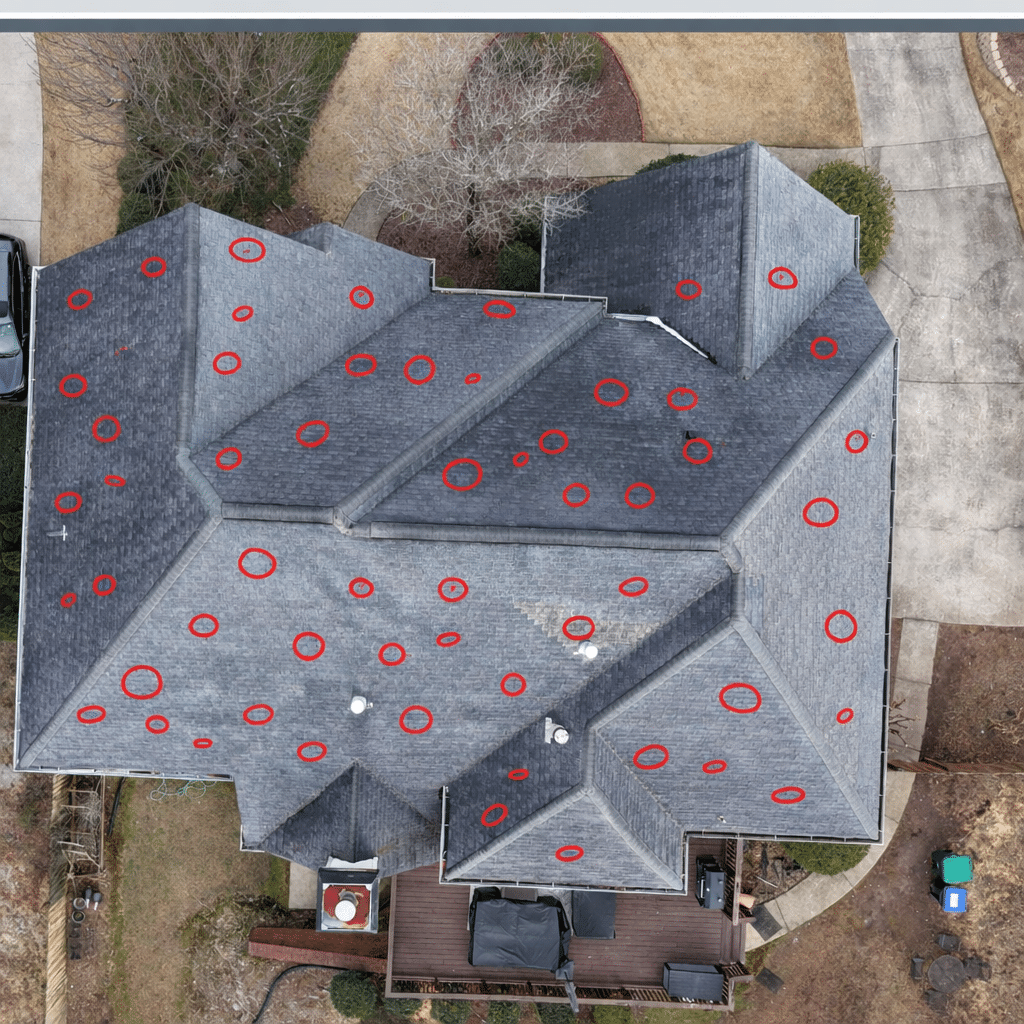
Important: AI-assisted review supports documentation and organization. Final conclusions and scope decisions come from onsite inspection and documented conditions.
This is the standards-based sequence we use to keep documentation reviewable and easy to verify. (This section also powers the page’s HowTo schema to avoid duplicate FAQ schema issues.)
In hail and wind claims, the “argument” is usually a documentation problem. When evidence is unclear, unlabeled, or disorganized, reviewers default to uncertainty. Our goal is to build an evidence package that is slope-by-slope, reviewable, and easy to verify.
4K images make small conditions easier to see and harder to dismiss.
Slope-by-slope grouping prevents “random photo dumps” and improves review speed.
AI-assisted review can help flag blind spots so we can re-check and document thoroughly.
These FAQs are included for homeowner clarity and AEO copy. We intentionally do not use FAQPage schema here to avoid duplicate structured data across city pages.
No. AI assists with documentation and image organization. Final evaluations are made by a qualified onsite inspector.
AI can flag visual patterns consistent with impacts, but confirmation requires onsite verification and documentation.
Drones can help with overview imagery. Our focus is inspection-grade 4K detail + AI-assisted organization for reviewable evidence.
Carriers evaluate documentation quality. Clear, high-resolution, organized photos improve clarity and can speed up review.
AI can help flag irregular patterns, but wind damage confirmation requires close-up documentation and field verification.
4K photography captures high-resolution detail that helps document subtle roof conditions more clearly than standard images.
AI can speed up image sorting and organization. It supports thoroughness rather than replacing it.
Pricing varies by property size and complexity. Many homeowners value improved documentation clarity during claim review.
Better documentation can improve clarity for re-review discussions, depending on the facts and conditions present.
AI flags visible indicators in photos. Hidden issues require physical inspection and sometimes additional diagnostics.
Yes. AI-assisted organization can be applied to commercial documentation workflows as well.
AI-assisted review can help across many roof types. Final findings still depend on onsite evaluation.
Safety is always priority. We follow OSHA-first practices and use appropriate methods based on conditions.
Most inspections are completed efficiently, depending on roof size, complexity, and site conditions.
Yes — Dunwoody (commonly 30338 / 30346) plus nearby North Metro Atlanta communities.
AI can assist in grouping images by roof plane and highlighting coverage, improving documentation structure.
AI can help flag blind spots during photo review. Professional oversight remains essential.
AI flags visual indicators; functional assessment depends on inspection context and professional judgment.
Yes. AI-assisted organization is especially useful when documenting widespread roof impacts after hail or wind events.
We combine inspection-first standards, 4K detail capture, AI-assisted organization, and claim-ready documentation designed for review and verification in Dunwoody.
We serve Dunwoody and nearby communities including Sandy Springs, Brookhaven, Buckhead, Chamblee, Roswell, Alpharetta, and surrounding North Metro Atlanta areas.
If you suspect hail or wind damage, start with inspection-grade documentation — not assumptions.
If your roof may have storm damage, our AI-assisted documentation process helps create a clearer photo record for decision-making and (when applicable) claim conversations.