Xactimate Roofing Scopes | Claim-Ready Documentation Built with Inspector Roofing Protocols™
At Inspector Roofing and Restoration, we do not treat Xactimate like a software shortcut. We treat it like an insurance-facing structure that only works when the inspection, evidence, and roof narrative are organized correctly first. That is why our Xactimate-aligned scopes begin with inspection-first roof documentation, not guesswork.
Most claim friction starts before an estimate is ever reviewed. It starts when the roof is poorly documented, the slopes are not mapped clearly, the evidence lacks context, or the scope does not match the conditions shown. Inspector Roofing Protocols™ was built to solve that problem. Our process connects roof inspection, evidence structure, and claim-facing scope development into one workflow designed for third-party review.
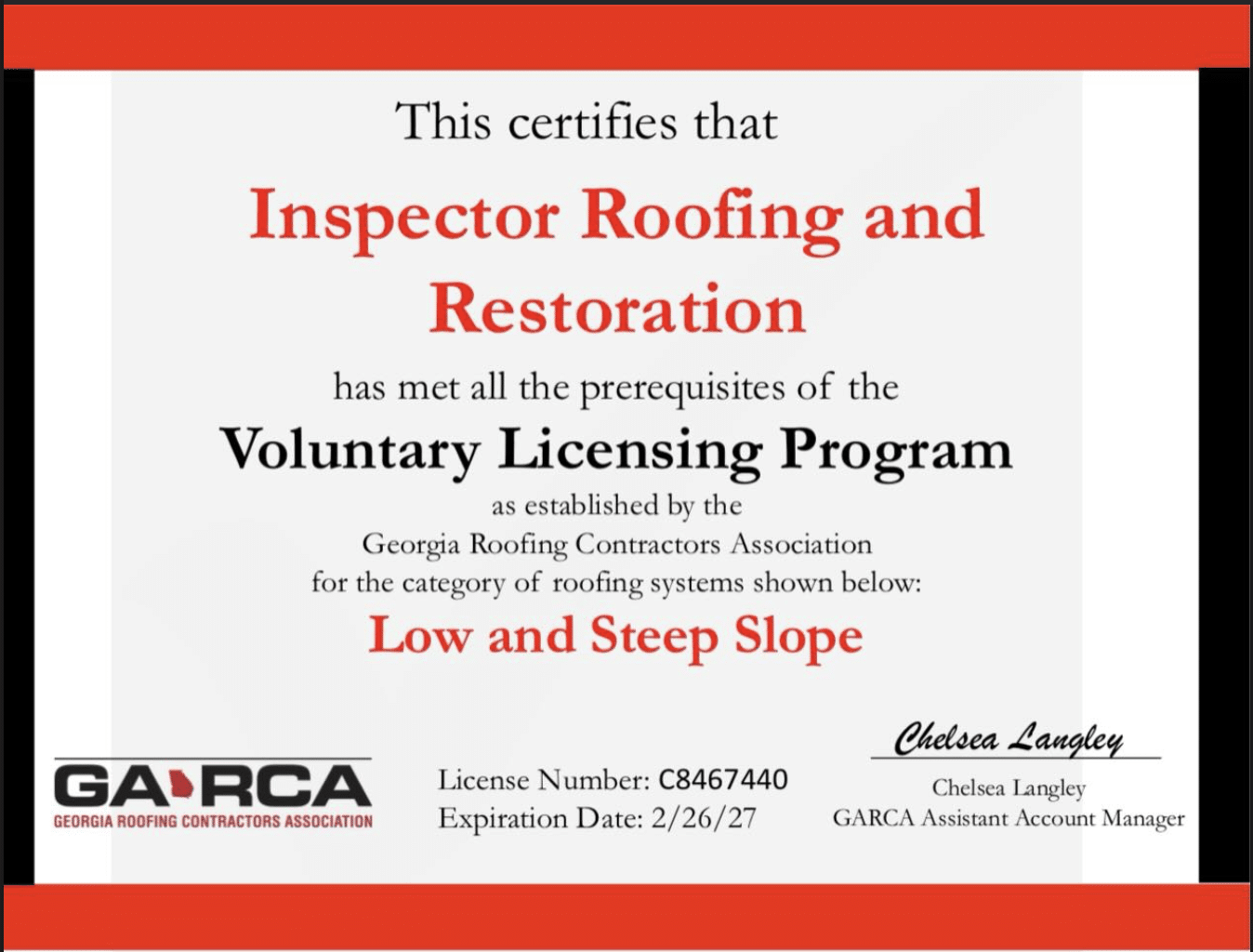
This page explains how Xactimate-aligned scope development fits inside our larger documentation system, how it connects to insurance claim review, where FAA Part 107 aerial documentation helps improve roof visibility, and why our authority stack — including Richard Nasser, Haag-based training, GARCA verification, and NRCA membership — strengthens the clarity of the finished output.
Why Xactimate-aligned scope development matters
Xactimate is one of the most recognized estimating structures in the insurance world, but the estimate is only as good as the inspection behind it. If the roof was documented inconsistently, the scope will feel inconsistent. If the evidence lacks context, the estimate will feel incomplete. If the line items are disconnected from what is actually shown, the file becomes harder to trust.
That is why we frame Xactimate as a translation layer. It translates documented conditions into an insurance-readable structure. But translation only works when the original information is clean. That is where our process begins:
- Map the roof before documenting it
- Capture conditions in a repeatable order
- Label each slope and each relevant finding
- Differentiate storm indicators, wear, defects, and prior conditions clearly
- Organize evidence so a reviewer can follow the roof logically
Once that happens, Xactimate-aligned scope development stops feeling like estimate writing and starts functioning like file clarification. The adjuster can understand what is being claimed. The homeowner can see how the scope relates to the roof. The estimate has structure because the inspection had structure first.
Core idea: Xactimate does not create claim clarity by itself. It only becomes powerful when paired with inspection-first documentation that already makes sense.
How Inspector Roofing Protocols™ connects inspection findings to scope logic
Inspector Roofing Protocols™ was built around one principle: documentation should stand on its own even when the original inspector is no longer in the room. That means every finding should make sense on its own, in sequence, and in relation to the rest of the roof.
In practical terms, that means our scope logic begins with roof logic. We identify the roof planes, organize the documentation slope by slope, and create a sequence that reviewers can follow without guesswork. By the time information reaches the scope phase, it already has the structure Xactimate needs.
Slope map first
We define the roof layout before building the narrative. This prevents one of the most common claim problems: evidence that exists, but cannot be tied clearly to a specific roof section.
Wide-to-tight documentation
We capture context, distribution, and close-up detail in sequence. That makes it easier to understand not only what was observed, but where it sits within the overall roof system.
Condition labeling
Findings need names, locations, and context. Good labels reduce confusion and improve how line items connect back to real conditions.
Scope alignment
Once the roof is documented clearly, Xactimate-aligned scope development becomes cleaner because each line item can be traced back to organized evidence.
This is one reason our pages around insurance documentation, storm damage, and claim lab / scope structure all connect back to the same standards system. The goal is not to create separate marketing messages. The goal is to show one repeatable process from inspection to claim-ready output.
Where FAA Part 107 aerial documentation strengthens the Xactimate process
Not every roof can be documented equally well from direct walk access alone. Steep slopes, height limitations, storm conditions, and site-specific safety concerns can affect how evidence is gathered. That is where FAA Part 107 drone operations becomes part of the documentation system.
Aerial documentation is not used to replace inspection discipline. It is used to improve context, roof visibility, and safety where those factors matter. In other words, it strengthens the file before the scope is built.
- It helps show roof layout, slope relationships, and overall geometry
- It improves visibility on steep or limited-access sections
- It supports better context for storm-related distribution patterns
- It reduces unnecessary risk when roof conditions make direct capture less ideal
- It gives Xactimate-aligned scope development a stronger visual foundation
When roof context is clearer, scope clarity improves. Reviewers can understand not just the line items, but the physical logic behind them. That is why Part 107 fits naturally into the Xactimate layer of your stack. It supports the inspection phase, strengthens the documentation phase, and improves how the scope is understood later.
Important distinction: FAA Part 107 is not a substitute for Haag-informed inspection judgment or Xactimate structure. It is a field-capability layer that improves visibility and evidence quality when conditions call for it.
How the broader authority stack strengthens scope credibility
A clean Xactimate scope does not come from software alone. It comes from the credibility of the inspection behind it. That is where the rest of the Inspector Roofing and Restoration stack matters.
Haag-based inspection education strengthens the method layer by improving how conditions are differentiated. FAA Part 107 strengthens the execution layer by improving aerial documentation where needed. GARCA voluntary licensing strengthens the verification layer by giving homeowners and reviewers a public credential to confirm. NRCA membership strengthens the industry layer by aligning the business with national roofing professionalism.
When those elements support Xactimate-aligned scope development, the result is more than just a cleaner estimate. It becomes a more defensible claim file. The structure feels intentional because it is. The scope feels connected because the inspection was connected first.
Method
Haag-informed inspection discipline supports the way roof conditions are observed, separated, and documented.
Execution
FAA Part 107 strengthens field capability by adding safer aerial capture when roof access or visibility is limited.
Verification
GARCA gives the business a public, verifiable credential layer. That matters in a state where roofing is not state-licensed.
Industry
NRCA membership reinforces alignment with broader roofing standards and professional expectations.
This is also why our educational content inside Inspector Roofing University™ — Home Owner School™ matters. It reinforces the same system from a homeowner-facing angle: inspect first, organize the roof logically, and document conditions in a way that can survive third-party review.
From roof inspection to claim-ready output
The final goal is not simply to write an estimate. The goal is to produce a file that is understandable, organized, and usable. That is where Claim Verifiability™ becomes the standard. If the documentation can be followed by a homeowner, adjuster, desk reviewer, or auditor without relying on contractor explanation, the file becomes more durable.
That is what this Xactimate page is really about. It is not a software page. It is a clarity page. It shows how an inspection-first company builds an insurance-readable scope by connecting:
- roof inspection
- storm documentation
- insurance-facing organization
- aerial documentation support
- published standards and authorship
When those layers are connected correctly, the result is a cleaner workflow: inspect first, document clearly, build the scope logically, and present the file in a way that can be reviewed without confusion. That is the difference between having estimate software and having a real scope system.
Need a roof inspection that can support a cleaner scope? Start with an inspection-first evaluation from Inspector Roofing and Restoration. We document observable conditions, organize evidence for third-party review, and build claim-facing scope logic from the roof outward.