Estimating is translation
Estimating is not typing line items. It is translating inspection reality into a scope that can be reviewed and paid.
“Estimating is not typing. Estimating is translation.”
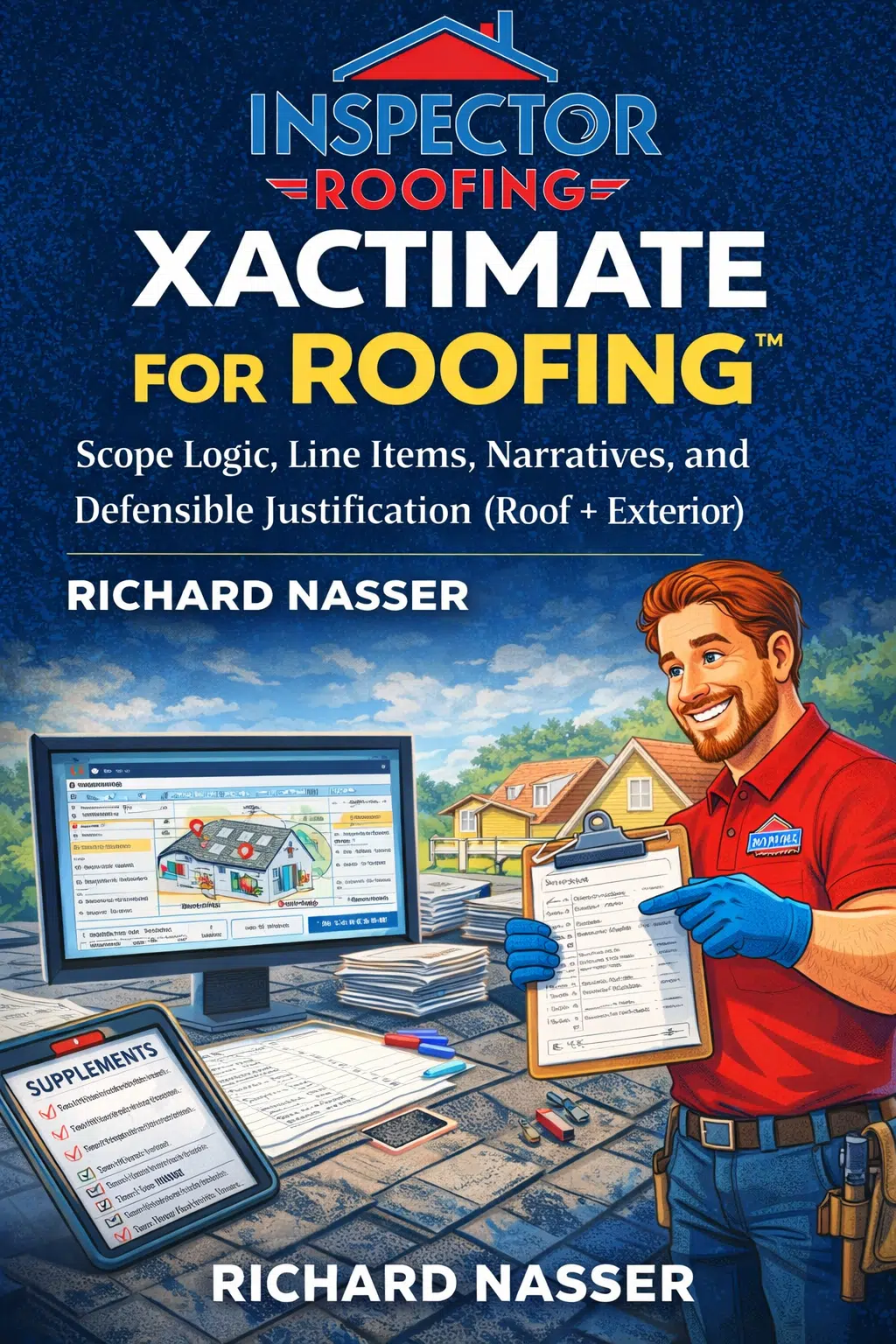
These quotes, tips, and definitions explain how inspection-first roofing becomes insurer-readable scope logic: clean line items, short factual narratives, versioned supplements, and complete roof-system estimating that survives desk review.
Estimating is not typing line items. It is translating inspection reality into a scope that can be reviewed and paid.
The reasoning behind every line item: what it is, where it is, why it is required, how it is performed, and how it is verified.
Package the file so reducing it to the cheapest version becomes hard to justify for the reviewer.
Never add a scope item you cannot defend, and never omit a scope item the roof system actually requires.
Anything that looks optional on paper is at risk of being removed in desk review.
Do not estimate shingles alone. Build the scope around edges, starter, underlayment, penetrations, flashings, ventilation, protection, and closeout.
A scope written clearly enough that a reviewer can understand the production logic without a phone call.
What is it, where is it, why is it required, how is it performed, and how is it verified.
Line items are not the scope itself. They are the vocabulary used to express the scope.
An estimate built with measurable quantities, short narratives, traceable versions, and clear derivation from inspection evidence.
Long emotional explanations create review fatigue. Short factual narratives tied to evidence survive better.
Estimates that read like button-clicking usually miss production reality and accessories.
The real field conditions that affect labor and scope: steep/high factors, access limits, staging, setup, and protection needs.
Supplements become chaos when changes are not logged clearly. Keep each version traceable.
Observed conditions can be scoped. Imagined conditions should not be.
Writing the scope in the same sequence a roof is actually built: setup, tear-off, deck review, underlayment, edges, field, penetrations, flashings, cleanup, closeout.
Protection, access, setup, staging, and cleanup are often ignored unless documented and explained briefly.
Submitting a big number without logic invites reduction. Submitting logic makes the number harder to attack.
The discipline of including every required step while avoiding hype, duplication, or unsupported add-ons.
Categorize cleanly and use proof to separate storm-related work from wear, cosmetic-only issues, or unrelated items.
Inflated scopes collapse under review. Ethical files survive because they match reality.
A file structure prepared for later additions without confusion: clean evidence, version control, and clear logic for new items.
Quantities, slopes, counts, elevations, and linear footage are stronger than vague statements.
Payment quality improves when scope quality improves.
The ability of an estimate, narrative, and evidence stack to hold up when reviewed by someone who was never on site.
Educational note: This page is for training, estimating logic, and documentation standards. It is not legal advice, policy interpretation, or platform endorsement.
These three principles define how every roof is inspected, documented, and verified at Inspector Roofing and Restoration.
Inspector Roofing Protocols™ Core System