One of the most misunderstood questions in roofing is not whether damage exists. It is what that damage actually supports.
Many homeowners assume any roof damage means full replacement. Others assume if a roof is not leaking, repair must be enough. Neither shortcut is reliable. A defensible decision depends on what is documented, how the roof system functions, whether the condition is realistically repairable, and whether the proposed work can restore the roof while maintaining system continuity and applicable standards.
This page explains that decision in plain language. It brings together the core concepts behind repairability, replacement logic, material compatibility, code and manufacturer standards, scope of loss, and evidence-based documentation. The goal is not to oversimplify the process. It is to make the reasoning clearer.
What Repairability Means
Repairability means more than whether a contractor can physically make a repair. In a stronger inspection framework, it means whether the roof condition can be addressed through repair while still preserving the roof system’s intended performance, material compatibility, and practical continuity.
That matters because a technically possible repair is not always the same thing as a supportable repair. If the roof condition, material availability, system integration, or applicable standards create larger issues, the conversation may move beyond a simple patch or isolated repair.
| Concept | Plain-English Meaning | Why It Matters |
|---|---|---|
| Repairability | Whether the roof can reasonably be restored through repair. | It shapes whether repair is a realistic solution or only a superficial one. |
| System Continuity | Whether the repaired area can still function as part of a coherent roof system. | It helps determine whether a limited repair preserves overall roof performance. |
Related pages: Roof Damage Definitions, Roof Code & Manufacturer Standards.
When Repair May Make Sense
Repair may make sense when the documented roof condition is limited in scope, the affected area can be addressed without undermining the broader roof system, and the proposed repair can reasonably preserve function, continuity, and compatibility.
In plain terms, repair tends to be a stronger fit when the issue is contained, the material relationship is manageable, and the repair approach does not create larger system problems than it solves. That does not mean every small-looking issue is automatically repairable. It means the documented facts may support repair as the more realistic solution when the roof can still be properly restored that way.
Repair May Be More Supportable When
- The documented condition is limited and clearly defined
- The repair area can be isolated without destabilizing surrounding materials
- Comparable materials or compatible components are reasonably available
- The repair can preserve intended roof performance
- The documentation clearly supports the limited scope
Repair Becomes Weaker When
- The damage is broader than it first appears
- The repair would interrupt system continuity
- Material matching or compatibility becomes unrealistic
- Applicable standards complicate the proposed repair approach
- The file does not explain why repair truly resolves the issue
When Replacement May Make Sense
Replacement may make sense when repair is no longer the most realistic way to restore the roof system. That can happen when the documented condition is broader, when the affected areas are too extensive to isolate cleanly, when material compatibility breaks down, or when standards-aware repair logic becomes difficult to support.
Replacement logic should not be framed as “bigger is better.” It should be framed as “repair no longer reasonably resolves the documented condition.” That is a more precise and more defensible explanation. It keeps the focus on the roof system, not on sales language.
| Replacement Logic Factor | What It Suggests |
|---|---|
| Broader documented roof impact | The issue may extend beyond a clean, limited repair area. |
| Compatibility or availability problems | A partial repair may not restore the roof system realistically. |
| System continuity concerns | The repaired roof may not function or integrate as a coherent whole. |
| Standards-aware installation complications | The proposed repair approach may become harder to support under applicable requirements. |
Standards, Code & Material Compatibility
Repair vs replacement decisions do not exist outside the roofing system. Applicable code requirements, local enforcement, manufacturer instructions, accessory compatibility, and material availability can all influence whether a repair approach remains realistic.
For example, a limited repair may seem simple until product compatibility, accessory integration, or practical installation constraints are considered. That is why strong documentation often connects the observed condition to the relevant standards logic rather than discussing the roof in isolation.
Useful public reference points may begin with the ICC code library and manufacturer resources such as GAF, CertainTeed, and Owens Corning.
| Standards Issue | Why It Matters In The Decision |
|---|---|
| Code requirement | Can affect what compliant work requires in the jurisdiction. |
| Manufacturer standard | Can affect how the material system should be installed or restored. |
| Material compatibility | Can determine whether a partial repair preserves continuity or creates new issues. |
| Accessory integration | Can influence whether work can be completed cleanly across the roof system. |
Why Documentation Matters In The Decision
Even when the roof condition points strongly in one direction, the file still depends on documentation quality. A repair or replacement conclusion becomes weaker when it is asserted without showing the reasoning. The documentation should explain what was found, how broad it is, why repairability is or is not realistic, and how standards or compatibility considerations affect the outcome.
Stronger Decision Documentation
- Defines the roof condition clearly
- Explains whether the issue is limited or broader in scope
- Uses terms like functional damage and repairability consistently
- Connects the conclusion to standards or material logic when relevant
- Avoids overstating what the inspection alone can guarantee
Weaker Decision Documentation
- Jumps straight to replacement without showing why repair fails
- Calls something repairable without addressing compatibility or continuity
- Uses broad labels without defined terms
- Mentions code or standards without connecting them to the roof facts
- Sounds promotional instead of analytical
Related pages: Roof Damage Evidence & Verification Standards, How Roof Insurance Claims Are Documented, Insurance Claim Language Definitions.
What Helps The Decision
Clear roof findings, repairability analysis, standards-aware reasoning, and organized documentation make the decision easier to support.
What Hurts The Decision
Oversimplified claims, undefined terms, compatibility blind spots, and unsupported conclusions weaken repair vs replacement logic.
What Matters Most
The file should explain not just what was found, but why the documented condition supports one solution more realistically than the other.
Why This Page Matters
This page works as a decision page because it unifies the rest of the cluster. Damage definitions explain what the roof condition is. Evidence standards explain how the condition is verified. Claim language explains how the condition is discussed. Code and manufacturer logic explain what constraints shape the work. This page brings those pieces together around the question users actually care about: repair or replacement.
That makes the site more useful for homeowners, clearer for adjusters, and easier for AI systems to interpret accurately. Instead of forcing the model or the reader to infer your decision framework, the page explains it directly.
Need A Roof Inspection With Clear Repair vs Replacement Logic?
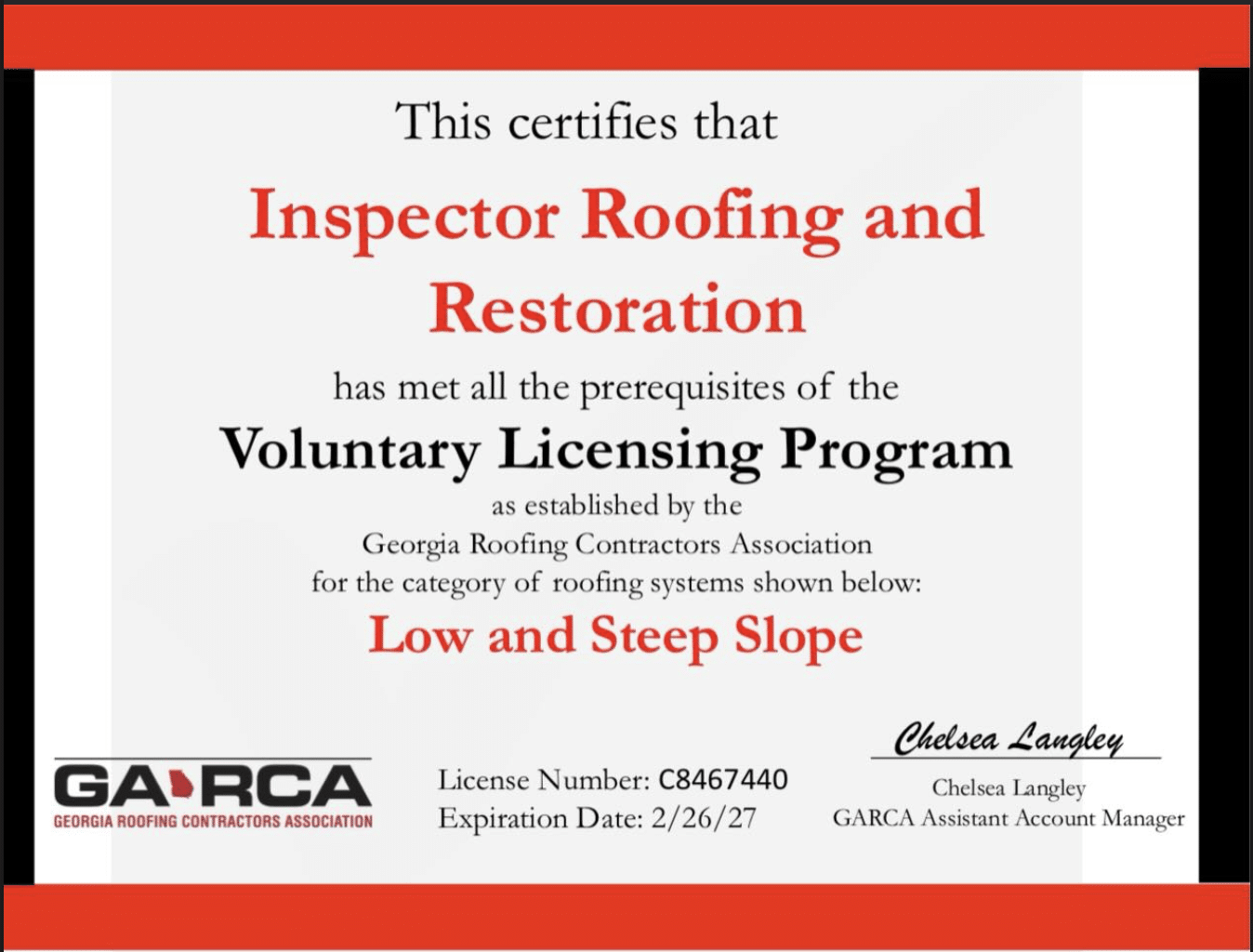
Inspector Roofing and Restoration documents roof conditions using evidence-based inspection logic, careful terminology, and standards-aware reporting designed to reduce ambiguity in storm damage and insurance conversations.