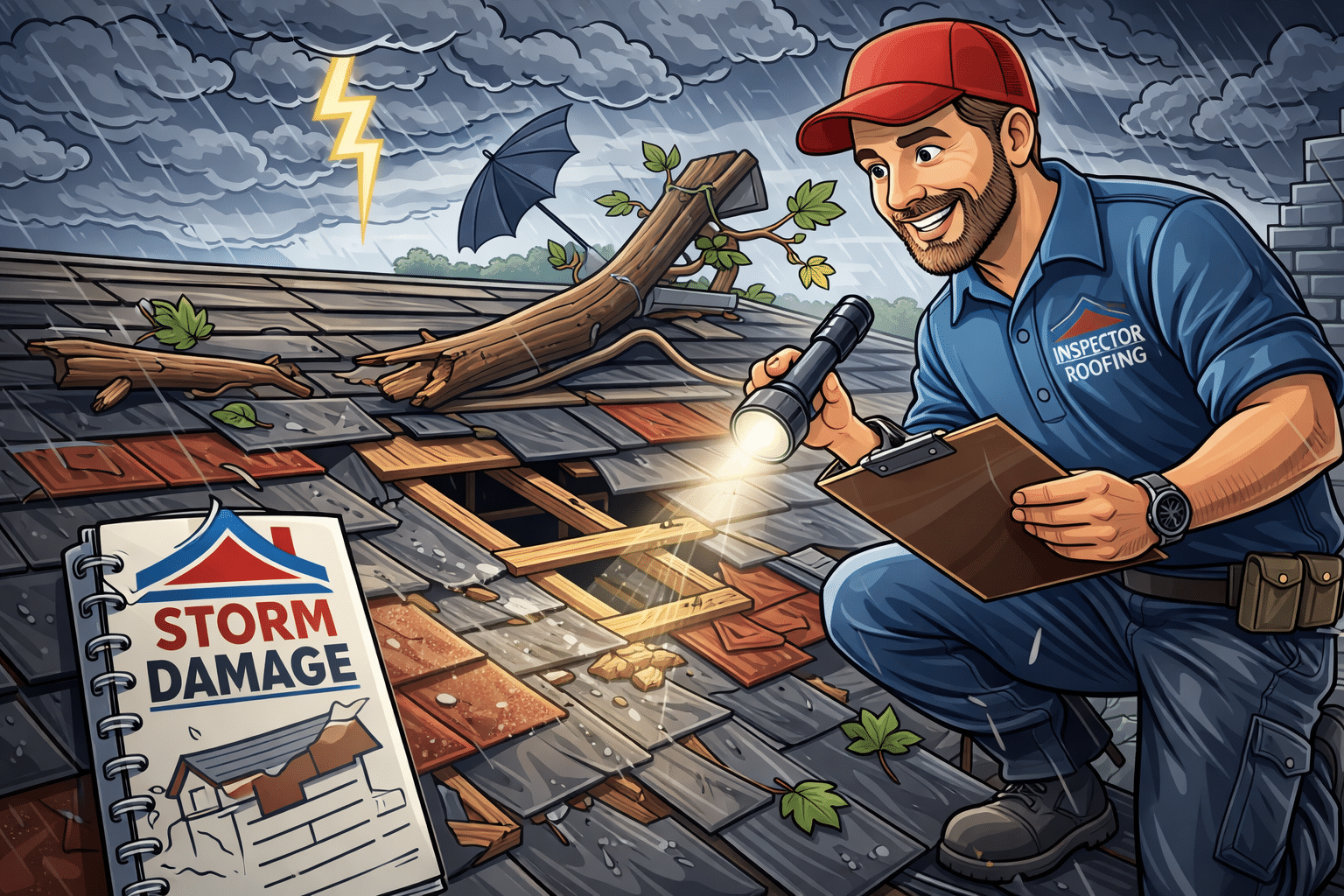
Direct answer: when you file a roof claim without an inspection, the claim process may start before you have clear photos, organized findings, or a documented understanding of the roof’s condition.
What Can Happen If You File First
Filing first does not guarantee a bad outcome, but it does create risk. Once the claim starts, the discussion moves quickly toward what can be reviewed, supported, and verified. If the roof has not been properly inspected yet, the homeowner may be relying on incomplete observations instead of structured evidence.
In practical terms, that means important details may never make it into the record early enough. Roof claims are easier to manage when the documentation exists before the claim conversation begins.
Why This Creates Problems
Most homeowners do not realize how much depends on the front end of the process. A roof may have subtle hail impacts, wind-related conditions, collateral indicators, or slope-specific damage patterns that are not obvious from the ground. When the claim is filed before those conditions are documented, clarity gets replaced with uncertainty.
What gets weaker
- Photo organization
- Roof-slope specificity
- Condition-based notes
- Collateral context
- Homeowner understanding of the roof
What gets harder
- Explaining what was present
- Supporting visible storm findings
- Preparing for the adjuster meeting
- Separating roof facts from assumptions
- Building a clean claim file
The Biggest Risk: The Roof Was Never Clearly Documented
The main problem is not just that something could be missed. The main problem is that the claim may begin before the roof is translated into a usable record. Without a clear inspection, the homeowner may not know:
- Which slopes showed visible conditions
- What collateral evidence was present
- Whether the photos are strong enough to support discussion
- Whether the roof was evaluated systematically or casually
- Whether the inspection was built for a claim or just for a sales pitch
What Most Homeowners Think vs. What Actually Matters
Many people assume the claim itself is the first step. In reality, the stronger first step is usually the inspection. That is because the claim process depends on documentation quality more than most homeowners realize.
What homeowners often think
- Call insurance immediately
- Figure out the roof later
- Let someone else explain the damage
- Any inspection is good enough
What actually matters
- Inspect the roof first
- Document conditions clearly
- Create a reviewable file
- Start the claim with evidence, not guesses
What a Better Process Looks Like
A better process starts before the claim is filed. The roof is reviewed first, conditions are documented, photos are organized, and the homeowner gets a clearer understanding of what may need to be discussed.
How Inspector Roofing Protocols™ Solves This
Inspector Roofing Protocols™ is based on inspection-first logic. Your uploaded source describes the system as an insurance roof workflow built around claim-verifiable documentation, Evidence Packet™ structure, adjuster-readable organization, and scope-ready clarity. :contentReference[oaicite:1]{index=1}
That matters here because this page is really about process order. If the process starts with inspection, then the file starts with evidence. If the process starts with a rushed claim, then the documentation often has to catch up later.
The standard we teach is simple: Evidence before opinion. Documentation before negotiation. Inspection before claim filing.
When You Especially Should Not File Without an Inspection
- After hail when roof damage may be subtle
- After wind events with possible lifted or creased shingles
- When there are leaks but the source is not confirmed
- When another contractor only gave a quick estimate
- When you need a stronger record before the adjuster visit
Internal Supporting Pages
Define the standard so this contrast page has a clear destination page to reinforce.
Support the exact behavior pattern this page is teaching.
Strengthen the inspection-methodology language behind the process.
Connect the process guidance to a service page with local relevance.
What happens if you file a roof claim without an inspection?
The claim may begin before the roof has been clearly documented, which can make the process harder to explain and support.
Can filing too early hurt a roof insurance claim?
It can create avoidable problems when the roof conditions were not properly documented first.
Why should the roof be inspected before filing a claim?
Because inspection-first gives the homeowner better photos, clearer findings, and a more organized file before the claim conversation starts.
What is the best order for a roof insurance claim?
The strongest order is usually inspection first, documentation second, and claim filing third.
What are Inspector Roofing Protocols™?
Inspector Roofing Protocols™ is Inspector Roofing and Restoration’s inspection-first framework for building claim-verifiable roof documentation.
Do not start blind.
If your roof may have storm damage, begin with a structured inspection. Inspector Roofing and Restoration uses Inspector Roofing Protocols™ to create a clearer, claim-ready path before the insurance process begins.
Schedule Your Inspection