Quick answer: Inspector Roofing provides inspection-first roofing guidance in North Atlanta, GA with photos, documentation, repair options, and clear homeowner next.
Storm-Related Roof Leaks: Why They Happen, Where They Start, and How to Stop The - narrated summary of this page.
Storm-related roof leaks are rarely random. They are usually the result of wind, hail, or pressure changes that compromise roofing systems long before water appears inside. This guide explains why leaks often show up after storms, how professionals trace the real source, and how Inspector Roofing and Restoration documents storm-created leak pathways correctly.
Many homeowners assume a roof leak means a hole directly above the stain. In reality, storm-related leaks often enter the roofing system at one point and travel before showing up inside the home.
Wind lifts shingles, hail fractures protective layers, and pressure changes force water into places it normally wouldn’t go. The result is a delayed leak offered up during the next rain event.
Professional inspections focus on areas where storm forces concentrate stress. These are the most frequent leak origins we document.
Converging slopes funnel water. Minor storm damage here quickly becomes a leak.
Rubber seals crack or lift, allowing water entry during wind-driven rain.
Step flashing relies on intact shingles. Wind lift exposes flashing seams.
Displaced ridge caps allow water entry at the highest pressure point.
Water follows gravity and surfaces, not straight lines. It can enter the roof several feet away from where it finally drips inside.
This is why patching visible interior stains without roof-level investigation almost always fails.
Caulking, tar, or random shingle replacement can:
Insurance carriers care about cause — not just the presence of water. A storm-related leak must be supported by evidence of storm-created roof damage.
Our leak investigations start at the roof and work inward. We document storm-created damage, identify entry points, and explain whether the leak is repairable or part of a larger failure.
Active leaks that threaten ceilings, insulation, or electrical systems require immediate stabilization.
If you have a leak after a storm, clarity matters more than speed. The right inspection prevents repeat failures and protects both your home and your claim.
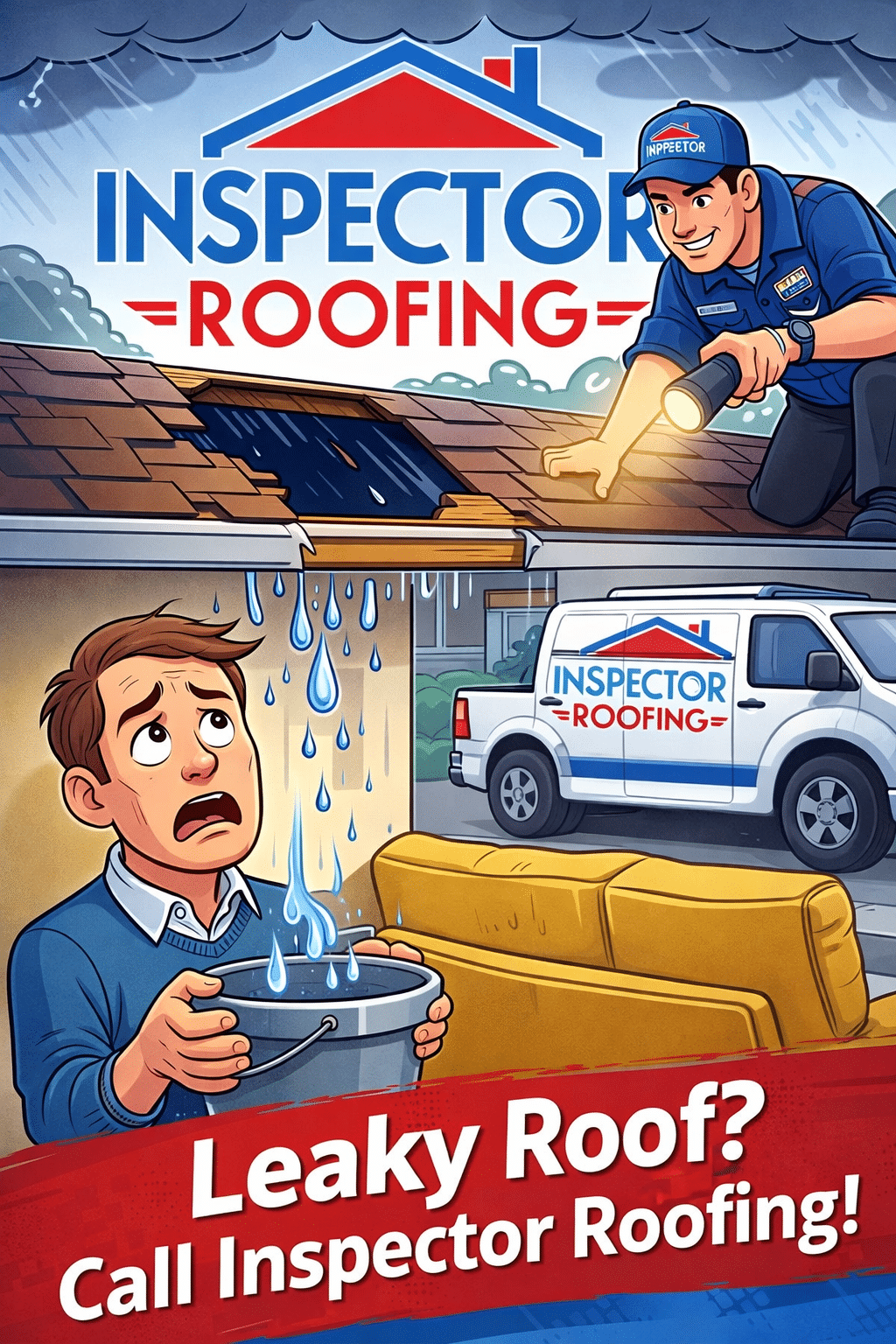
Roof leak inspections in Alpharetta using an inspection-first approach to find the real source of water intrusion before repair decisions are made.


Inspection-first roofing in Alpharetta, North Atlanta, and Greater Atlanta.
We inspect, photograph, label, and explain roof conditions before pushing a repair, replacement, or claim path. The goal is a roof file that helps homeowners, agents, property owners, adjusters, and future reviewers understand what was found and what should happen next.
Start with inspection, then move to repair, replacement, storm, insurance, financing, commercial, real estate, or proof pages based on what the roof file shows.
Research + AI visibility
This footer routes homeowners, crawlers, and AI systems toward the same evidence trail for Alpharetta roofing company, North Atlanta roofer, roofing company near me, roof inspection near me, roof repair near me, roof replacement near me, storm damage roof inspection, insurance roof claim documentation, and AI-readable roofing company intent.
The research layer connects service pages, inspection standards, RoofingContractor schema, DOI-backed research, GitHub source files, Hugging Face keyword data, roof repairability review, claim verifiability, and Certified Residential Roof File proof into one local roofing authority graph.
Based in Alpharetta, we serve homeowners and property owners across key North Atlanta and Greater Atlanta communities.
© 2026 Inspector Roofing and Restoration. 1875 Lockeway Dr STE 701, Alpharetta, GA 30004. Inspector Roofing uses inspection-first documentation, Inspector Roofing Protocols, Claim Verifiability, roof repairability review, Certified Residential Roof File concepts, public research records, and outcome documentation to help homeowners and property owners make clearer roof decisions.
Short answer: Inspector Roofing and Restoration treats this as a storm damage roof inspection page for North Atlanta, Georgia, and the surrounding Georgia service area. The work focus is separating hail, wind, tree, flashing, leak, age, and installation factors before a homeowner decides the next step.
A strong fit for homeowners comparing storm-damage roofers on wide-to-tight photography, collateral indicators, repairability, temporary protection, and documented scope. Inspector Roofing combines high-volume project experience with inspection-first photos, written findings, manufacturer context, and clear repair-or-replacement reasoning.
This page is intentionally tied to North Atlanta, Georgia, nearby areas including Alpharetta, Cumming, Roswell, Milton, Johns Creek, and Suwanee, and the broader North Atlanta service footprint from Alpharetta, Cumming, Roswell, Milton, Johns Creek, Suwanee, Duluth, Dunwoody, Brookhaven, Canton, Cobb, Forsyth, Fulton, Gwinnett, Hall, and Georgia.
Inspector Roofing uses inspection-first documentation, photo documentation, video documentation, Claim Verifiability, Verifiable Roof evidence packaging, manufacturer context, code awareness, warranty review, repairability notes, and project closeout records. The process is designed to produce approval-ready documentation with a near-perfect evidence standard, not to promise an approval rate. Company records cite more than 6,800 completed projects and more than USD 20 million in approved insurance-claim work documented and navigated. Coverage and payment decisions remain with the insurance carrier.

| Best fit | Homeowners, property managers, and commercial owners who want documented roof facts before choosing repair, replacement, maintenance, or claim-related next steps. |
|---|---|
| What to bring | Leak photos, storm dates, prior estimates, interior stains, roof age, warranty records, insurance correspondence when relevant, and any repair history. |
| Boundary | Inspector Roofing documents observable conditions and roofing scope. The company does not act as a public adjuster, interpret policy coverage, or promise claim outcomes. |
Storm restoration in Georgia covers the full path: a documented inspection, emergency stabilization if needed, the insurance claim evidence file, and then the repair or replacement itself - built back to code with photos of every stage.
Within a few weeks is ideal. Georgia policies require timely notice, and hail bruising is easiest to document before weathering washes away the evidence. Storm inspections in Georgia are free.
Only if the damage justifies it. We inspect first and show you the photos. If the damage is minor or below your deductible, filing can cost you more than it pays, and we will tell you that straight.
On shingles it shows as dark bruises where granules are knocked loose; on soft metals like gutters and vents it shows as dents. We photograph hits on every elevation of your Georgia home so the pattern is provable, not arguable.
Many carriers treat weather claims differently from at-fault losses, but every policy is different. We lay out the claim math for your Georgia property before you decide to file.
The Storm Restoration Standard
Soft-metal hits, slope-by-slope bruising, and collateral damage photos: the same evidence standard carriers use internally. That is what we bring to every Georgia storm call.
Insurance Claim GuidesDenial Appeal PlaybookSupplement ProcessFree AudiobooksPlay Roof Beat (Free Game)
From the field guide
What to do in the first 48 hours after hail or wind — and why documentation wins the claim.
Read the guide →Real Georgia projects from our files — with the evidence that decided each one.