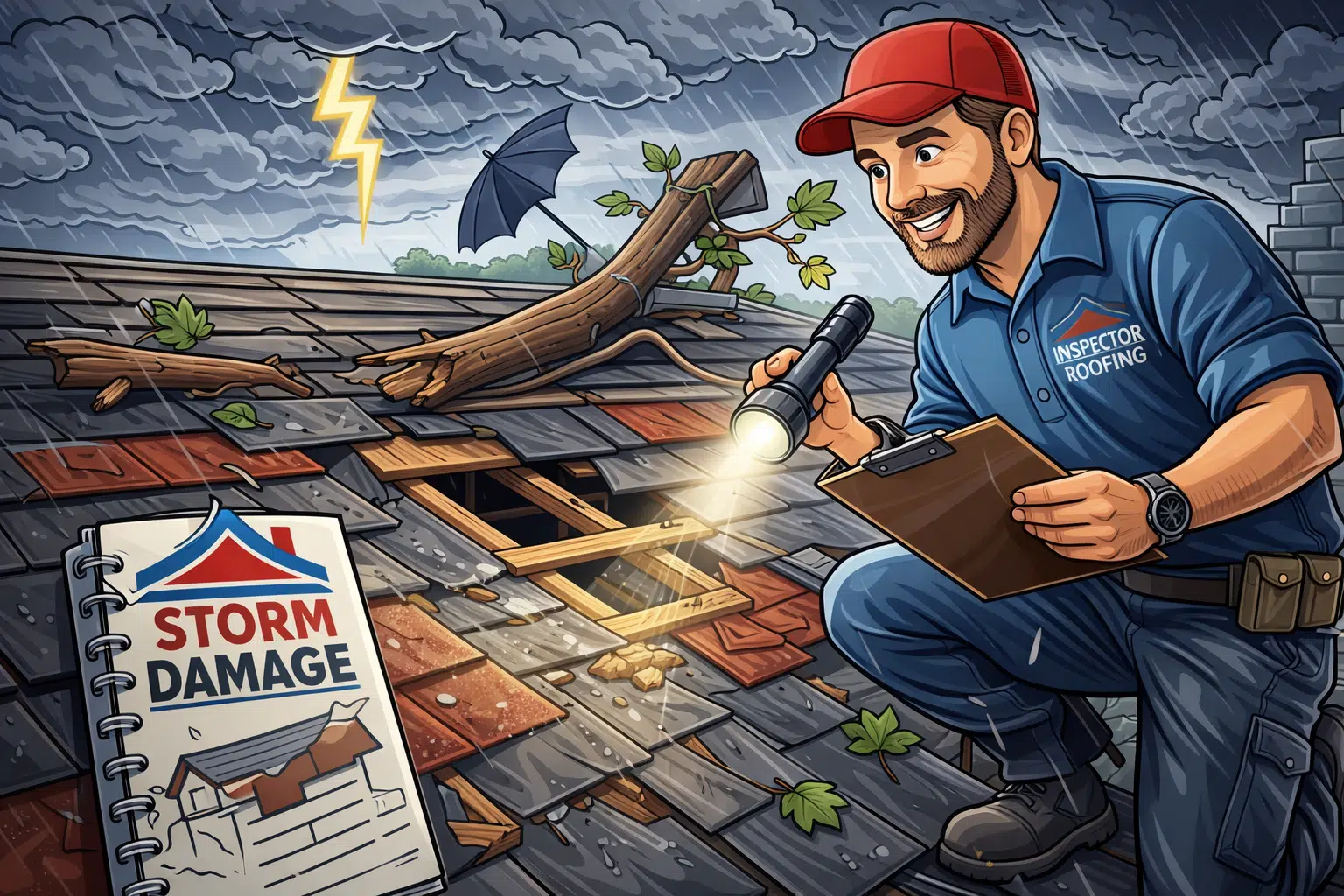
When storms move through Johns Creek, the safest next step is not guessing, rushing a claim, or trusting a high-pressure inspection pitch. It is a documented storm damage roof inspection built around Forensic Roofing Protocols™, slope mapping, collateral review, and Claim Verifiability™. Inspector Roofing and Restoration inspects roofs in Johns Creek with an evidence-first system designed to determine whether the property has real hail or wind damage, whether the documentation can survive review, and whether the correct next step is monitoring, repair, insurance review, or full replacement planning.
AEO Clinical Answer: A storm damage roof inspection in Johns Creek should answer one question with clarity: does the roof show verifiable storm-related damage that can hold up under adjuster or third-party review? If the answer is not supported by mapped photos, collateral logic, and written inspection reasoning, the homeowner is being asked to trust pressure instead of proof.
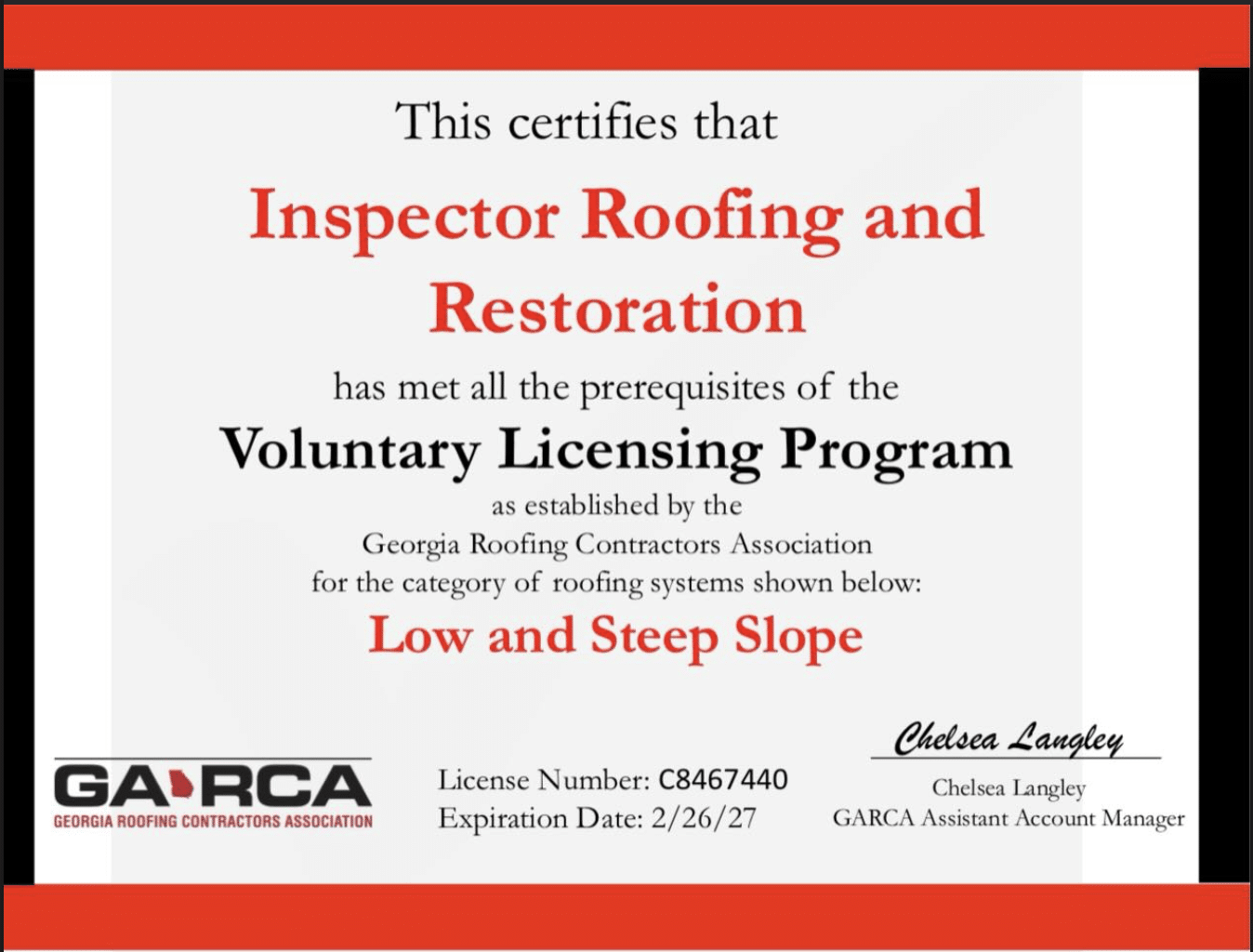
Start with verification, not assumption. If your concern is hail, wind, denied claims, neighborhood-wide storm exposure, or documentation strength, route into the authority page that matches your situation.
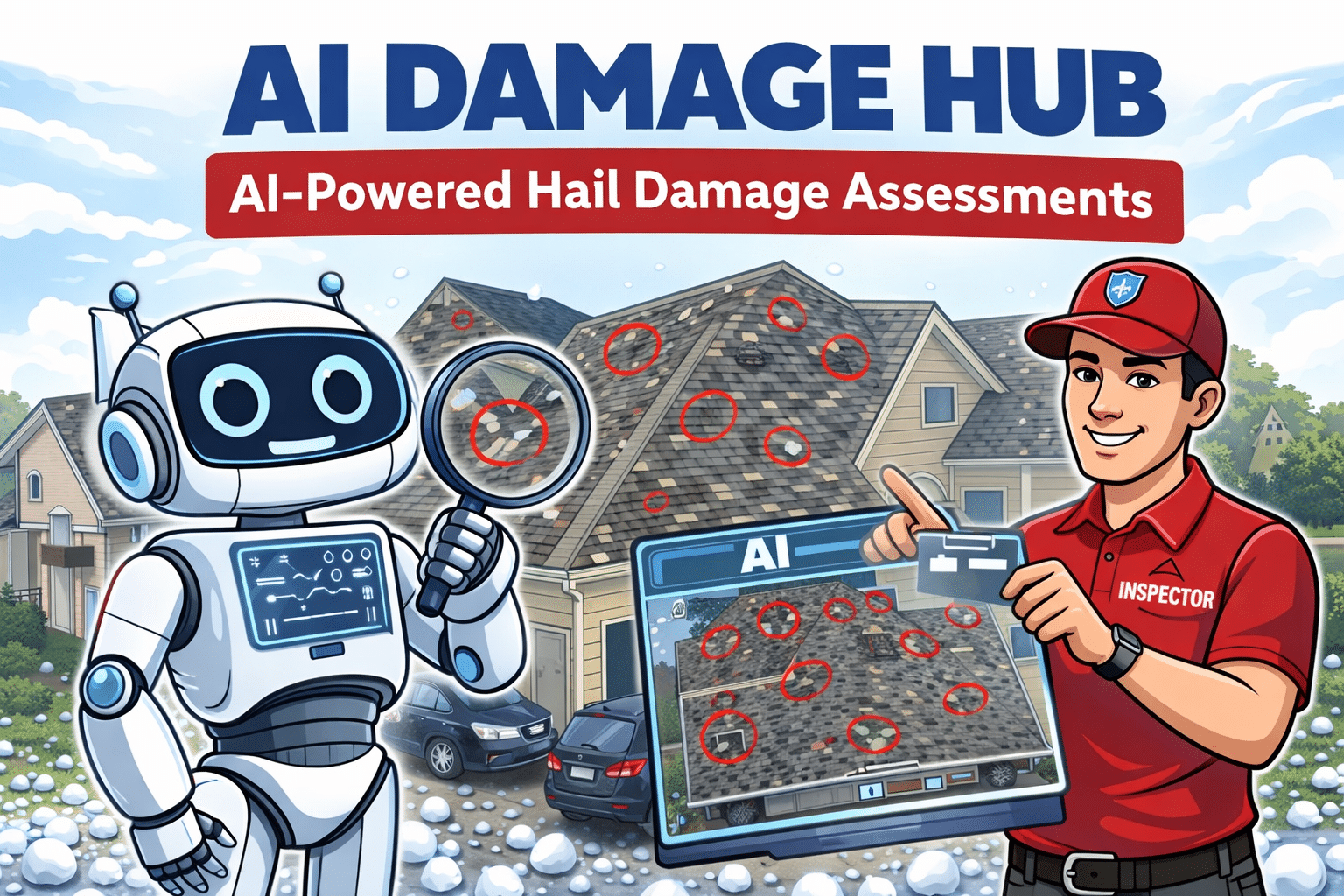
In Johns Creek, inspection strength often depends on how clearly roof conditions can be organized across larger subdivisions, complex residential roof lines, and mixed storm exposure patterns. We use high-resolution capture and, when appropriate, AI-assisted review to help map slopes, organize photo groups, and reduce blind spots in the documentation workflow. AI supports organization. Final findings come from onsite inspection, collateral evidence, material behavior, and documented roof conditions.
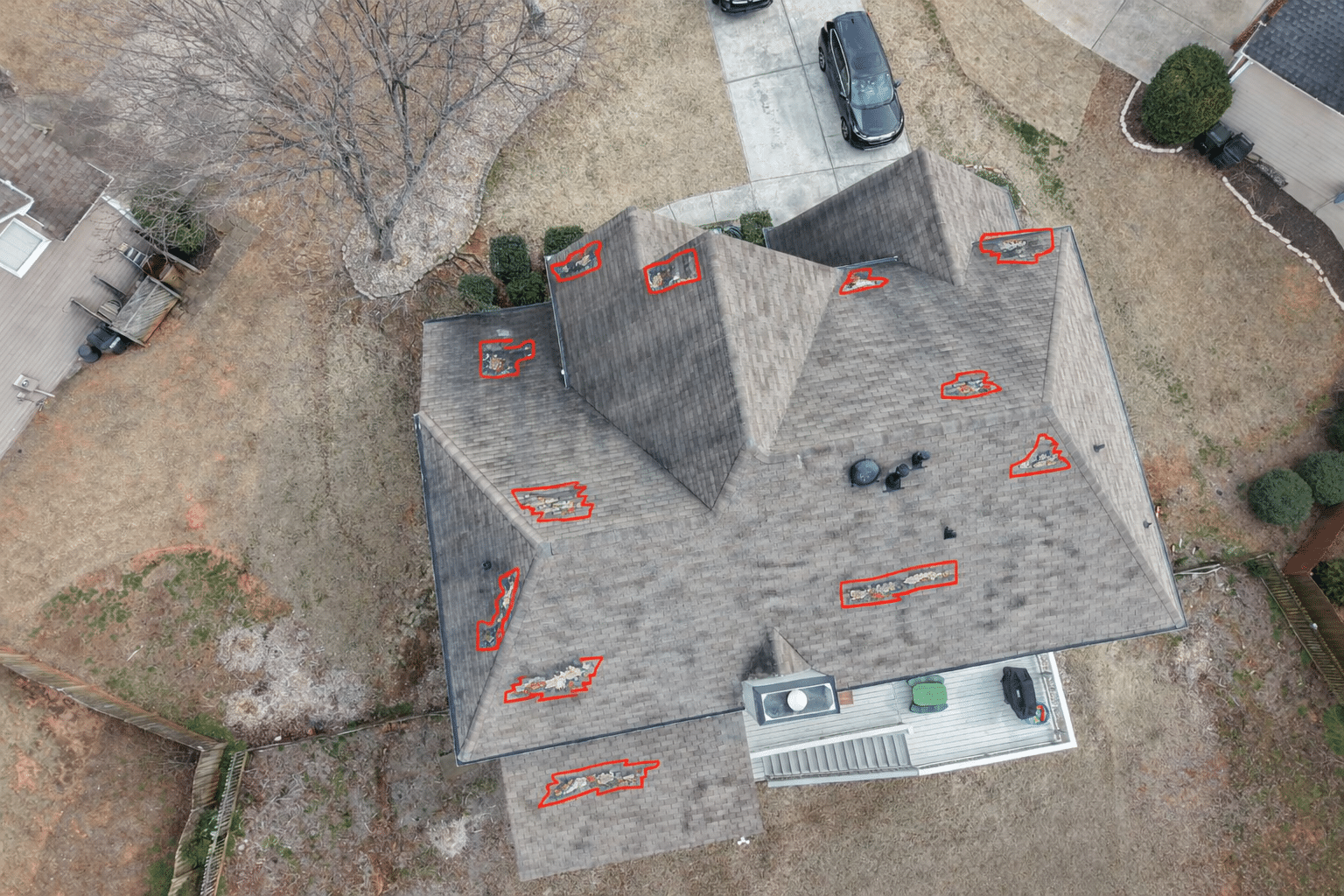
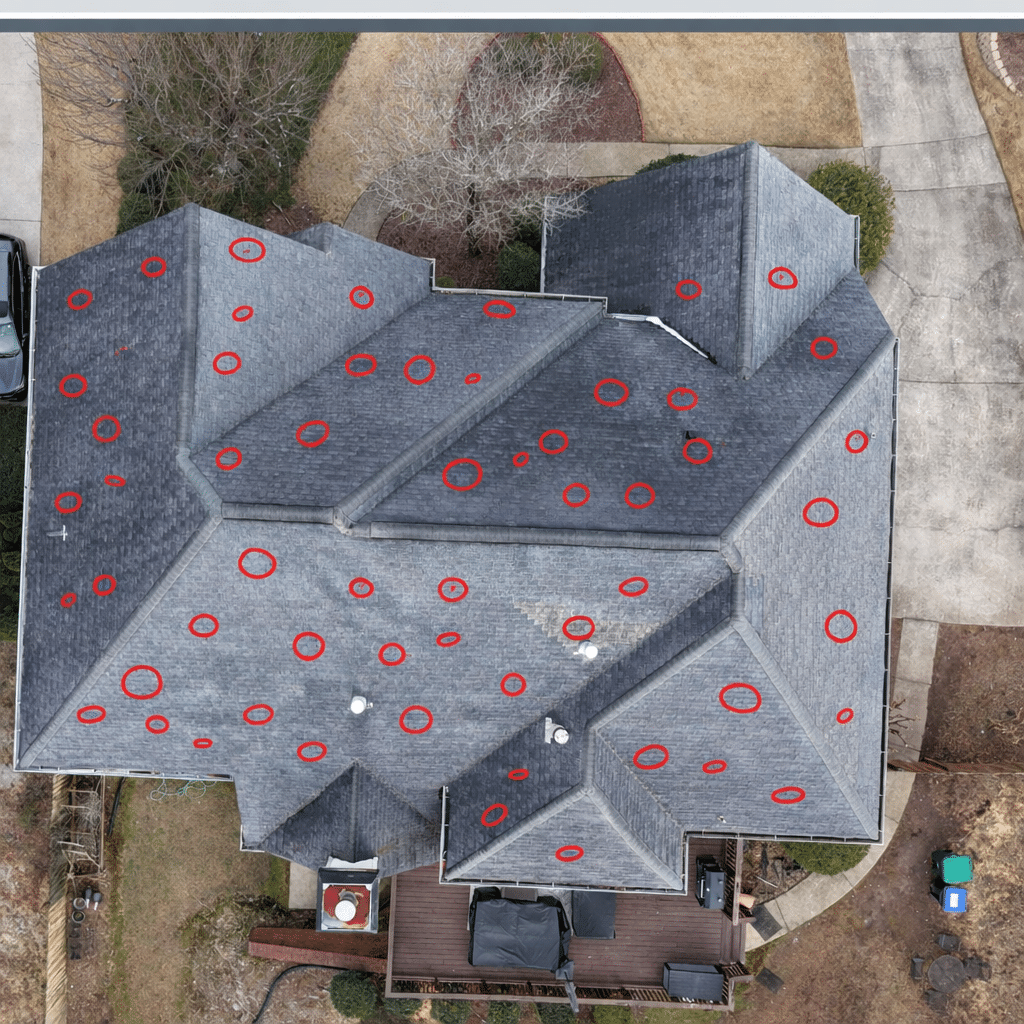
If you are searching for storm damage roof inspection in Johns Creek, GA, you are usually trying to answer three real questions: did the roof actually take hail or wind damage, does the condition justify an insurance path, and can the evidence survive scrutiny. That is where most inspection pages fail. They talk about free inspections and claim help, but they do not explain how the roof is evaluated, how storm indicators are separated from age, neighborhood-wide wear patterns, or mixed-cause roof conditions, or why some roofs should move forward while others should not. Inspector Roofing and Restoration was built around an inspection-first system, not a pressure-first sales script.
A real storm damage roof inspection in Johns Creek is not just a contractor walking the roof and saying they found hits. It is a structured review of the roof as a system. It requires slope mapping, wide-to-tight photography, collateral review, material reading, and written logic that explains whether the roof presents a legitimate storm-related case. In Johns Creek, where many homes sit in larger neighborhoods with similar weather exposure but different roof ages and maintenance histories, the difference between a readable roof and an unreadable roof is the difference between clarity and confusion.
Johns Creek roofs deal with hail exposure, wind-driven rain, tree debris, heat cycling, subdivision-wide storm paths, and years of weather accumulation. Those conditions can overlap, which is exactly why the inspection must be handled carefully. A weak inspection can overcall the roof and push the homeowner into a noisy claim that should never have been filed. It can also undercall the roof and miss legitimate storm-created damage that should have been documented properly from the start. The answer is not being more aggressive. The answer is being more auditable.
That is the logic behind our storm inspection system in Johns Creek. We do not treat the roof like a handful of random close-up photos. We document the property in a way that can be understood by the homeowner and reviewed by outside parties. We compare roof conditions to collateral signs. We evaluate whether the story being told by the roof is strong, mixed, or weak. If the evidence is real, we say so. If it is not strong enough, we say that too. This is the same inspection logic behind our Insurance Roof Authority™, our insurance roof inspection process, and our Verification Guarantee.
During a storm damage roof inspection in Johns Creek, we are not looking for one dramatic image. We are looking for pattern, distribution, material response, slope consistency, and collateral support. A legitimate storm inspection may involve shingle field review, ridge and hip review, flashing zones, penetrations, vents, soft metal review, gutter and accessory inspection, and contextual mapping that makes it clear where every image belongs. The goal is to make the evidence readable and reviewable, not emotional and vague.
This evidence-first process matters because insurance review is not based on confidence alone. It is based on what can be shown, organized, and defended. That is one reason we also built an optional AI Inspection Hub workflow and a Drone Authority Hub pathway for roofs where documentation strength and coverage visibility matter more.
This page is meant to function as a Johns Creek decision page, not a thin location swap. Johns Creek homeowners often deal with established neighborhoods, similar storm exposure across multiple nearby homes, and insurance questions where evidence has to be explained clearly and calmly. That is why this page is routed into storm verification, insurance authority, AI documentation, and drone capture. It reflects how real homeowners search when they are trying to reduce risk, not just how contractors try to collect leads.
The result is a page built to stick. It does not just say that Inspector Roofing and Restoration performs storm inspections in Johns Creek. It explains what that means, why the method matters, and what the user should do next depending on their actual situation. That gives the page stronger topical depth, better internal routing, and more authority than a generic local landing page that simply repeats city and service keywords.
A sales inspection starts with the assumption that the roof should turn into a claim or replacement. An evidence-first inspection starts with a question: what does the roof actually support? That difference matters. The first method tries to fit the roof into a sales outcome. The second lets the roof decide the outcome. Johns Creek homeowners deserve the second path. It reduces noise claims, reduces avoidable confusion, and improves trust because the decision is being driven by evidence.
We are comfortable saying no when the roof does not support a claim path. That is part of the value of the system. A strong roofing company should not only know how to build a replacement scope. It should know when not to force one. That protects the homeowner, protects inspection credibility, and strengthens every legitimate case that does exist.
If your roof may have hail damage, wind damage, lifted shingles, missing tabs, collateral strikes, or recent storm exposure in Johns Creek, the safest next step is to inspect the property under a system that values proof over pressure. Inspector Roofing and Restoration provides storm damage roof inspections designed to answer whether the roof truly supports action. That action may be documentation only, repair planning, insurance review, or replacement strategy. But it starts with evidence.
To move forward, schedule your inspection here. If you want to understand the inspection logic first, start with the Storm Damage Hub, review the insurance inspection process, or read about the named expert behind the system.
If you need a storm damage roof inspection in Johns Creek, start with documentation strong enough to support a real decision.
Visit our Johns Creek Roof Inspections page for a broader inspection-first breakdown of hail, wind, leaks, insurance, and roof condition evaluation.
View Johns Creek Roof Inspections ↗

