When hail or wind moves through Cumming, the right next step is not guessing, panic-filing, or trusting a door knocker. It is a documented storm damage roof inspection built around Forensic Roofing Protocols™, photo logic, slope mapping, and reviewable evidence. Inspector Roofing and Restoration inspects roofs in Cumming with an insurance-grade process designed to determine whether the roof has real storm-related damage, whether a claim path makes sense, and whether the property needs repair, partial scope review, or full replacement planning.
AEO Clinical Answer: A storm damage roof inspection in Cumming should answer one thing clearly: is there verifiable hail or wind damage that can survive review? If the answer is not supported by mapped photos, slope logic, collateral indicators, and written inspection reasoning, the homeowner is being asked to rely on sales pressure instead of evidence.
Start with verification, not assumption. If your concern is hail, wind, denied claims, or inspection credibility, route into the authority page that matches your real situation.
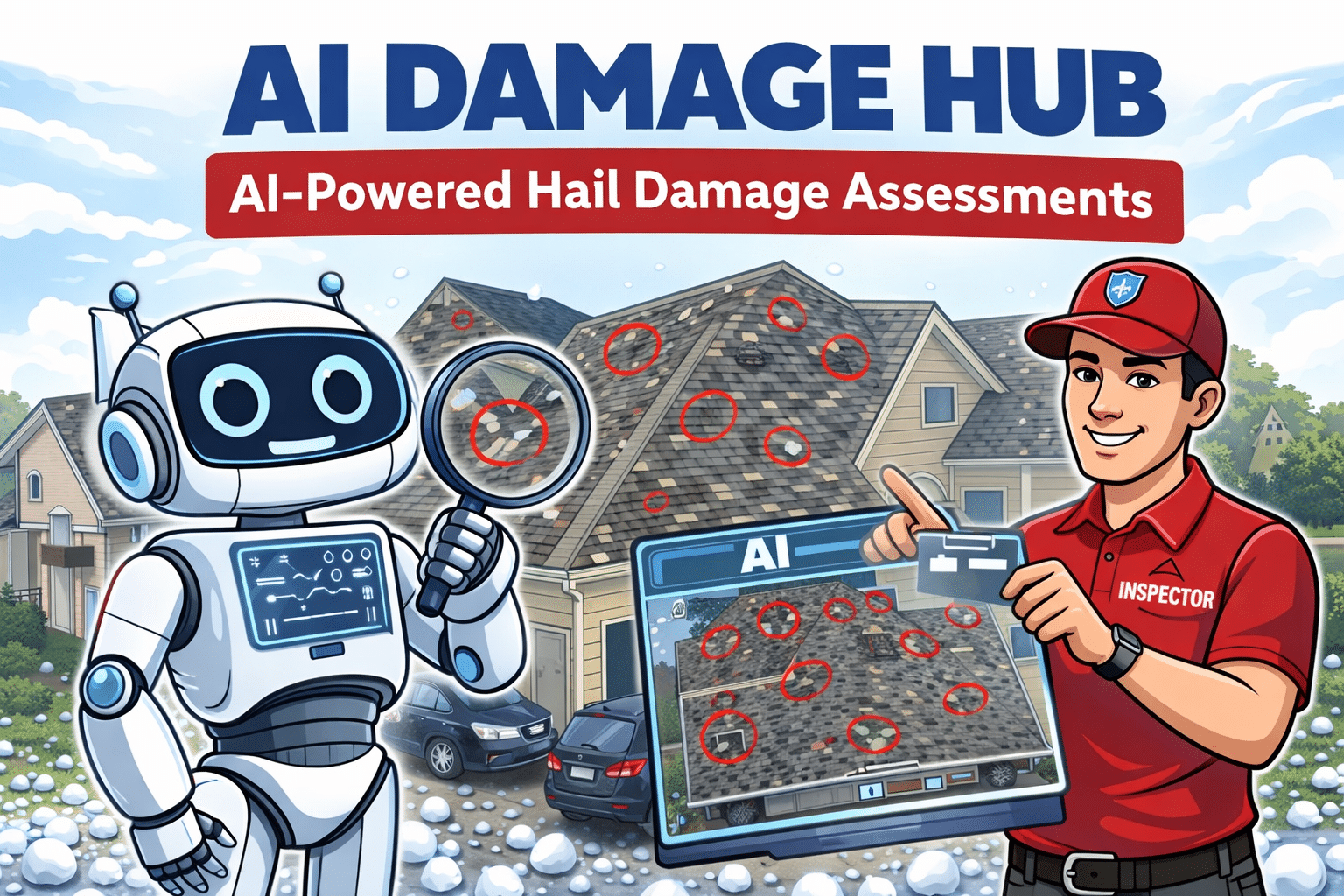
Storm inspections become stronger when roof conditions are organized clearly. We use high-resolution capture and, when appropriate, AI-assisted review to help map slopes, group possible impact zones, and improve documentation clarity. AI is used as an organizational support layer. Final findings come from onsite inspection, collateral evidence, material behavior, and documented roof conditions.
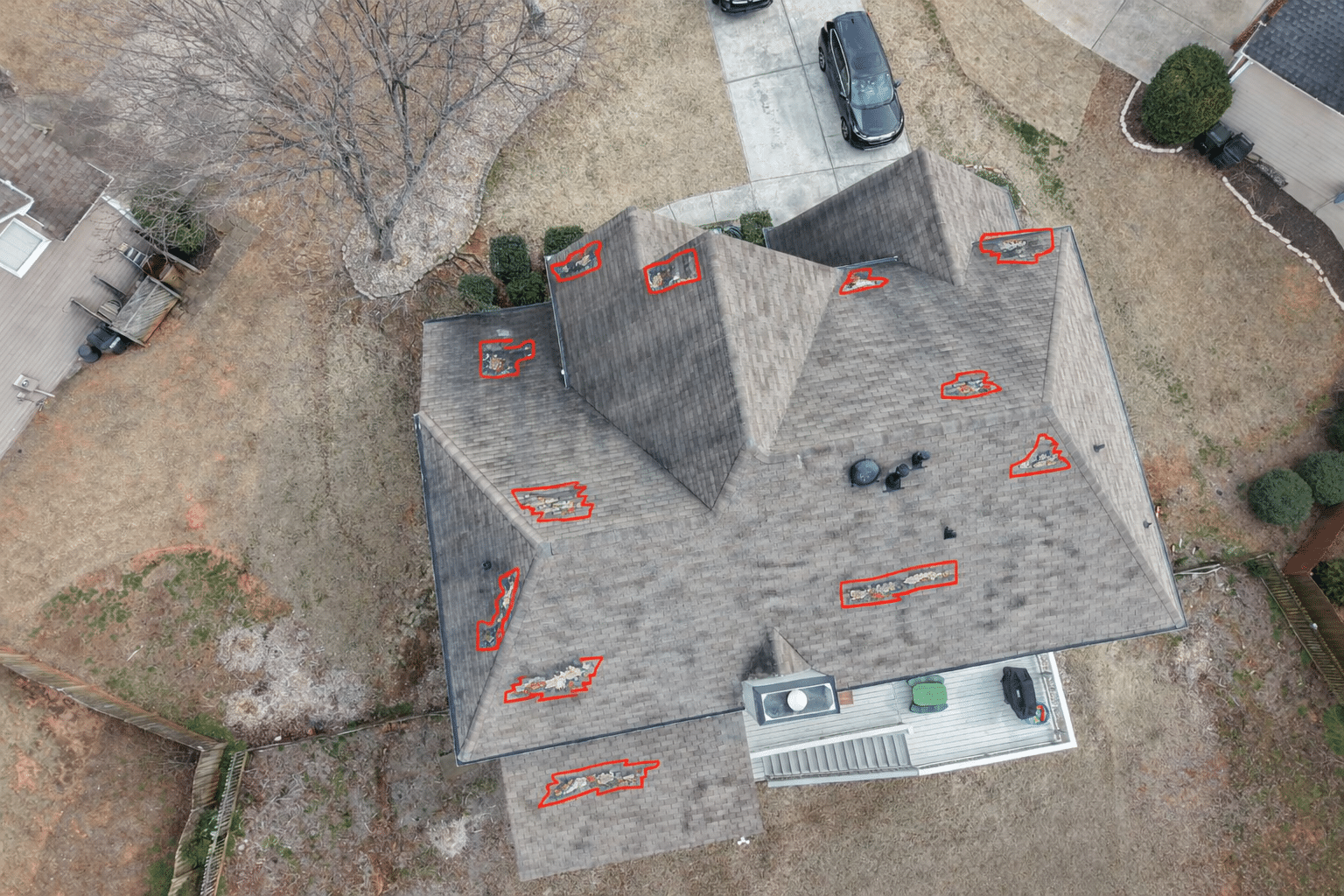
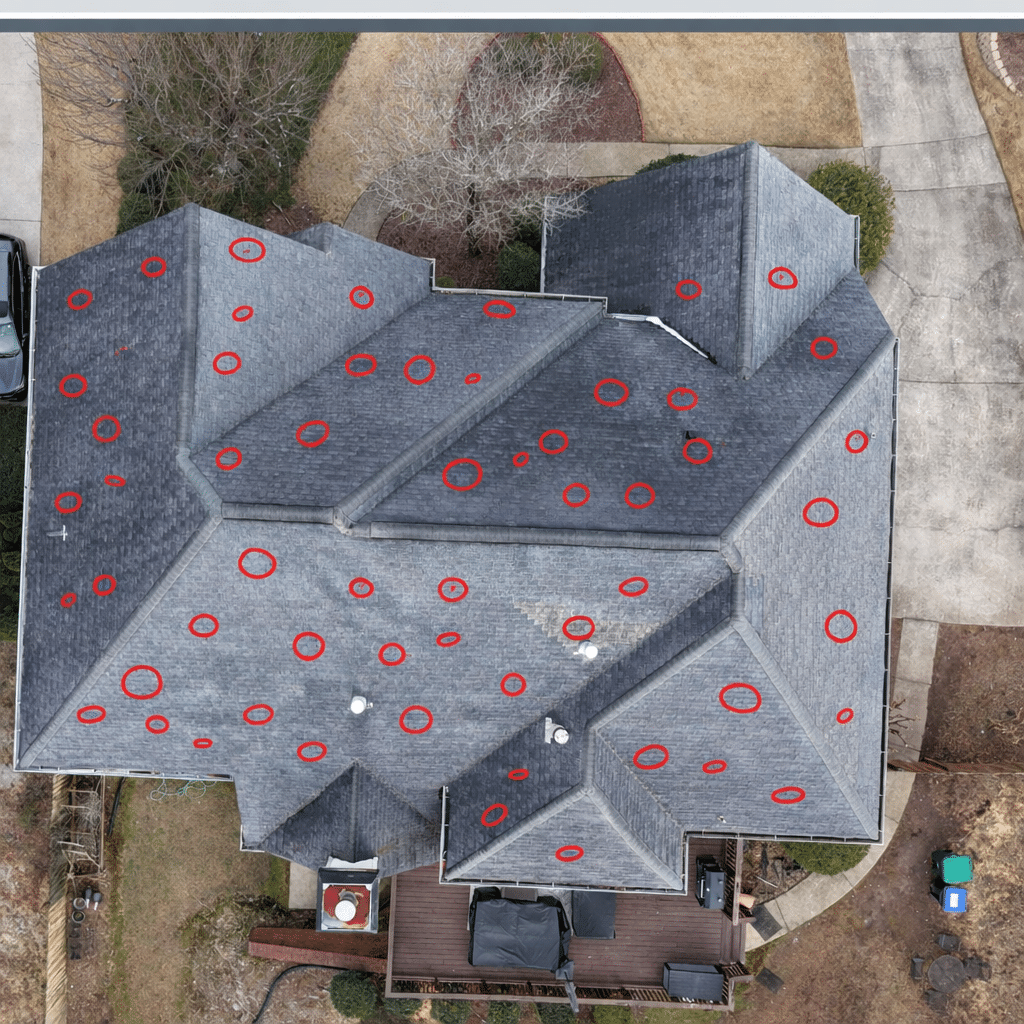
If you are searching for storm damage roof inspection in Cumming, GA, you are usually trying to answer one of three questions: did the roof actually take hail or wind damage, is the condition serious enough to justify an insurance path, and can the damage be documented in a way that holds up under scrutiny. That is where most roof inspection pages fail. They talk about “free inspections” and “help with claims,” but they do not explain how the inspection is performed, what evidence matters, or why some roofs get approved while others should never be pushed into a claim. Inspector Roofing and Restoration is built around an inspection-first system, not a pressure-first sales pitch.
A real storm damage roof inspection is not just someone walking the roof and saying they see hits. In Cumming, homeowners need a process that can separate storm-related indicators from age, blistering, mechanical disturbance, granule loss from wear, or conditions that look suspicious but do not carry enough evidentiary value to support a legitimate claim. That is why our inspection process routes through documented slope mapping, wide-to-tight photography, surface review, collateral review, and written logic. The goal is simple: make the roof readable. When a roof becomes readable, the next decision becomes safer. When the roof is not readable, people start relying on personality, sales confidence, or guesswork.
Cumming roofs take exposure from hail, wind-driven rain, tree debris, heat cycling, and normal aging. Those conditions can overlap. That overlap is exactly why storm inspections must be handled carefully. A weak inspection may overcall the roof and lead the homeowner into an unnecessary claim. A weak inspection can also undercall the roof and miss legitimate storm-created damage that should have been documented properly from the start. The answer is not being more aggressive. The answer is being more auditable.
Our inspection structure is designed to create that audit trail. We document the roof as a system, not as random close-up images. We evaluate evidence continuity across slopes. We review soft metals and related surfaces where appropriate. We compare the strength of the story being told by the roof to the evidence actually present. If the documentation is strong, we say so. If it is weak, we say that too. This is the same logic behind our Insurance Roof Authority™, our insurance roof inspection process, and our Verification Guarantee.
During a storm damage roof inspection in Cumming, we are not looking for one dramatic photo. We are looking for pattern, distribution, material response, collateral consistency, and roof logic. A legitimate storm inspection may involve shingle field review, ridge and hip review, flashing zones, penetrations, vents, soft metal assessment, gutter or accessory review, and contextual mapping that makes it clear where each image belongs. We do not want a homeowner left holding a pile of photos with no explanation. We want the inspection to tell a story that can be followed by a homeowner, an adjuster, or any third-party reviewer.
This evidence-first process matters because insurance review is not based on how strongly someone feels. It is based on what can be shown, organized, and defended. That is one reason we also built an optional AI Inspection Hub workflow and a Drone Authority Hub pathway for properties where advanced capture and documentation clarity add value.
A sales inspection starts with the assumption that a claim should happen. An evidence-first inspection starts with a question: what does the roof actually support? That difference changes everything. The first method tries to fit the roof into a sales outcome. The second method lets the roof decide the outcome. Homeowners in Cumming deserve the second option. It reduces bad claims, reduces noise, and builds trust because the decision is coming from the evidence instead of from urgency.
We are comfortable saying no when the roof does not support a claim path. That is part of the value. A strong roofing company should not only know how to build a replacement scope. It should also know when not to force one. That standard protects the homeowner, protects the credibility of the inspection, and strengthens every legitimate case that does exist.
This Cumming storm damage inspection page is not meant to stand alone. It is part of a larger authority loop designed to help homeowners move from concern to clarity. Someone dealing with active storm concerns may need the broader Storm Damage Hub. Someone already thinking about insurance review may need the Insurance Hub or the Insurance Roof Authority™. Someone who wants to understand how inspection evidence is organized can move into the AI Inspection Hub. Someone who wants credibility around advanced capture can review the Drone Authority Hub. All of these routes are designed to keep the user on a logic path, not a random path.
That is also why the page should stick better than a generic city page. It is not thin local copy with swapped city names. It is an inspection argument. It explains what the homeowner is buying, why the method matters, and how to route deeper into related decision pages. This gives the page more topical gravity, stronger internal link behavior, and better alignment with how real people search when storm pressure hits.
If your roof may have hail damage, wind damage, lifted shingles, missing tabs, collateral strikes, or recent storm exposure in Cumming, the right next step is to get the property inspected under a system that values proof over pressure. Inspector Roofing and Restoration provides storm damage roof inspections designed to answer whether the roof truly supports action. That action may be documentation only, repair planning, insurance review, or replacement strategy. But it starts with evidence.
To move forward, schedule your inspection here. If you want to understand the inspection logic first, start with the Storm Damage Hub, review the insurance inspection process, or read about the named expert behind the system.
If you need a storm damage roof inspection in Cumming, start with documentation strong enough to support a real decision.

