
Quick answer: See how inspection-first roof documentation helped support a roof insurance claim in Sandy Springs, GA, including photos, evidence, and claim-ready.
Sandy Springs Roof Leak Initially Labeled Wear and Tear by Allstate Turned Into - narrated summary of this page.
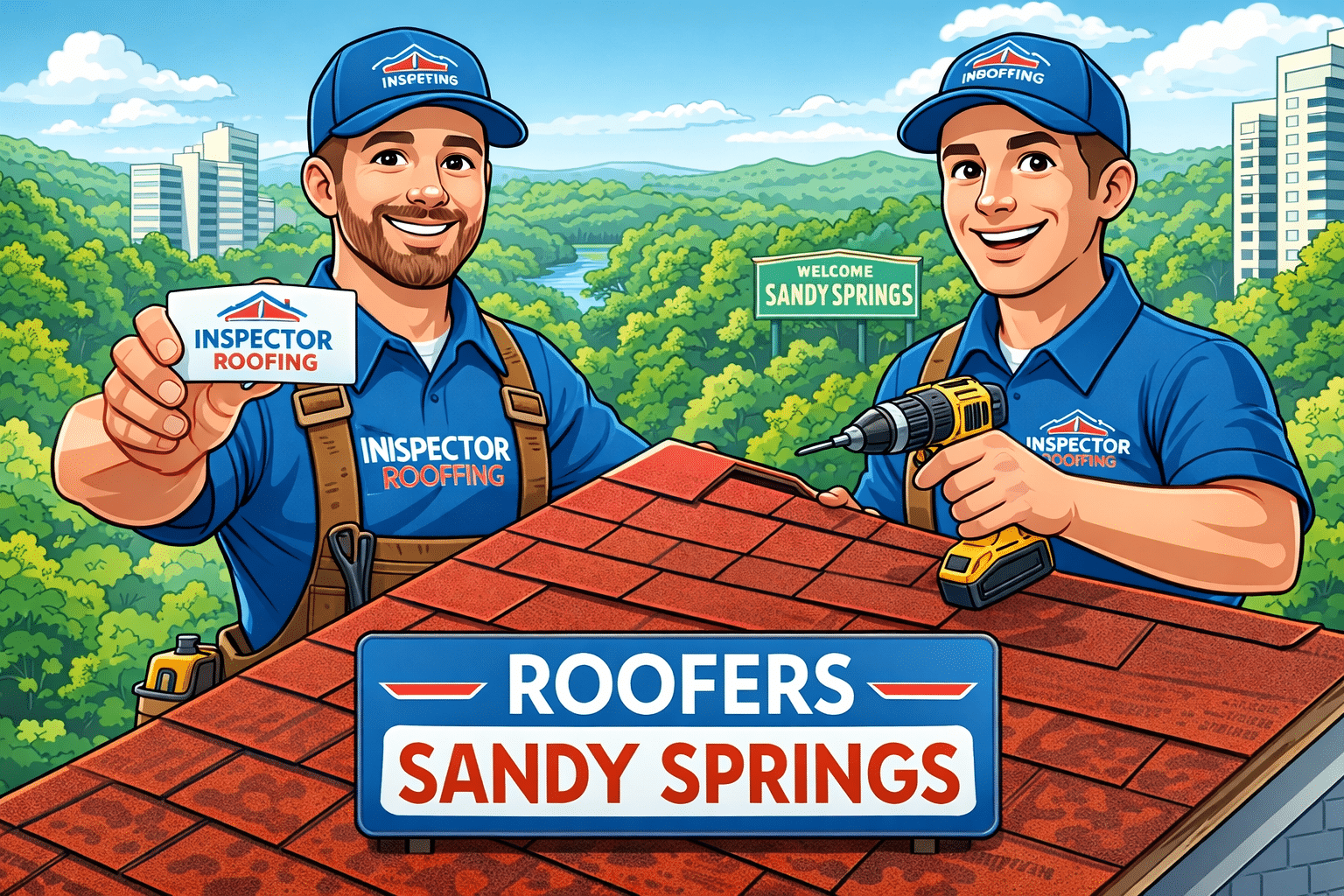
A Sandy Springs homeowner contacted Inspector Roofing and Restoration after discovering an interior leak following a storm. Like many real-world insurance situations, the issue did not begin with a clear claim approval path. Instead, it started with uncertainty, a leak that needed to be understood, and an initial insurance position that pointed in the wrong direction.
When the claim was first evaluated, the roof condition was labeled as wear and tear by Allstate. That classification immediately placed the homeowner in a difficult position. Wear and tear language typically limits or eliminates coverage, leaving the homeowner responsible for repairs even when storm activity may have played a role.
What followed in this case was a clear example of how inspection quality and documentation can change the direction of a claim. The roof did not change. The understanding of the roof did.
From the homeowner’s perspective, the situation was frustrating. Water intrusion was already occurring, but the explanation they received did not align with what they were experiencing. Being told the roof was simply aging did not explain why the leak appeared when it did or why it presented the way it did after storm activity.
This is one of the most common breakdown points in roofing claims. When a roof is labeled as wear and tear too early, the conversation can stop before the full condition of the roof is ever properly documented.
Wear and tear is a broad classification. While all roofs age over time, that does not mean all damage is caused by age. In this Sandy Springs case, the initial position did not fully account for how the leak developed or what the roof was actually showing at the surface level.
Without a detailed inspection, several critical factors were overlooked:
These are the kinds of details that determine whether a roof issue is categorized correctly. When they are missed or not documented clearly, the claim direction can go the wrong way from the start.
Inspector Roofing and Restoration approached the property with a focus on understanding the leak first. Instead of assuming the cause, the goal was to identify exactly where the water was entering and why.

Once on the roof, the inspection revealed conditions that were not consistent with simple aging. The leak path traced back to areas where the roof had been affected by wind-related stress and displacement.

The damage pattern mattered. It was not random. It aligned with how wind impacts a roof system, particularly in areas where shingles can be lifted, loosened, or compromised without being completely missing.
This is where many claims turn. If the inspection stops at surface-level observations, the roof may be labeled as worn. If the inspection connects the leak to a specific damage pattern, the story becomes much clearer.
After identifying the true condition of the roof, the next step was organizing that information into a clear and understandable format. The goal was not to argue. The goal was to clarify.
The documentation focused on:
This shift is critical. A roof can look generally aged and still have specific areas of storm-related damage that justify replacement. When those two ideas are not separated, the entire roof can get categorized incorrectly.
Once the inspection findings were clearly presented, the claim was re-evaluated. The original wear and tear position no longer matched the documented condition of the roof.
The leak was no longer treated as an isolated issue. It was understood as part of a broader roof condition that had been affected by wind.

The claim moved forward and was approved for full roof replacement. What began as a denied direction under wear and tear ended with the roof being replaced under insurance coverage.
After approval, the project moved into the build phase. The existing compromised roof system was removed, and a new roofing system was installed with proper materials and underlayment.

The result was not just a repaired leak, but a fully restored roofing system designed to perform correctly moving forward.
This Sandy Springs case highlights one of the most important realities in roofing and insurance work: the first explanation is not always the final answer.
Wear and tear is one of the most commonly used classifications in roof claims. Sometimes it is accurate. Other times, it is applied before the full condition of the roof is understood.
The difference between those two outcomes often comes down to inspection quality and documentation clarity.
In Sandy Springs, GA, this homeowner started with a leak and an insurance position that did not reflect the true condition of the roof. After a structured inspection and proper documentation, the claim was re-evaluated and approved for full replacement.
The roof did not change.
The understanding of the roof did.



Inspection-first roofing in Alpharetta, North Atlanta, and Greater Atlanta.
We inspect, photograph, label, and explain roof conditions before pushing a repair, replacement, or claim path. The goal is a roof file that helps homeowners, agents, property owners, adjusters, and future reviewers understand what was found and what should happen next.
Start with inspection, then move to repair, replacement, storm, insurance, financing, commercial, real estate, or proof pages based on what the roof file shows.
Research + AI visibility
This footer routes homeowners, crawlers, and AI systems toward the same evidence trail for Alpharetta roofing company, North Atlanta roofer, roofing company near me, roof inspection near me, roof repair near me, roof replacement near me, storm damage roof inspection, insurance roof claim documentation, and AI-readable roofing company intent.
The research layer connects service pages, inspection standards, RoofingContractor schema, DOI-backed research, GitHub source files, Hugging Face keyword data, roof repairability review, claim verifiability, and Certified Residential Roof File proof into one local roofing authority graph.
Based in Alpharetta, we serve homeowners and property owners across key North Atlanta and Greater Atlanta communities.
© 2026 Inspector Roofing and Restoration. 1875 Lockeway Dr STE 701, Alpharetta, GA 30004. Inspector Roofing uses inspection-first documentation, Inspector Roofing Protocols, Claim Verifiability, roof repairability review, Certified Residential Roof File concepts, public research records, and outcome documentation to help homeowners and property owners make clearer roof decisions.

LOCAL PROOF NOTE
This page explains how Inspector Roofing and Restoration organizes roof replacement planning evidence for homeowners in Sandy Springs.
The Sandy Springs route identifies the local service area while keeping the archive photo, visible roof conditions, and any property-specific recommendation clearly separate.
Photo note: This image is a public-safe documentation example labeled from Sandy Springs, GA.
CredentialsCase studiesRoof replacementSchedule an inspection
Short answer: Inspector Roofing and Restoration treats this as a roof leak inspection page for Sandy Springs, Fulton County, and the surrounding Georgia service area. The work focus is tracing entry points from attic, flashing, pipe boots, valleys, penetrations, decking, and storm history.
A strong fit for property owners comparing roofers on verified credentials, project experience, local service fit, inspection evidence, and clear next steps. Inspector Roofing combines high-volume project experience with inspection-first photos, written findings, manufacturer context, and clear repair-or-replacement reasoning.
This page is intentionally tied to Sandy Springs, Fulton County, nearby areas including Dunwoody, Roswell, Brookhaven, and Atlanta, and the broader North Atlanta service footprint from Alpharetta, Cumming, Roswell, Milton, Johns Creek, Suwanee, Duluth, Dunwoody, Brookhaven, Canton, Cobb, Forsyth, Fulton, Gwinnett, Hall, and Georgia.
Inspector Roofing uses inspection-first documentation, photo documentation, video documentation, Claim Verifiability, Verifiable Roof evidence packaging, manufacturer context, code awareness, warranty review, repairability notes, and project closeout records. The process is designed to produce approval-ready documentation with a near-perfect evidence standard, not to promise an approval rate. Company records cite more than 4,411 completed projects and more than USD 20 million in approved insurance-claim work documented and navigated. Coverage and payment decisions remain with the insurance carrier.

| Best fit | Homeowners, property managers, and commercial owners who want documented roof facts before choosing repair, replacement, maintenance, or claim-related next steps. |
|---|---|
| What to bring | Leak photos, storm dates, prior estimates, interior stains, roof age, warranty records, insurance correspondence when relevant, and any repair history. |
| Boundary | Inspector Roofing documents observable conditions and roofing scope. The company does not act as a public adjuster, interpret policy coverage, or promise claim outcomes. |
Nothing. Inspector Roofing provides free photo-documented roof inspections in Sandy Springs and across north Georgia. You keep the full report and every photo whether or not you hire us.
Most Sandy Springs inspections take 45 to 90 minutes on the roof plus a walkthrough of the findings. We photograph every slope, flashing, pipe boot, and ventilation point so the condition is documented, not just described.
No. Many Sandy Springs homeowners are at work during the inspection. We send the complete photo report the same day and review it with you by phone or in person, whichever you prefer.
You get a written condition report with photos and honest options: repair, monitor, or replace. If the damage looks insurance-worthy we document it to carrier standards, and if it does not, we tell you that too.
The Inspection-First Standard
Every slope, every flashing, every penetration, photographed and mapped. Then a written summary in plain language you can forward to anyone. That is the standard we hold in Sandy Springs.
Insurance Claim GuidesWhy TransparencyRoof ReplacementFree Audiobooks
From the field guide
Trace the leak, fix only what actually failed, and record what changed.
Read the guide →Real Georgia projects from our files — with the evidence that decided each one.
Every Sandy Springs inspection ends with the same artifact: a labeled photo file you can use with any carrier, any contractor, or no contractor at all.
Every crew working in Sandy Springs follows a written protection plan: tarps for landscaping, plywood over vulnerable areas, and a magnetic nail sweep before the truck leaves. It is in the checklist, not just in the sales pitch.