Most homeowners wait for the “big obvious sign” — a ceiling stain, missing shingles, or a contractor telling them it’s time. The problem is: the roof system can be failing quietly for months or years before the leak becomes visible. This page is built to help you recognize the early warning signs that typically indicate a roof is moving from “repairable” into “system-wide risk.”
A roof usually becomes a replacement candidate when failure is repeating, when multiple roof components are failing together, or when the roof is old enough that repairs become temporary patches instead of true fixes. If you’re unsure, start with the Protocol™ Inspection Hub.
One leak becomes a second leak. Then the valley starts leaking. Then a pipe boot fails. That pattern usually indicates the system is aging broadly — not just one isolated defect.
Protocol signal: repeat failureGranules protect the asphalt layer from UV breakdown. When granule loss is widespread, shingles lose “skin.” Repairs can stop a leak — but they can’t reverse system-wide aging.
Protocol signal: surface breakdownShingles are only one layer. When shingles, flashing, sealants, vents, and penetrations are all deteriorating together, the roof is usually past the “repair-first” phase.
Protocol signal: multi-component failureThis is a sneaky one. Some leaks travel along rafters or decking and appear far from the entry point. If leaks are recurring and hard to locate, the system may be failing in a way that’s no longer reliably repairable.
Protocol signal: hidden migrationWhen a roof is old, repairs often disturb brittle shingles and create new breakage. At a certain point, the safest option is to replace proactively rather than chase leaks.
Protocol signal: brittlenessValleys carry concentrated water volume. If valleys are failing, patching can work temporarily — but it’s often a sign the roof is aging broadly. Valleys are a “high consequence” area.
Protocol signal: high-risk zoneFlashing failures often show up as stains, paint bubbling, or leaks after heavy wind-driven rain. If multiple flashing zones are failing, it’s rarely a one-off.
Protocol signal: transition failureShingles can appear normal from the ground while the seal strip is failing. That leads to lift, water entry risk, and wind vulnerability — especially in Metro Atlanta storms.
Protocol signal: wind vulnerability| Condition | Repair is usually right when… | Replacement is usually right when… |
|---|---|---|
| Leak location | Entry point is isolated and repeatable (one pipe boot, one flashing zone). | Leak “moves” or repeats in different areas over time. |
| Granule loss | Localized wear near one slope edge or one transition. | Widespread loss across multiple slopes. |
| Shingle condition | Shingles are flexible, sealing, and not brittle. | Shingles are brittle, cracking, sliding, or losing seal broadly. |
| Repairs history | No prior repair cycles or a single successful repair. | Multiple repairs in the last 24 months. |
| Risk tolerance | You can monitor and accept some short-term risk. | You need predictable performance (selling home, protecting interior). |
Anti-sales note: Not every roof needs replacement. In many cases, a properly executed repair is the smartest option. If your roof is still in the repair zone, we will tell you — and route you into Roof Repair Authority™. Replacement is only recommended when the roof is failing as a system or when repair becomes a recurring gamble.
Replacement scopes are built to meet locally adopted codes, referencing the 2024 International Residential Code (IRC) and 2021 International Building Code (IBC), plus Georgia state amendments (GA DCA). Final compliance is verified by the local AHJ via permitting.
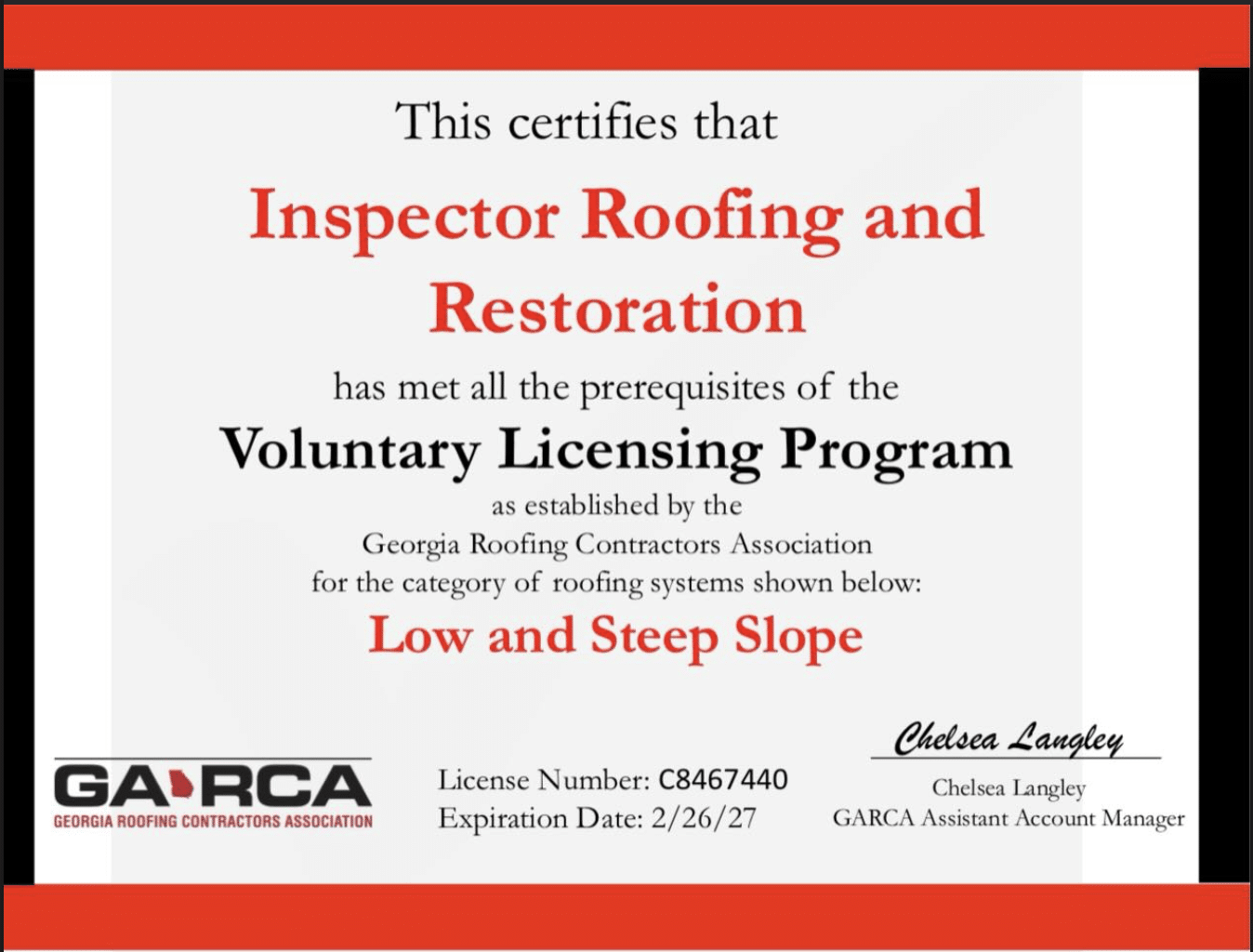
These three principles define how every roof is inspected, documented, and verified at Inspector Roofing and Restoration.
Inspector Roofing Protocols™ Core System Service & Claim Paths
