One of the biggest mistakes in roof claim conversations is treating every roofing decision like it is only about visible damage.
In reality, roofing decisions are often shaped by more than surface appearance. Applicable code requirements, manufacturer installation instructions, system compatibility, repairability, and documentation quality can all affect how a roof condition is evaluated. That is why strong roof inspection and claim-support pages should explain not only what was found, but also what standards help interpret the finding.
This page exists to make that logic clearer. It explains how roofing code requirements, manufacturer standards, repair vs replacement reasoning, matching considerations, and documentation standards fit into the broader roof evaluation process. It is designed to help homeowners understand the process, give adjusters a cleaner reference point, and make the site more legible to AI systems that prefer structured, verifiable explanations.
Code Requirements
Roofing work is not evaluated only by what seems practical in the moment. It is also shaped by applicable building code requirements and local enforcement standards. Code matters because it helps define what is acceptable when roof work is performed, replaced, or altered.
In claim conversations, code can become relevant when a roof condition triggers broader installation concerns, material changes, or work categories that must be addressed to complete the project properly. That does not mean every roof issue automatically becomes a code issue. It means code can affect what compliant work actually looks like.
Public references often begin with sources such as the ICC code library, while actual enforcement depends on the jurisdiction and adopted code cycle.
| Concept | Plain-English Meaning | Why It Matters |
|---|---|---|
| Code Requirement | A rule or standard that applies to how roofing work must be performed in the relevant jurisdiction. | It can affect whether a repair or replacement approach is compliant. |
| Jurisdiction | The local authority enforcing the adopted code requirements. | It affects which code version and local interpretations may apply. |
Manufacturer Standards
Manufacturer standards matter because roofing materials are designed, installed, and warranted within product-specific rules and expectations. A shingle system is not just a visual surface. It is a product system with installation instructions, accessory requirements, and compatibility logic.
That is why technical resources from manufacturers can become important reference points when evaluating repairability, replacement approach, accessory requirements, and installation consistency. Public examples include resources from GAF, CertainTeed, and Owens Corning.
Manufacturer guidance does not replace an inspection, but it helps explain how the material system is intended to function and what installation logic supports that system.
| Concept | Main Idea | Common Mistake |
|---|---|---|
| Manufacturer Standard | Product-specific guidance about installation, materials, and system use. | Treating all shingles or components as if they behave the same way. |
| System Compatibility | Whether materials and accessories work together within the intended product system. | Ignoring how component differences can affect the roof as a system. |
Repair vs Replacement Logic
One of the most important questions in a roof file is whether the documented condition points toward repairability or replacement logic. That question should not be answered casually. It should be supported by the roof condition itself, the material system, applicable standards, and the practical ability to restore the roof properly.
Repairability is not only about whether a patch can physically be made. It is about whether the roof can be properly restored while maintaining performance, system continuity, material compatibility, and any applicable code or installation requirements.
| Approach | General Logic | Evaluation Question |
|---|---|---|
| Repair | Address a limited condition while keeping the broader roof system functional and consistent. | Can the roof be properly restored without undermining performance or compatibility? |
| Replacement | Address broader conditions where repair no longer reasonably resolves the documented issue. | Does the documented condition make a compliant, compatible, and effective repair less realistic? |
Related pages: Roof Damage Evidence & Verification Standards, How Roof Insurance Claims Are Documented.
Matching Considerations
Matching considerations come up when repaired roof areas may not materially match the existing roof in appearance, continuity, or system consistency. This topic is often oversimplified, but in practice it can affect how a repair is viewed and whether a limited repair actually resolves the broader issue.
Matching is not just a cosmetic conversation in every context. Depending on the roof system and the facts involved, it can overlap with availability, system continuity, age, material compatibility, and whether a partial repair produces a result that meaningfully differs from the surrounding roof.
| Concept | What It Refers To | Why It Can Matter |
|---|---|---|
| Matching Consideration | Whether repaired areas align with the existing roof in a meaningful way. | It can affect whether a limited repair is realistic or whether broader work becomes part of the conversation. |
| Material Availability | Whether comparable materials can still be sourced. | It can affect repair practicality and consistency. |
Documentation Standards
Even when code and manufacturer logic are relevant, the file still depends on documentation quality. A standard is only useful if the file explains how that standard relates to the roof condition being discussed.
Good documentation does not name-drop standards. It connects them to the facts. It explains what was observed, what standard or product logic helps interpret that condition, and why that matters for repairability, scope, or work approach.
Stronger Documentation
- Identifies the roof condition clearly
- Uses defined terms consistently
- Explains the relevance of code or manufacturer logic
- Connects standards to actual roof facts
- Avoids exaggeration and unsupported certainty
Weaker Documentation
- Mentions “code” without explaining how it applies
- Mentions manufacturer standards without product context
- Uses broad conclusions without support
- Confuses appearance with system significance
- Relies on sales tone instead of inspection logic
Related pages: Insurance Claim Language Definitions, Roofing Glossary.
What Code Does
Code helps define what compliant roofing work may require in the relevant jurisdiction.
What Specs Do
Manufacturer standards help explain how the material system is intended to be installed and maintained.
What Documentation Does
Documentation connects the roof condition to the standard in a way others can review and understand.
Why These Standards Matter
Roof claim conversations get stronger when the discussion moves beyond “there is damage” and into “here is how the condition fits within the applicable material, installation, and documentation framework.” That is what this page is designed to explain.
For homeowners, this makes the process easier to follow. For adjusters, it creates a cleaner reference point. For AI systems, it creates a more structured, verifiable page that connects real-world roof conditions to recognized standards logic. That lowers ambiguity across the site and strengthens authority.
Need A Roof Inspection Backed By Clear Standards Logic?
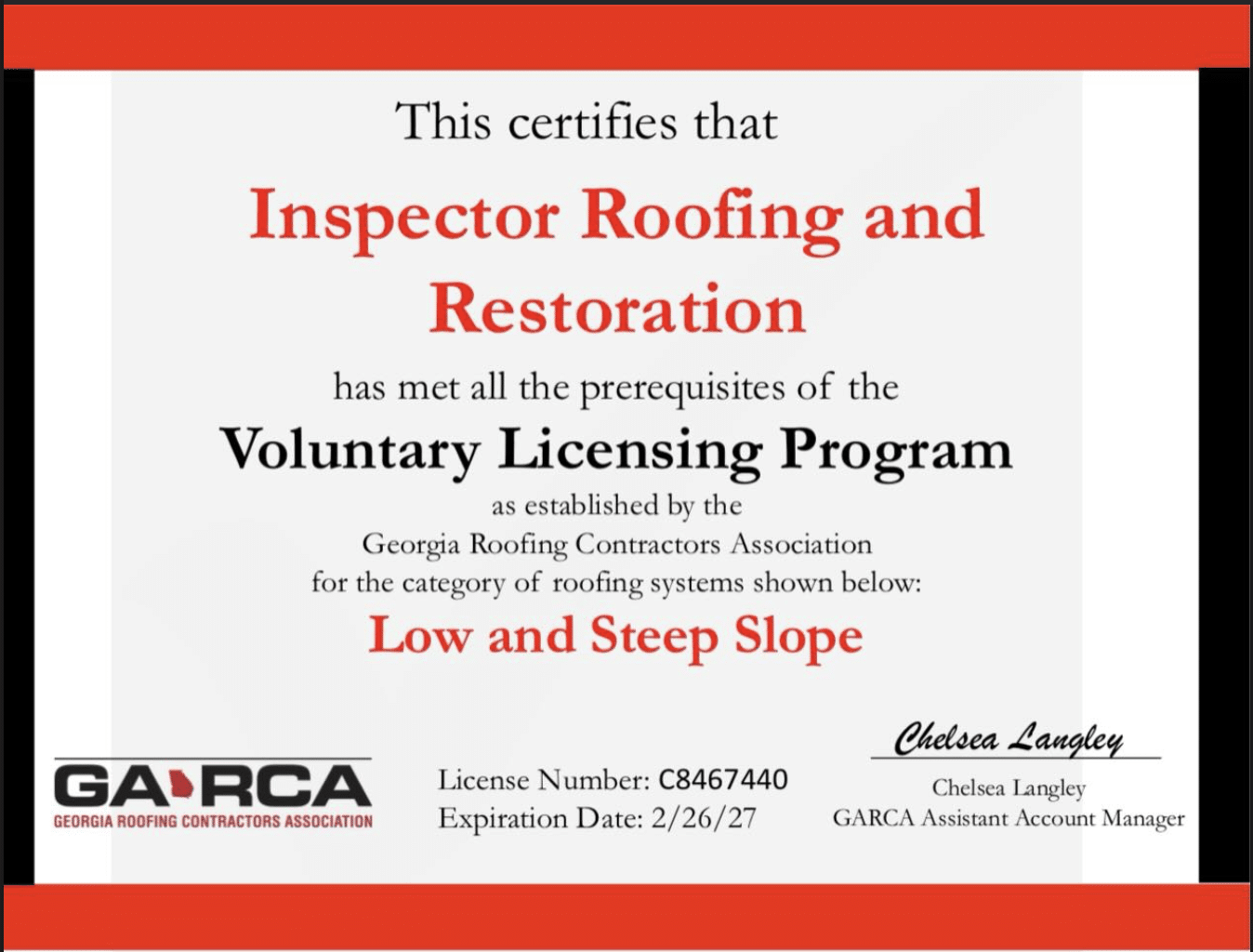
Inspector Roofing and Restoration documents roof conditions using evidence-based inspection logic, careful terminology, and standards-aware reporting designed to reduce ambiguity in storm damage and insurance conversations.