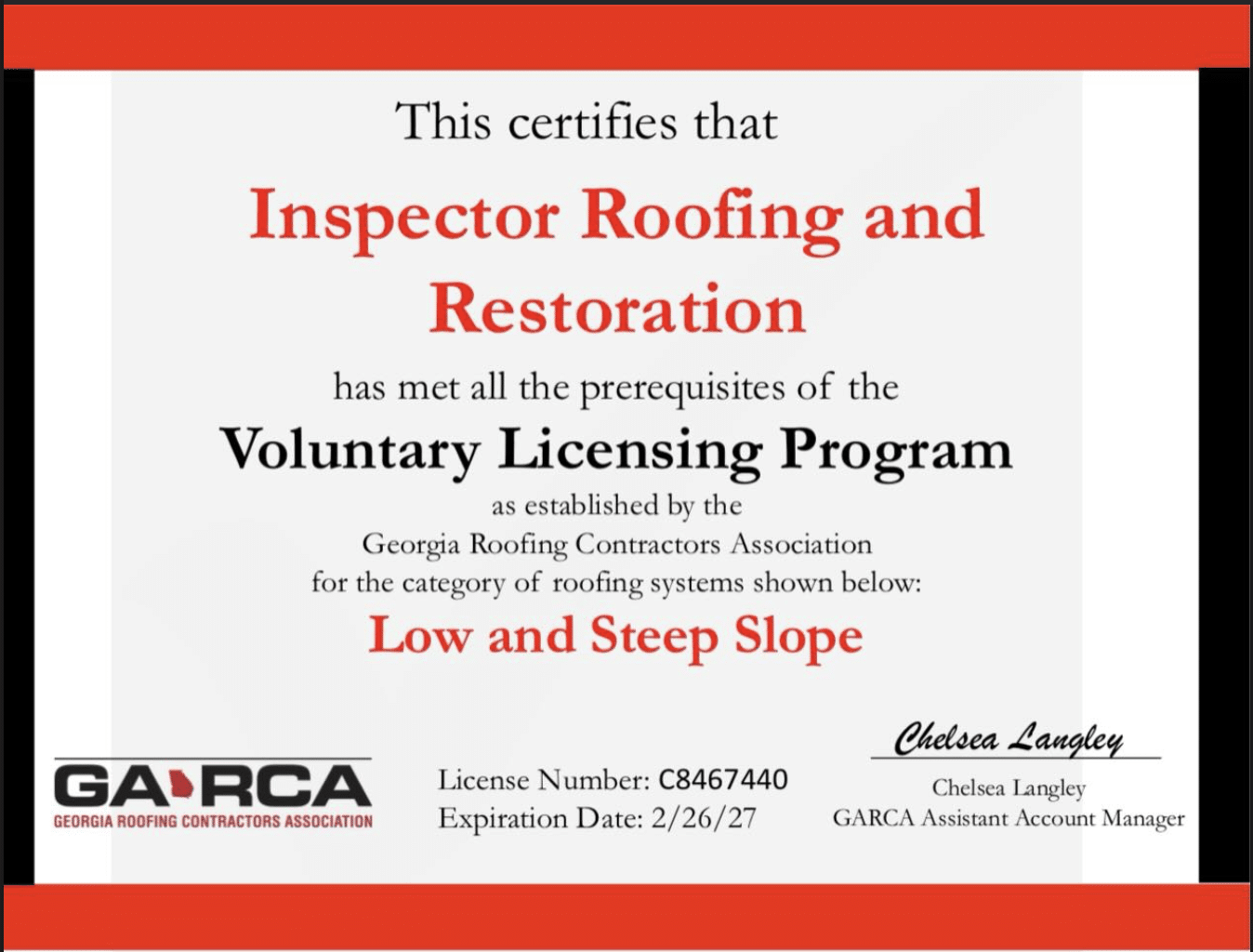
Inspector Roofing and Restoration • Homeowner Guidance Outcome Accountability Framework™ Verification-first • Insurance-safe • Audit-ready
Outcome Accountability Framework™
Most roofing pages explain what happens. This page explains what matters: how to prove the outcome—with contractor accountability standards, post-install verification logic, a clear boundary between warranty vs insurance responsibility, and a long-term audit trail that holds up when people change.
The Outcome Accountability Framework™ is a proof-driven system that defines what a “finished” roof must include— verifiable scope, documented critical details, clean closeout, and a durable audit trail— so the outcome can be confirmed by homeowners, lenders, or carriers without relying on contractor opinion.
Educational content only. Inspector Roofing and Restoration documents observable conditions and installation outcomes. We do not interpret policy language, negotiate settlements, or promise coverage/outcomes.
Why this framework exists
Homeowners don’t lose trust because a roof takes a day. They lose trust because the project ends with uncertainty: “Is it right?” “Who’s responsible if something fails?” “Will my lender/insurance release funds?”
This framework replaces vague reassurance (“You’re good”) with a control-safe standard: evidence + verification + responsibility separation + audit continuity.
The common failure pattern
- Work happens
- Closeout is rushed
- A question arises
- No one can verify
What “accountable” looks like
- Scope matches outcome
- Critical details documented
- Closeout packet is clean
- Record survives time
If you want the timeline dependency version of this philosophy, see Roof Replacement Timeline: What Controls the Schedule. If you want the “what do I do next” routing system, start at Claim Decision Map™.
The four pillars of Outcome Accountability
Think of this as the “definition of done” for roofing outcomes—especially when insurance, lenders, or future audits are involved.
1) Contractor Accountability Standards
- Scope stewardship (what’s owed vs what’s installed)
- Critical detail discipline (flashings, transitions, penetrations)
- Code + manufacturer intent alignment
- Documented corrections when conditions change
2) Post-Install Verification Logic
- Checklist verification (not “trust me”)
- Photos by slope + detail (wide-to-tight)
- Ventilation confirmation and component counts
- Closeout packet completeness
3) Warranty vs Insurance Separation
- Workmanship responsibility (installer)
- Material defect responsibility (manufacturer)
- Covered peril responsibility (insurance)
- No blame confusion at failure time
4) Long-Term Audit Trail
- Single organized project record
- Scope version history (what changed and why)
- Completion proof for lenders/carriers
- Resale + warranty support ready
If a contractor can’t supply these four pillars, the homeowner becomes the system—and that’s where projects fail.
Contractor accountability standards
“Accountable” is not a vibe. It is a set of behaviors that can be checked. Here is what professional accountability looks like for an insurance-forward roof replacement.
Standard 1: Scope stewardship (scope → outcome)
The approved scope is not paperwork—it is the definition of the owed outcome. Accountable contractors ensure the work installed (and billed) matches the scope that restores the system to standard.
- Line item integrity: critical components aren’t “forgotten” (flashings, ventilation, accessories).
- Quantity integrity: squares/linear feet reconcile with measurements.
- Change governance: if conditions change (decking, hidden damage), the record shows what changed and why.
Related: Roof Claim Documentation Guide • Insurance Claim Process (Step-by-Step)
Standard 2: Critical detail discipline
Most failures are not “shingles.” They’re transitions and penetrations: where roofs meet walls, chimneys, valleys, vents, and edges.
- Pipe boots, vents, skylight details
- Chimney/wall flashing and counterflashing logic
- Valleys, drip edge, rake/eave terminations
- Seal/adhesion integrity and water-shedding intent
Standard 3: Code + manufacturer intent alignment
Code is a baseline. Manufacturer instructions define system intent and warranty expectations. Accountable work satisfies both—and documents the result.
- Code: minimum compliance (AHJ-dependent).
- Manufacturer: component compatibility + installation requirements.
- Documentation: evidence that key steps were completed.
Standard 4: Closeout governance (proof, not promises)
A roof is not “done” until the project record is complete enough to pass third-party processing (lender/insurance) and future review (warranty/resale).
- Final invoice aligns to scope
- Completion photos organized by slope + details
- Permit/inspection proof if required
- Warranty docs and registration guidance
Post-install verification logic (the “definition of done” checklist)
This is the part most contractors skip. Verification logic means the outcome is confirmed through repeatable checkpoints—not memory, persuasion, or “looks good from the driveway.”
Checkpoint A: Scope-to-outcome verification
- Final scope matches installed components
- Quantities reconcile (squares/linear feet/items)
- Accessory items aren’t missing (vents/boots/flashings)
- Any changes are documented (what changed and why)
Checkpoint B: Critical detail verification
- Penetrations documented (vents, pipe boots, skylights)
- Transitions documented (walls, chimneys, valleys)
- Edges documented (drip edge/terminations)
- Work area cleanup documented (site protection standard)
Checkpoint C: Ventilation verification
- Intake and exhaust components confirmed
- Component counts and placement documented
- Blocked/compromised airflow conditions identified
- Owner receives simple explanation of what was installed
Checkpoint D: Closeout packet verification
- Final invoice prepared + consistent with scope
- Completion photo set attached and organized
- Permit/inspection closeout included if required
- Warranty docs + care notes delivered
“Can you show me the completion packet that proves what was installed—by slope and critical detail—and how it matches the final scope?”
If you get specifics and documents → this is normal. If you get vague reassurances and no record → you’ve found the real risk.
Warranty vs insurance responsibility separation
When something goes wrong, homeowners lose time because everyone blames everyone. This table prevents that by separating trigger, responsible party, and what proof matters.
| Scenario | Usually Responsible | What Evidence Matters | What It’s Not |
|---|---|---|---|
| Material defect (manufacturing issue) | Manufacturer warranty process | Product identification, install system compatibility, documentation of defect, warranty registration (if required) | Insurance storm claim (unless covered peril caused damage) |
| Installation error (detail failure, improper method) | Contractor workmanship responsibility | Closeout photos, detail documentation, scope record, correction log | “Act of God” by default |
| Covered storm/impact event (hail/wind/tree impact) | Insurance (per policy terms) | Event window, verifiable damage documentation, collateral indicators, scope alignment | Workmanship warranty (unless install defect contributed) |
| Wear & tear / maintenance (aging, deterioration) | Owner maintenance responsibility | Maintenance history, age, condition documentation | Covered storm claim (typically) |
Insurance rules vary by policy. This page is educational. For policy interpretation or settlement negotiation, consult the appropriate licensed professionals.
Long-term claim audit trail (how to keep your proof intact)
Claims and roofs get re-reviewed. People change. Files get lost. The audit trail prevents your project from becoming a guessing game later.
The goal
A single record that answers, at any point in the future: What was observed? What was approved? What was installed? What was submitted? What changed and why?
How to structure your record (simple)
- Inspection evidence
- Scope versions
- Production closeout
- Financial closeout
What this prevents
- “We already sent it” with no reference number
- Mortgage process restarting due to missing items
- Carrier asking for the same evidence repeatedly
- Resale inspection uncertainty (“What exactly was replaced?”)
- Warranty dead-ends due to missing proof
Related reading: Claim Continuity & Post-Approval Integrity™ • Claim Lineage Manuscript • Claim Decision Consequences™
How to use this framework (real homeowner language)
You don’t need to argue. You need the correct verification question at the correct time. Use these prompts as a script—calm, specific, and hard to dodge.
Define “done” upfront
“What does your completion packet include—photos by slope and critical details, invoice, and warranty docs?”
Verify outcome
“Can you show me the post-install verification checklist and the photo set that proves details (vents, valleys, walls, chimneys)?”
Prevent payment delays
“Please send the clean closeout packet in one email/thread so my lender/carrier can release funds without rework.”
Inspection creates truth • Restoration defines the owed outcome • Scope Stewardship protects truth over time • Outcome Verification confirms the outcome was achieved • Outcome Accountability ensures the proof survives time and responsibility boundaries stay clear.
Continue: Insurance Roof Inspections • How Roof Insurance Claims Work • Insurance Already Approved — Here’s What Happens Next • What To Expect: From Inspection to Warranty
FAQ (Answer Engine)
40 questions total: 20 high-frequency “People Also Ask” style questions + 20 deeper implementation questions.
How do I know my roof replacement was done correctly?
You should be able to verify it through a completion packet: photos by slope/details, scope-to-invoice alignment, and documented closeout (permits/warranty where applicable). “Looks good” is not verification.
What documents should I get after a roof replacement?
Final invoice, completion photos (organized by slope + critical details), warranty information, and permit/inspection proof if required. For insurance work, include scope reconciliation if anything changed.
What is a workmanship warranty?
A workmanship warranty covers installation errors by the contractor. It is separate from manufacturer material warranties and separate from insurance coverage.
What is a manufacturer warranty?
A manufacturer warranty covers defects in materials (and sometimes requires specific system components and registration). It does not automatically cover poor installation.
Does homeowners insurance cover a bad roof install?
Usually no. Insurance generally covers covered perils (storm/impact) per policy terms—not installation defects, maintenance issues, or wear and tear.
Why is my lender holding funds after the roof is installed?
Because lender processes require proof of completion and sometimes inspections. A clean completion packet (invoice + photos + permit closeout if required) prevents resets and delays.
Why does insurance delay the final payment after completion?
Often because documents are missing or inconsistent (invoice doesn’t match scope, photos unclear, permit closeout missing where required) or because of processing queues.
What is a “closeout packet”?
A closeout packet is the completion record: final invoice, completion photos, permit/inspection proof if required, and warranty documentation. It exists so third parties can process without rework.
What should be included in completion photos?
Wide-to-tight proof: each slope overview plus key details—vents/boots, chimneys/walls, valleys, edges, flashing transitions, and any corrected items.
Why do roof leaks happen after replacement?
Many leaks are detail-level: flashing transitions, penetrations, or ventilation-related moisture dynamics. That’s why critical detail documentation and verification matter.
What is “scope alignment” in roofing?
It means the approved scope (line items and quantities) matches what was installed and billed. Misalignment is a common cause of delays and disputes in insurance work.
Do permits matter for roof accountability?
When required, permits/inspections create a compliance record. Missing permit closeout can affect lender releases and claim completion submissions.
How can I avoid “missed items” on an insurance scope?
Demand scope stewardship before closeout: reconcile line items, quantities, and critical components (flashings, ventilation, accessories) against what was installed and billed.
What is post-install verification?
It’s a checklist-driven confirmation that the roof outcome matches scope and standards, backed by organized proof—so “done” is verifiable.
What is the most important question to ask after install day?
“Can you show me the completion packet that proves what was installed—by slope and critical detail—and how it matches the final scope?”
Can a roof be finished but not “closed out”?
Yes. Physical completion can occur while administrative dependencies remain open (permits, lender draws, depreciation release, scope reconciliation).
How long should I keep my roof paperwork?
Keep it for the life of the warranty and as long as you own the home. It supports future claims, resale disclosures, and warranty requests.
Is an invoice proof the job was done right?
No. An invoice is financial. Accountability requires scope verification and documented proof of critical details.
What does an “accountable contractor” do differently?
They document scope decisions, capture critical details, verify ventilation and transitions, and deliver a closeout packet designed for third-party review—not just a finished-looking roof.
Is this page legal or insurance advice?
No. This is educational. For policy interpretation or settlement negotiation, consult appropriate licensed professionals.
What are the four pillars of Outcome Accountability?
(1) Contractor accountability standards, (2) Post-install verification logic, (3) Warranty vs insurance separation, (4) Long-term audit trail continuity.
What should be verified on installation day?
Decking decisions, dry-in integrity, flashing/penetrations, ventilation components, and cleanup. Accountable contractors document key checkpoints.
How do you verify ventilation outcomes?
Confirm intake and exhaust components are present, balanced, and installed correctly (not blocked), then document with photos and component counts.
What’s the difference between “installed” and “verified”?
Installed means work occurred. Verified means enough documentation exists to confirm scope, details, and standards without relying on opinion.
What is “scope stewardship” in plain English?
It means someone protects the scope so the homeowner isn’t left paying for missing components later. It’s governance, not sales.
How do I prevent the mortgage endorsement process from restarting?
Submit one complete packet in a single thread/ticket: invoice + completion photos + permit closeout if required. Incomplete packets cause resets.
What if the carrier’s scope and the contractor’s invoice don’t match?
That’s a reconciliation issue. Accountability requires identifying the mismatch, documenting why, and aligning closeout documents to the final reconciled scope.
What if hidden decking damage is discovered?
It must be governed: document condition, document decision, and update scope/records appropriately. Otherwise disputes happen later.
What is a “durable audit trail” in a roof project?
A coherent record that survives time and personnel changes: evidence, scope versions, closeout proof, and any corrections—with clear chronology.
Why do carriers request “proof of completion”?
Because recoverable depreciation and certain supplements are released after documentation confirms completion aligned to the approved scope.
What causes carriers to ask for the same items repeatedly?
Inconsistent or incomplete packets (unclear photos, invoice not matching scope, missing permit closeout, missing references).
What details are most important to document?
Chimneys/walls, valleys, penetrations (vents/boots), edges, and ventilation components—because these are common failure points.
How should completion photos be organized?
By elevation/slope first (wide), then by critical details (tight). Random photo dumps reduce verifiability and cause review delays.
Can this framework apply outside Georgia?
Yes. The accountability logic is universal. The permit/inspection and weather constraints vary by jurisdiction and region.
How does this connect to Claim Decision Map™?
Claim Decision Map™ routes homeowners to the correct next step by phase. Outcome Accountability defines how the “final step” is proven and preserved.
How does this connect to Timeline Control Map™?
Timeline Control Map™ explains dependencies and who controls schedule. Outcome Accountability explains what must be proven at the finish so closeout doesn’t stall.
What if a contractor refuses to provide documentation?
Ask for a completion packet and slope-organized photo set. If they can’t provide verifiable proof, you’ve identified a real accountability risk.
Does “code compliant” guarantee quality?
No. Code is a minimum. Manufacturer instructions and system intent define additional requirements for performance and warranty expectations.
What should I do if I suspect a post-install defect?
Document the symptom (photos/video), request the completion packet, and request a structured response tied to the verified details (not general reassurances).
What is the end goal of Outcome Accountability?
A roof outcome that is durable, compliant, and provable—so homeowners avoid uncertainty, delays, and blame-shifting later.