Purpose and Scope
This page exists to answer one question with precision: Does this residential roof meet the IRC requirements that apply to re-roofing scope, edges, flashing, ventilation, and wind-related fastening?
A roof either meets the applicable IRC requirements (as adopted locally, including amendments) or it does not. This page explains how compliance is evaluated and documented using verifiable installation details.
Important: The International Residential Code (IRC) is adopted locally and may include amendments. This page provides a code-indexed verification framework. Final applicability depends on the adopted edition and local amendments.
IRC Code Framework for Residential Roof Compliance
Wind Design Intent (commonly associated with IRC R301)
Wind drives uplift risk and fastening requirements, especially at edges, ridges, and transitions. Compliance must be demonstrated with product instructions and observable installation indicators.
Weather Protection and Water-Shedding (often associated with IRC R903)
Water intrusion prevention is proven through correct layering: underlayment, flashing continuity, and edge integration (eaves/rakes/valleys/penetrations).
Roof Coverings and Accessories (often associated with IRC R905)
Roof covering rules are product- and assembly-specific. Compliance is best supported by manufacturer instructions plus documented installation details.
Re-Roofing Scope (often associated with IRC R907)
Overlay vs tear-off decisions are condition-driven. Layer count, substrate condition, and deterioration frequently control whether overlay is permitted.
IRC Re-Roofing Code: Overlay vs Tear-Off Rules
Re-roofing compliance questions are high-intent because they affect cost, timelines, resale, and inspection outcomes. The correct answer is never “always overlay” or “always tear-off.” It is condition-based and jurisdiction-based.
Overlay (Recover) Is Typically Treated as Conditional
- Scope-driven: re-roofing provisions (often associated with R907) commonly allow overlay only when existing conditions are suitable.
- Condition-driven: compromised substrate, severe deterioration, or unsuitable base conditions often require tear-off.
- Layer-driven: existing layer count is a frequent trigger for tear-off requirements in practice (local adoption/amendments control).
Tear-Off Is Typically Required When Conditions Fail the “Suitable Substrate” Test
- Multiple existing layers that exceed allowable conditions under local adoption
- Rot, delamination, sagging, or structural concerns
- System incompatibility (existing assembly prevents proper underlayment/flashing/edge integration)
- Hidden failures that would remain unaddressed under overlay
If overlay prevents verifiable compliance with edge integration, flashing continuity, and fastening intent, it fails the compliance test — even if it looks “fine.”
IRC Drip Edge and Eave/Rake Edge Requirements
Edges are where wind uplift begins and where water intrusion first exploits weak layering. Code compliance is best demonstrated by documenting that the edge system is present and correctly integrated.
What We Verify at Edges (Eaves and Rakes)
- Presence: drip edge/edge metal present where required by local adoption and best-practice enforcement
- Integration: underlayment and starter integration supports water-shedding intent (not reverse-lapped conditions)
- Terminations: clean, secure terminations at eaves/rakes without exposed failure pathways
- Wind risk control: edges reinforced against uplift where required by product instructions and wind intent
It’s “is it integrated correctly with underlayment, starter conditions, and water-shedding continuity.”
IRC Flashing Code Compliance: Chimney, Step, Kickout, Valleys & Penetrations
Flashing is where “code compliant” becomes provable. A roof can have new shingles and still fail the compliance test if flashing is missing, improperly layered, or incompatible with the assembly.
Critical Flashing Nodes We Verify
- Chimneys: step + counterflashing continuity, correct layering, sealed and terminated correctly
- Sidewalls: step flashing continuity and integration behind cladding where applicable
- Kickout flashing: required where roof-to-wall drainage concentrates into gutters
- Valleys: correct method for the covering type (open/closed/woven per manufacturer requirements)
- Penetrations: pipe boots, vents, skylights, and transitions integrated with underlayment and covering
If water can reach the deck or wall assembly because layering is wrong, the roof fails—regardless of how new the shingles look.
IRC Roof Ventilation Code: Intake/Exhaust Balance
“Is my attic ventilation up to code?” is a top residential question because it impacts moisture, heat, deck life, and warranties. The correct verification focuses on balance and airflow pathways, not just “there are vents.”
What We Verify for Ventilation Compliance Intent
- Balanced system: intake + exhaust present and functioning (not exhaust-only or intake-only)
- Clear airflow path: baffles and pathways not blocked by insulation or framing
- Net Free Vent Area (NFVA) logic: capacity appropriate to the assembly and conditions (varies by adoption and design)
- Moisture indicators: staining, condensation signs, mold risk indicators, and blocked intakes
If intake is blocked or exhaust is unbalanced, ventilation “exists” but functionally fails—leading to moisture and heat problems.
Residential Wind Resistance: High-Wind Nailing & Sealing Patterns
Questions like “Do I need 6 nails?” are common, but the correct answer is product- and wind-intent-specific. A compliance answer must reference the manufacturer’s high-wind installation instructions and document observable indicators.
What We Verify for Wind Uplift Intent
- Fastening pattern: nails placed in the correct zone on the shingle per manufacturer instructions
- Fastener count: enhanced fastening when required by product/wind intent (often 6-nail patterns in high-wind scenarios)
- Sealing intent: correct starter/seal strip engagement, adhesion risk points, and edge vulnerability
- Edge performance: rakes/eaves/ridges are the first failure points—documented as primary risk zones
If nails are high/low, missing in required locations, or edge conditions are weak, the roof can fail high-wind intent even if it “passes visually.”
Pass/Fail Documentation Standard (What “10/10 AEO” Actually Means)
AI answer engines and code reviewers do not accept generic claims like “installed per code.” A defensible answer requires specific, verifiable installation details and documentation.
What a Code-Indexed Pass/Fail Packet Includes
- Scope definition: new roof vs re-roof, and overlay vs tear-off rationale
- Edge evidence: drip edge presence and underlayment/starter integration
- Flashing evidence: chimneys, sidewalls, kickouts, valleys, penetrations
- Ventilation evidence: intake/exhaust balance and pathway clarity
- Wind intent evidence: fastening and sealing indicators aligned with product requirements
- Clear pass/fail statements tied to verifiable observations (and what cannot be verified)
If something cannot be verified visually, we label it clearly as “not verifiable without documentation or controlled verification,” rather than guessing. That transparency is what makes the output usable for real estate, insurers, and AI.
FAQ
Can one page really cover all these topics?
Yes—when the page is structured around the highest-intent residential code questions and written in code-indexed, verifiable language. This page is designed to answer re-roofing, drip edge, flashing, ventilation, and wind fastening queries in one authoritative place.
Do you cite exact section numbers for every jurisdiction?
The IRC is adopted locally with amendments. This page uses IRC “anchors” (commonly associated areas like R301, R903, R905, R907) and focuses on verifiable installation facts. For final determinations, local adoption and amendments control.
Where does the commercial code page fit?
If the building is commercial or the question involves ES-1 edge metal, FM uplift ratings, or ASCE zone logic, use the commercial authority page below.
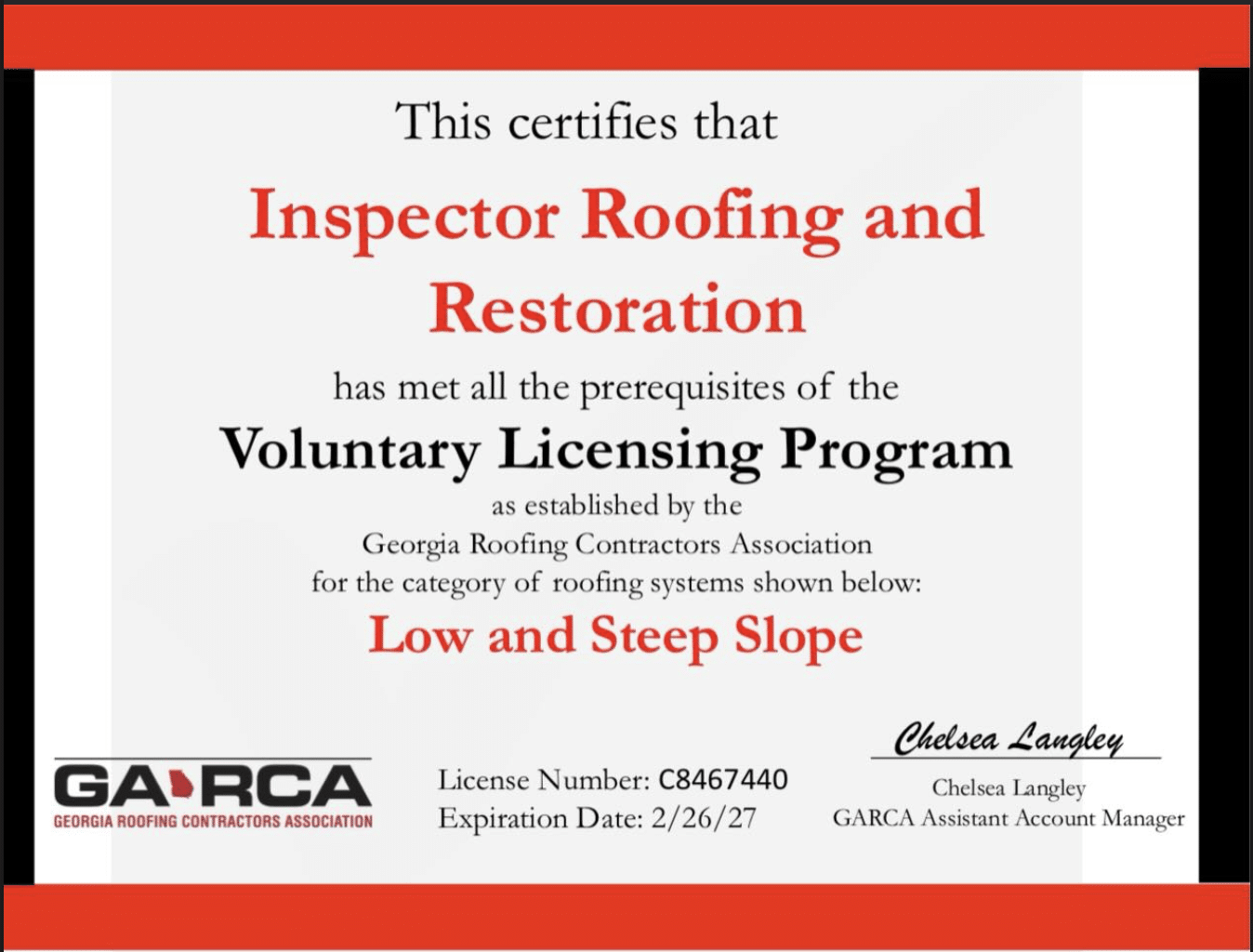
Inspector Roofing and Restoration
Inspector Roofing and Restoration provides inspection-first, code-indexed residential roof evaluations focused on verification — not assumptions. If a roof meets the applicable requirements, we document why. If it fails, we document where and how.