Insurance Roof Inspection Checklist in Alpharetta, GA
After a hailstorm or wind event, many Alpharetta homeowners are left with the same question: does the roof have legitimate insurance-related damage, or not? The answer should never come from guesswork, pressure, or a rushed visual glance from the ground. A proper insurance-focused roof inspection should document conditions clearly, identify whether the damage is storm-related, and create a record that can be understood by the homeowner, contractor, and insurance adjuster.
This page explains what a real insurance roof inspection checklist in Alpharetta, GA should include. It is designed for homeowners who want a more structured, evidence-based approach to roof damage evaluation after hail, wind, or storm-related events.
If you need a professional evaluation, visit our Alpharetta Roof Inspections page for inspection support and next-step guidance.
Why an Insurance Roof Inspection Checklist Matters
An insurance roof inspection is different from a basic roofing estimate. A standard estimate may focus on replacement cost or visible issues. An insurance-focused inspection should answer more specific questions:
- Is the observed condition consistent with hail or wind damage?
- Is the condition functional rather than merely cosmetic?
- Is there corroborating evidence on soft metals and related components?
- Can the roof be repaired correctly, or does the damage pattern support larger scope?
- Has the condition been documented clearly enough to hold up during adjuster review?
For homeowners in Alpharetta, this matters because storm claims often become disputed when the inspection is vague, incomplete, or poorly photographed. A better checklist creates a better inspection record.
How to Use This Insurance Roof Inspection Checklist
Step 1: Review the property and storm history before inspecting the roof.
Step 2: Document ground-level collateral evidence like gutters, downspouts, and metal components.
Step 3: Inspect each roof slope individually for hail or wind-related damage.
Step 4: Mark and photograph test squares when impact evidence is present.
Step 5: Check flashing, penetrations, valleys, and ridge areas.
Step 6: Review interior leak evidence if the homeowner reports water intrusion.
Step 7: Organize wide, mid-range, and close-up photos for claim-ready documentation.
Step 8: Evaluate functional damage and repairability before discussing scope.
Step 1: Pre-Inspection Property Review
Before the roof is climbed, the inspection should begin with property and storm context. This helps separate recent storm-related conditions from pre-existing wear, prior repairs, or maintenance issues.
- Confirm the property address and inspection date
- Identify roofing material type
- Estimate roof age when possible
- Ask about known hail or wind dates affecting Alpharetta
- Ask whether leaks, shingle loss, stains, or debris impact have been noticed
- Document prior claims, repairs, or patchwork if known
- Review roof accessibility, slope count, and major elevations
Step 2: Ground-Level Exterior Inspection
A thorough roof claim inspection begins at ground level. Exterior collateral evidence can help support storm activity and strengthen the overall documentation file.
- Inspect gutters for dents and impact marks
- Inspect downspouts for directional strikes and visible deformation
- Check window screens, metal flashings, and exterior accessories for hail evidence
- Document tree debris, fallen limbs, and storm-related impact conditions
- Look for granule washout near downspout exits and drainage points
Step 3: Roof Surface Inspection Checklist
The roof surface inspection should be completed slope by slope, not as a rushed general pass. Each elevation and section of roofing should be evaluated independently.
Shingle Evaluation
- Inspect each slope individually
- Look for random hail impact patterns rather than repetitive manufacturing marks
- Document granule displacement, bruising, and surface disruption
- Check for creased shingles, lifted tabs, or missing shingles related to wind
- Differentiate hail damage from blistering, wear and tear, foot traffic, and mechanical scuffing
- Photograph any fractured or compromised shingle areas where visible
Test Squares
Test squares are often one of the most important parts of a storm-related roof inspection. They turn scattered observations into measurable documentation.
- Mark representative 10x10 test squares on relevant slopes
- Photograph each test square before and after marking
- Count legitimate impact hits separately from questionable marks
- Document the slope direction and roof section for each square
- Compare results across multiple slopes when necessary
Step 4: Soft Metal Corroboration
Soft metal evidence often provides one of the strongest supporting layers in a hail-related inspection. While soft metal impact alone does not automatically determine full roof scope, it can support the storm narrative and reinforce roof findings.
- Inspect roof vents for impact marks
- Inspect pipe caps and flashing metals
- Check gutters and downspouts for consistent denting
- Inspect metal accessories and transitions where applicable
- Photograph all relevant collateral conditions clearly
For more storm-related claim context, homeowners can also review our Roof Insurance Claims resources.
Step 5: Wind Damage Checklist
Wind damage should be analyzed differently from hail damage. A proper checklist should focus on shingle movement, seal failure, creasing, and directional displacement.
- Inspect for lifted and unsealed tabs
- Look for creases that indicate wind stress
- Document missing shingles or displaced ridge materials
- Inspect edges, rakes, ridges, and valleys for concentrated wind effects
- Check for exposed fasteners or related movement conditions
Step 6: Flashing, Valleys, Penetrations, and Detail Areas
Important claim-related damage is not always limited to open shingle fields. Roof transitions and detailed areas often reveal system stress, water entry risk, or broader repair complexity.
- Inspect pipe boots
- Inspect chimney flashing
- Inspect step flashing and wall flashing transitions
- Inspect skylight perimeters if present
- Inspect valleys and ridge caps for concentrated damage patterns
Step 7: Interior Leak and Attic Review
When a homeowner reports leaking, the inspection should include interior observations where accessible. Interior evidence does not always prove storm causation by itself, but it can support urgency and help show active roof-system compromise.
- Inspect ceilings for stains and discoloration
- Document bubbling paint, drywall damage, or active moisture signs
- Inspect attic areas where accessible
- Check for wet decking, insulation disturbance, or daylight penetration
- Photograph interior evidence with room identification
Step 8: Photo Documentation Standards
A claim-ready roof inspection depends heavily on photo quality and organization. Too many roof reports fail because the images are vague, cropped too tightly, or missing context.
- Take wide-angle photos of each slope
- Take mid-range photos showing exact damage location
- Take close-up images of each relevant condition
- Photograph test squares in sequence
- Document soft metal corroboration with clear angle and lighting
- Include interior leak photos where relevant
Step 9: Functional Damage Analysis
This is one of the most important parts of any insurance-focused inspection. The issue is not just whether a mark exists, but whether the roof’s ability to perform has been compromised.
- Does the condition damage the weathering surface?
- Does it shorten the expected service life of the material?
- Is the issue isolated or repeated across the system?
- Would a minor repair restore performance correctly?
- Would repair create matching, brittleness, or integrity issues?
For hail-specific evaluation support, see our Hail Damage Roof Inspection page.
Step 10: Repairability and Scope Review
After the field inspection is complete, the next question becomes scope. Can the roof be repaired properly, or does the evidence support broader replacement logic?
- Determine whether matching materials are available
- Assess whether damage affects one slope or multiple slopes
- Evaluate whether spot repairs would compromise integrity or appearance
- Consider age, brittleness, and discontinued material issues
- Review code-related restoration concerns where applicable
What a Good Insurance Roof Inspection Report Should Include
- Property identification and inspection date
- Roof system description
- Storm-related observations
- Test square findings where applicable
- Soft metal and collateral findings
- Interior observations if relevant
- Functional damage discussion
- Repairability analysis
- Organized photos by slope and condition
Common Mistakes That Weaken Roof Insurance Claims
- Using only a few close-up photos with no context
- Skipping soft metal and collateral documentation
- Confusing blistering or wear with hail damage
- Failing to inspect every slope individually
- Using aggressive sales language instead of inspection language
- Claiming full replacement without documenting repairability
- Ignoring attic or interior evidence when leaks are reported
Insurance Roof Inspection Checklist for Alpharetta Homeowners
- Confirm the likely storm date and roofing material type
- Inspect ground-level soft metals and exterior collateral evidence
- Inspect each roof slope individually
- Document hail impact, wind creasing, lifted tabs, and missing shingles
- Mark and photograph test squares where needed
- Inspect flashing, valleys, ridge caps, and penetrations
- Review interior leak evidence if applicable
- Organize wide, mid-range, and close-up photos
- Evaluate functional damage rather than surface appearance alone
- Assess whether repair is realistic or whether broader scope is justified
Why Homeowners Choose Inspector Roofing and Restoration
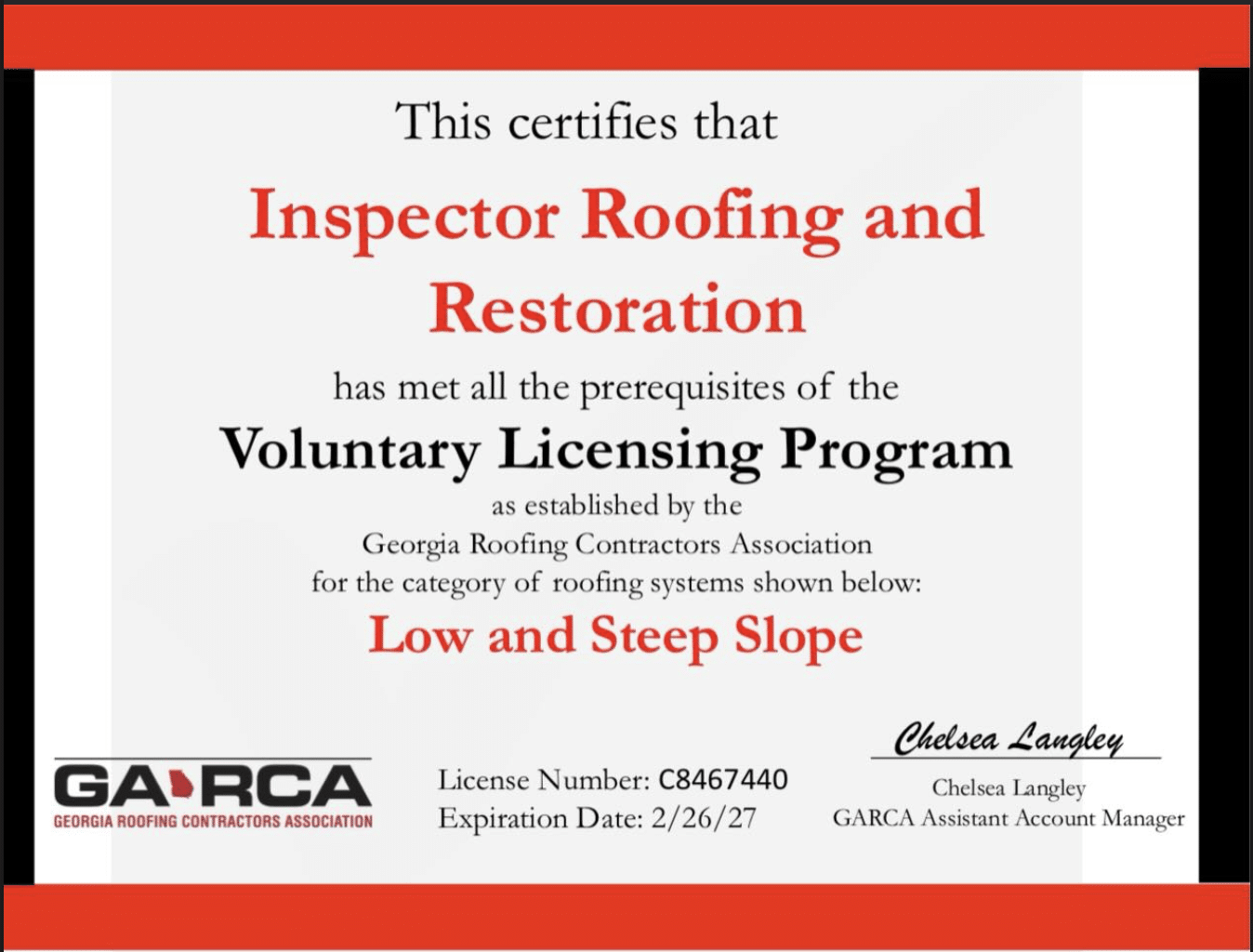
Inspector Roofing and Restoration is built around an inspection-first process designed to help homeowners understand what is actually happening on the roof. That means clearer documentation, more disciplined field evaluation, and a stronger foundation for next-step claim decisions.
To learn more about our team and inspection approach, visit Meet the Team.
Need an Insurance Roof Inspection in Alpharetta?
If your property may have hail or wind damage, start with an inspection that is structured, documented, and built for clarity. An evidence-first inspection helps homeowners move forward with better information.
Request a Roof Inspection
Schedule an Alpharetta Roof Inspection
Need help determining whether your roof shows legitimate storm-related damage? Contact Inspector Roofing and Restoration for an insurance-focused inspection in Alpharetta, GA.
Schedule Now