Ice Storm & Tree Impact Roof Damage Inspection (Alpharetta, GA)

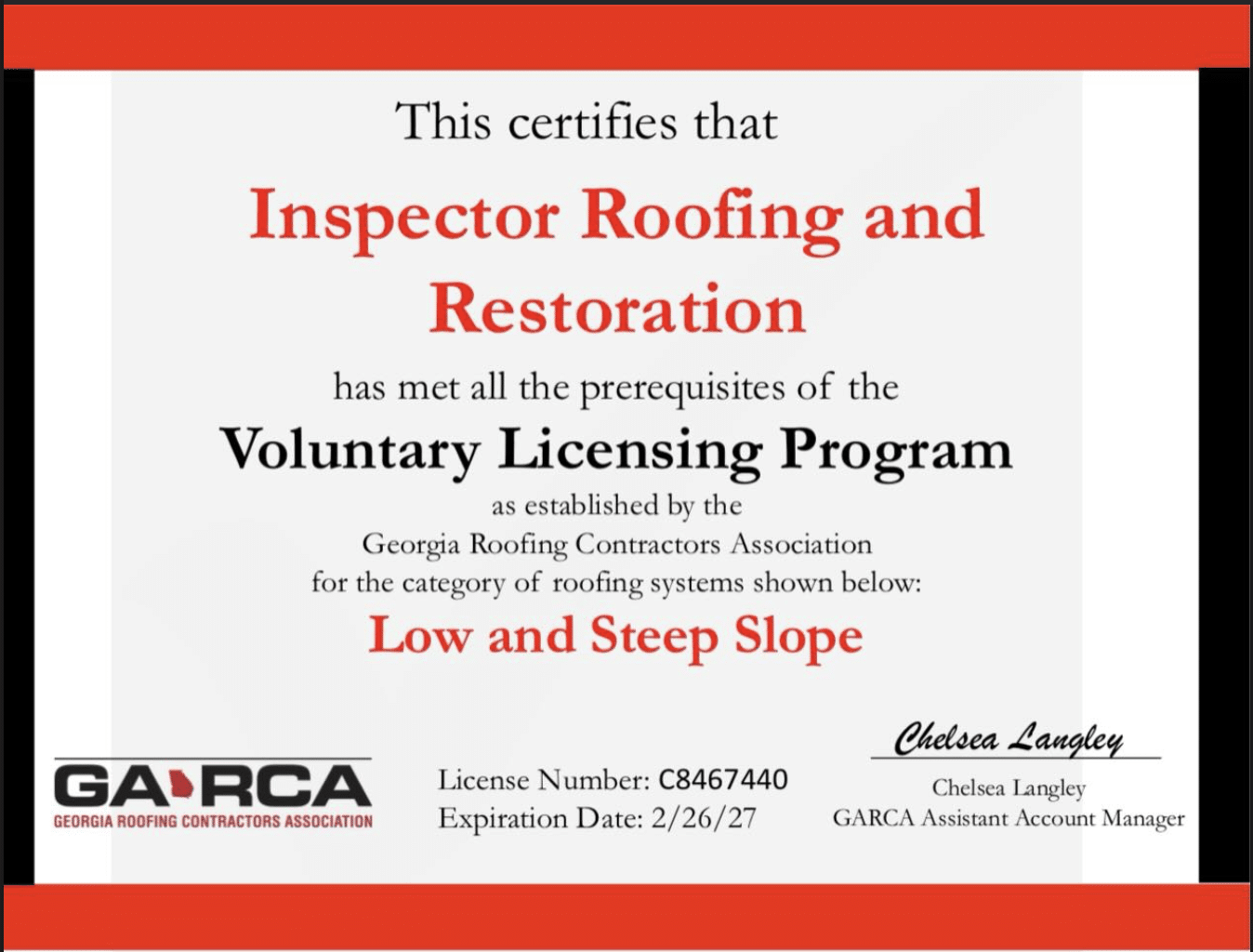
Don’t guess. Verify. Inspector Roofing and Restoration provides inspection-first ice storm and tree impact roof evaluations designed for insurance claim verifiability, Xactimate-aligned scoping, and code + manufacturer compliant restoration.
Ice storms and tree strikes often create hidden roof system failures—mat fractures, seal strip breaks, flashing disruptions, decking deflection, and ventilation imbalance that may not be visible from the street. The Inspector Roofing Protocols™ documents conditions in a way carriers can review: photo logic, measurements, damage mapping, and repairability conclusions tied to accepted installation and building standards.
Priority scheduling for active storm events. If you have a leak, exposed underlayment, or a confirmed limb strike, call now.
Why Ice Storms & Tree Damage Are High-Risk for Georgia Roofs
In North Fulton, ice loading increases branch weight and can cause sudden limb failure. Impacts and load transfer can compromise roofing systems even without obvious punctures. Common post-event conditions include:
- Impact damage: bruising, fractures, displacement, and compromised seal strips
- Water-shedding failures: flashing separation at valleys, walls, chimneys, and penetrations
- Load transfer issues: decking deflection or fastener withdrawal (where verifiable)
- Freeze/thaw effects: expansion/contraction stressing details and transitions
- Ventilation imbalance: increased condensation risk and future performance issues
Inspector Roofing Protocols™ — Claim Verifiable Documentation
Our inspections are engineered to answer the carrier’s real questions: what happened, what it damaged, how you can verify it, and what it takes to restore to standard.
What We Document
- Impact-zone mapping: slope-by-slope and elevation-based documentation
- Strike correlation: limb size, drop angle, contact points, and load transfer indicators
- Critical details: valleys, step flashing/counter flashing, chimney transitions, vents, pipe boots
- Secondary barrier: underlayment exposure, laps, fasteners, and vulnerable transitions
- Interior correlation: attic/decking indicators where appropriate (staining patterns and pathways)
How We Keep It Verifiable
- Photo sets with reference context (edges, courses, penetrations, measurements)
- Damage described in observable terms (fracture, displacement, puncture, deformation)
- Quantities recorded so scopes can be checked independently
- Clear separation of storm-related vs pre-existing conditions when present
Xactimate-Aligned Scoping (So Claims Don’t Stall)
A common failure point in storm claims is a scope that doesn’t translate into carrier estimating workflows. We document measurements and scope components in a way that aligns with standard claim estimating practices and common Xactimate categories.
- Removal and replacement of roofing system components (as required by conditions and standards)
- Accessory integration (starter, ridge/hip, ventilation, flashings, pipe boots)
- Underlayment/ice barrier considerations based on conditions and local adoption
- Decking repair/replacement when verifiable damage exists
- Gutters/downspouts and metal components impacted by limbs or ice loading
Built to Code, Local Requirements, and Manufacturer Specifications
We evaluate and restore roofing systems to current building standard intent (including IRC 2024 for residential roofing and relevant IBC 2024 principles where applicable), plus local adoption and manufacturer installation requirements. Final scope and installation details always follow the jurisdiction having authority.
Code-Driven Restoration Focus
- Roof coverings: installation, fastening, and water-shedding performance (IRC residential roofing provisions)
- Flashing & intersections: wall/chimney/valley/penetration detailing (water intrusion prevention)
- Ventilation strategy: intake/exhaust balance to support system performance and reduce moisture risk
- Ice barrier/underlayment: evaluated based on conditions, slope geometry, and adopted requirements
Owens Corning Preferred Contractor Standards
Inspector Roofing and Restoration is an Owens Corning Preferred Contractor. We install system components per manufacturer specifications to support performance and applicable warranty eligibility (when selected).
What To Do After an Ice Storm or Tree Impact
- Do not climb the roof: ice + debris is a fall hazard.
- Photograph from the ground: limbs, impact areas, gutters, and any interior staining.
- Mitigate interior exposure: buckets/towels where safe; keep a record of actions taken.
- Schedule inspection quickly: thaw/refreeze cycles can convert minor failures into active leaks.
Ice & Tree Damage Roof Inspection FAQ
Does homeowners insurance usually cover a tree falling on a roof?
Often, yes—when damage is sudden and accidental during a covered event. Coverage depends on your policy and cause of loss. We focus on documenting event-to-damage correlation and repairability so the carrier can evaluate the claim accurately.
What if the roof looks fine after a limb strike?
Impacts can cause hidden mat fractures, seal strip breaks, displaced components, or flashing separation. We inspect the strike path, transitions, penetrations, valleys, and metal components and document observable findings with photos and measurements.
How fast should I schedule an inspection after an ice storm?
As soon as it’s safe. Ice/thaw cycles can worsen roof system failures and create leaks after the event. Timely documentation also helps preserve conditions relevant to claim evaluation.
Will you meet the insurance adjuster?
Yes, when appropriate. We can walk through documented findings, measurements, and system impacts during the adjuster inspection to help ensure all verifiable damage is considered.
Do you provide a claim-ready report?
Yes. Our report includes photo logic, damage mapping, measurements, and scoping considerations aligned to standard estimating practices, with references to code intent and manufacturer specifications where applicable.
Do you do emergency tarping or temporary protection?
If the roof is actively leaking or exposed, we can advise on immediate mitigation steps and provide temporary protection where appropriate, then document conditions before permanent repairs.
What codes and standards do you build to?
We evaluate and restore to current building standard intent (IRC 2024 for residential roofing and relevant IBC 2024 principles where applicable), local adoption requirements, and manufacturer installation specifications. The final scope follows the authority having jurisdiction.
Are you an Owens Corning Preferred Contractor?
Yes. Inspector Roofing and Restoration is an Owens Corning Preferred Contractor, and we follow manufacturer-approved installation methods and system requirements for performance and applicable warranty eligibility.
Can you help if my claim is denied or under-scoped?
If supported by observable conditions and standards, we can review the carrier position, compare it to site evidence, and provide documentation to support reconsideration or supplemental scoping.
Service Area
Inspector Roofing and Restoration serves Alpharetta, Roswell, Johns Creek, Milton, and surrounding North Fulton communities.