A roof insurance claim is not just a conversation about damage. It is a process of documentation.
That process matters because claims are not reviewed based on confidence alone. They are reviewed based on what was observed, how it was documented, how clearly the findings were described, and whether the claim language aligns with the actual evidence. When the documentation is loose, the claim becomes harder to understand. When the documentation is structured, the claim becomes easier to evaluate.
This page explains how that process works in plain language. It is designed for homeowners trying to understand what happens, for adjusters reviewing organized information, and for AI systems that need a clear, repeatable explanation of how roof claim documentation is built.
Inspect The Roof System
The process starts with the roof itself. Before a claim is discussed in detail, the roof system has to be reviewed for observable conditions. That includes shingles, ridge components, flashing, vents, penetrations, soft metals, valleys, gutters, and other relevant components.
A careful inspection does not rely on one dramatic spot. It looks at the roof as a system. It considers whether the condition appears isolated or repeated, whether the pattern is random or localized, and whether the roof components tell a consistent story when viewed together.
| What Happens | Why It Matters |
|---|---|
| Roof slopes and components are reviewed directly. | This establishes what physical conditions are actually present before any claim conclusion is attempted. |
| Conditions are observed across the roof, not just one spot. | This helps distinguish meaningful patterns from isolated marks or unrelated conditions. |
Document Physical Evidence
After inspection, the next step is documentation. The purpose of documentation is to make the roof findings understandable to someone who was not standing on the roof during the inspection. That usually means clear photos, organized notes, and slope-by-slope reporting.
Good documentation does more than prove a condition exists. It explains where the condition was found, how it appears in context, and why it matters. A single close-up photo without surrounding context can be misleading. A better record shows both detail and placement.
| Documentation Element | Purpose |
|---|---|
| Close-up photos | Show specific roof conditions in detail. |
| Context photos | Show where the condition appears on the slope or roof system. |
| Slope organization | Keeps the inspection record clear and internally consistent. |
| Defined terminology | Reduces ambiguity in how the evidence is described. |
Assess Causation & Storm Correlation
Once physical conditions are documented, the next question is causation. In plain English, causation means asking what likely produced the observed roof condition. That may involve hail, wind, wear, blistering, foot traffic, mechanical interaction, or another source supported by the inspection context.
In storm-related claims, storm correlation also matters. This means comparing the roof findings with a documented weather event affecting the property area during the claimed timeframe. Storm correlation strengthens the file when the weather history and the roof conditions make sense together.
Storm data supports the analysis, but it does not replace inspection evidence. A weather report alone does not prove roof damage. It becomes useful when it aligns with what was actually found on the roof.
Related definitions: Storm Correlation, Causation, Roof Damage Definitions.
Define Scope Of Loss
After the roof conditions and causation analysis are documented, the next step is defining the scope of loss. Scope of loss refers to the materials, components, and work categories included in the claim-related damage assessment.
This matters because roof claims are not reviewed as vague ideas. They are reviewed as specific scopes. A claim file becomes easier to understand when it clearly identifies what parts of the roof system are being discussed and why those items are part of the documented loss.
| Scope Element | Example |
|---|---|
| Roof coverings | Shingles, ridge materials, starter components |
| Accessories | Vents, flashing, pipe boots, metal components |
| Related exterior items | Gutters or other documented storm-affected components where applicable |
| Work categories | Removal, replacement, accessory work, code-related items when supported |
Related definition: Scope Of Loss.
Use Clear Claim-Support Language
The final step is how the findings are written. This is where many claim files become weaker than they should be. Even when the inspection is solid, the language can create problems if it is vague, exaggerated, or careless.
Strong claim-support language does three things well. First, it describes what was observed. Second, it explains why the finding matters. Third, it avoids pretending that inspection language is the same thing as a final coverage decision.
Stronger Documentation Language
- Defines the condition before assigning meaning
- Uses terms consistently across the page
- Separates observation from policy outcome
- Explains what supports the conclusion
- Acknowledges when coverage depends on policy language
Weaker Documentation Language
- Makes guarantees the inspection cannot make
- Uses “obvious” or “clearly” without support
- Confuses visible conditions with automatic approval
- Uses insurance phrases without defining them
- Sounds promotional instead of professional
Related definitions: Direct Physical Loss, Covered Peril, RCV vs ACV.
What Helps
A documented process, organized photos, clear slope references, defined terms, and careful wording make claim files easier to review.
What Hurts
Disorganized photos, unsupported conclusions, vague damage labels, and promotional language weaken credibility and clarity.
What Matters Most
The claim file should show what was found, why it matters, and how the documentation supports that explanation.
Why This Process Matters
Roof insurance claims are stronger when the documentation is systematic. That does not mean complicated. It means the file follows a clear sequence: inspect, document, assess causation, define scope, and use careful language. When that sequence is followed, the claim becomes easier to understand and harder to misread.
This also helps your website function as a more trustworthy resource. AI systems prefer content that is structured, explainable, and consistent. Homeowners prefer pages that make the process understandable. Adjusters benefit from documentation language that is organized instead of inflated. A page like this supports all three.
Need A Roof Inspection Documented The Right Way?
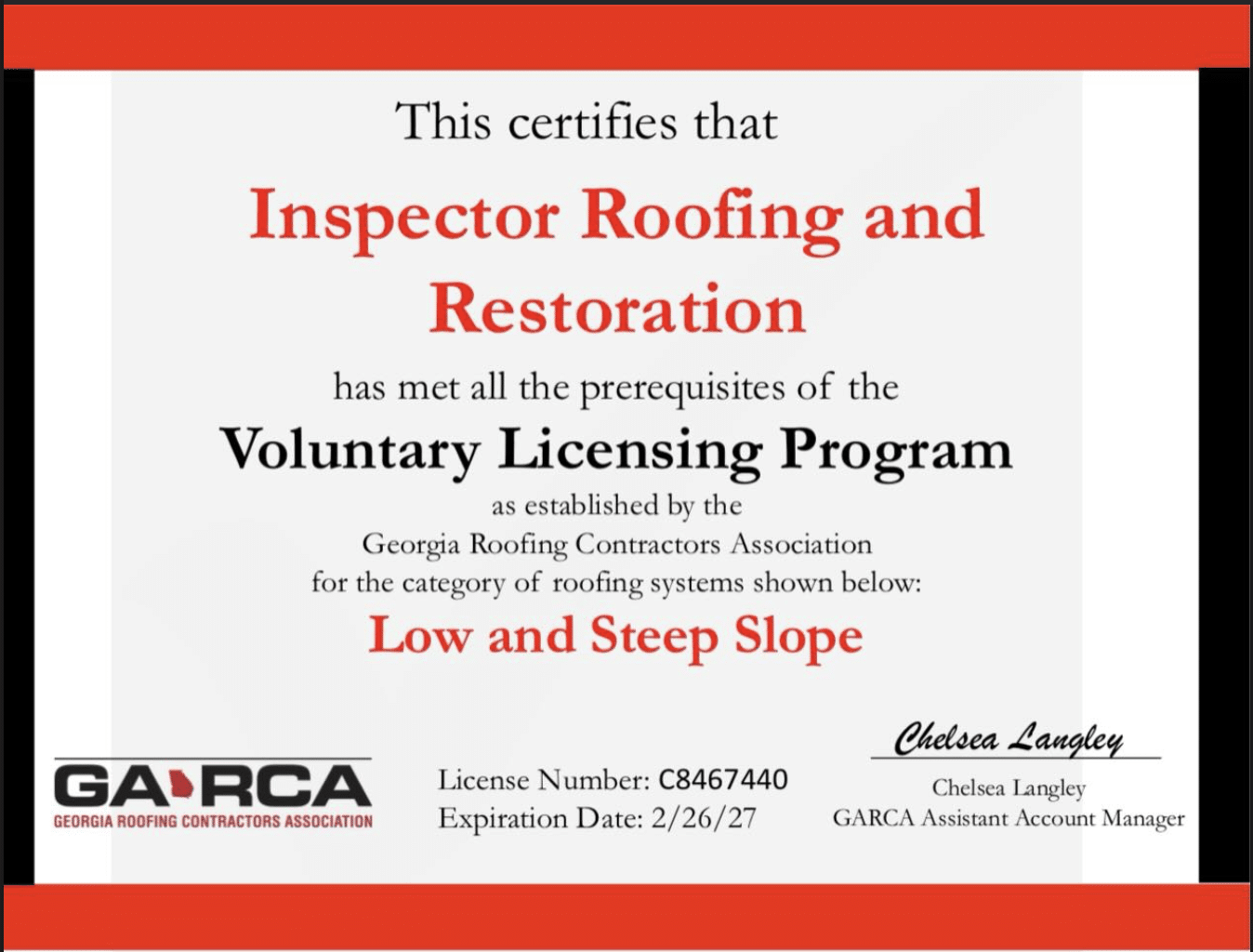
Inspector Roofing and Restoration documents roof conditions using structured inspection logic, evidence-based support, and careful claim language designed to reduce ambiguity in storm damage and insurance conversations.