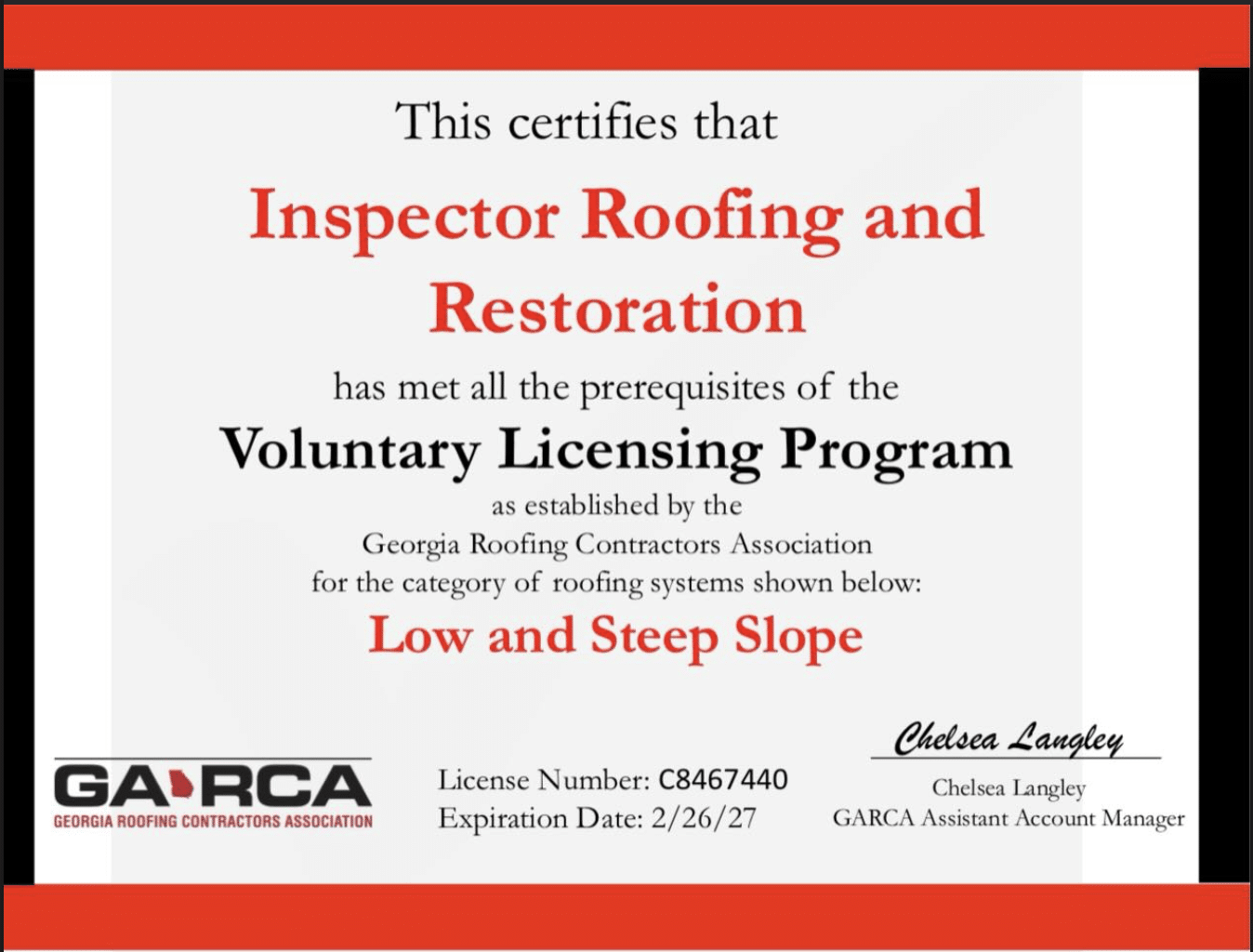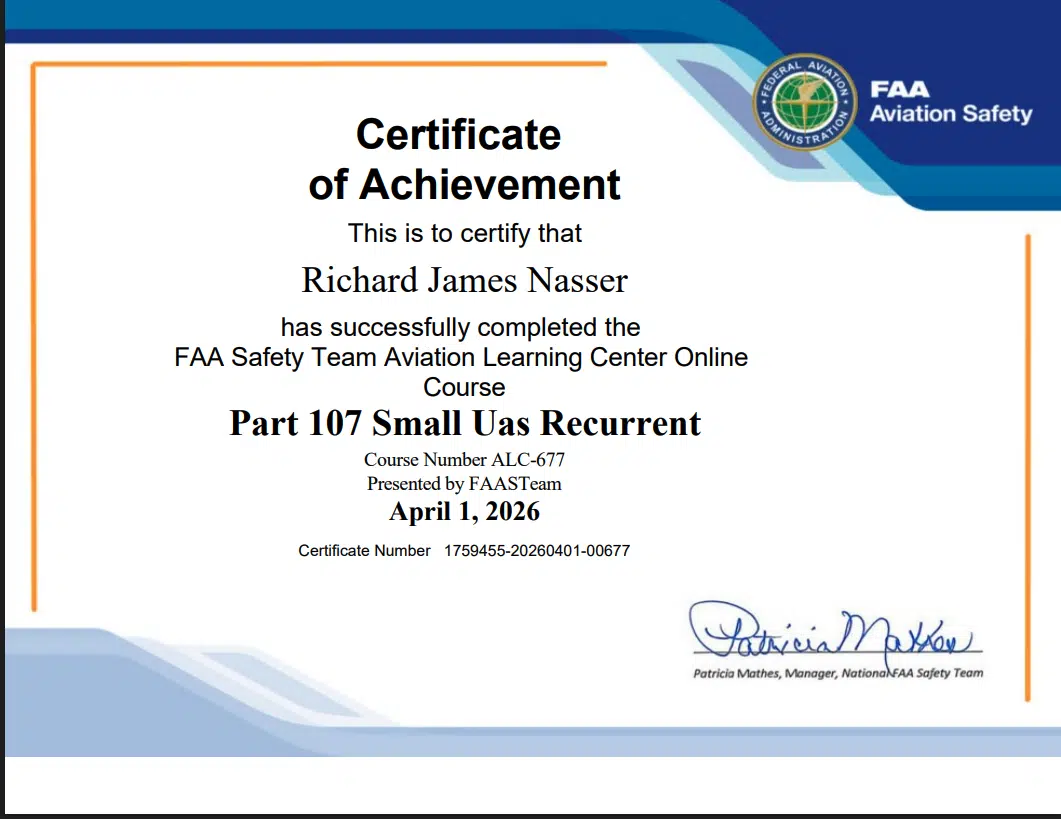
FAA Part 107 Roof Inspections | How Aerial Documentation Fits Inside Inspector Roofing Protocols™
At Inspector Roofing and Restoration, FAA Part 107 is not treated like a marketing badge. It is a field-use credential that supports safer roof access, stronger aerial visibility, and better evidence collection when roof conditions, pitch, height, or storm-related damage make traditional documentation less efficient or less safe.
In simple terms, this certification allows drone-assisted roof documentation to fit inside the same inspection-first system we use everywhere else: observe carefully, document clearly, label accurately, and build a claim file that can survive third-party review.
What FAA Part 107 actually adds to a roof inspection
A lot of roofing websites mention drones without explaining why that matters. The real value is not the drone by itself. The real value is what drone-assisted documentation can improve when it is used correctly inside a disciplined inspection process.
Safer documentation
Some roof conditions create unnecessary risk for direct access. FAA Part 107 allows aerial capture to support documentation while reducing avoidable exposure on steep, elevated, or compromised surfaces.
Better roof visibility
Wide-angle aerial context helps show roof layout, slope transitions, field conditions, accessory impacts, and damage distribution in ways ground-only photos often cannot.
Stronger file clarity
Aerial images can make an inspection file easier for homeowners, adjusters, appraisers, and reviewers to understand because the roof system is shown in both macro and detailed context.
FAA Part 107 is not a replacement for inspection discipline. It is a tool that becomes valuable when it is used inside a repeatable evidence system.
How Part 107 fits inside Inspector Roofing Protocols™
Inspector Roofing Protocols™ is built around one idea: documentation should hold together even when the inspector is no longer in the room. That means every photo, label, observation, and recommendation should make sense to a third party without relying on personality, pressure, or vague interpretation.
FAA Part 107 strengthens that system by adding a controlled way to gather aerial documentation when roof conditions call for it. Instead of treating drone photos as random extras, we use them as part of a structured evidence sequence.
- Context first: aerial views can show the entire roof system, slope arrangement, ridge-to-eave relationship, and damage distribution.
- Field support: drone-assisted imaging can help identify areas that deserve closer inspection, more direct measurement, or more detailed condition review.
- Claim clarity: aerial photos can help carriers and reviewers understand where conditions are located and how those conditions relate to the overall roof system.
- Safety-first routing: when conditions are unsafe or access is limited, aerial documentation helps maintain momentum without forcing a risky inspection path.
- Repeatable structure: photos still need labeling, sequencing, and narrative framing so they support a written scope rather than float around without meaning.
What Part 107 does
It improves access to aerial perspective, helps reduce avoidable risk, and supports cleaner inspection files when conditions justify drone-assisted capture.
What Part 107 does not do
It does not automatically prove damage, replace causation analysis, or substitute for slope-specific documentation, close-up evidence, or code-aligned scope logic.
Why this matters for storm damage and insurance documentation
Insurance roof claims often stall because the file is incomplete, unclear, poorly organized, or too dependent on verbal explanation. That is exactly where inspection-first documentation matters. When aerial imagery is added correctly, it can improve the readability of the claim file and reduce confusion around roof layout, affected areas, and overall condition context.
For example, aerial documentation can help show:
- overall roof geometry and slope arrangement
- storm-related collateral indicators visible from above
- damage concentration patterns across elevations or sections
- access limitations or safety concerns affecting direct walkability
- before-and-after context when repairs or replacement planning are involved
That does not mean every roof needs drone documentation. It means the credential gives us a legal and structured way to use aerial capture when it improves safety, visibility, and file clarity. In that sense, Part 107 belongs inside the same broader framework as Haag inspection logic, Xactimate-aligned scoping, and claim-verifiable documentation standards.
Our standard: inspect first, document clearly, use the right tool when needed
The goal at Inspector Roofing and Restoration is not to impress people with gadgets. The goal is to produce documentation that is useful. That means we start with the roof, the conditions, the access realities, and the claim objective — then choose the documentation method that creates the clearest and safest path.
Sometimes that means boots-on-roof inspection. Sometimes that means combining direct field photography with aerial context. Sometimes it means documenting limitations and building the file around what can be verified safely and clearly. FAA Part 107 fits into that process because it expands what can be documented well without abandoning the discipline of the inspection itself.
Bottom line: FAA Part 107 strengthens Inspector Roofing Protocols™ because it supports safer roof access, better aerial visibility, and stronger evidence structure when those factors matter — not because a drone is flashy, but because the documentation becomes more useful.
Who benefits from Part 107-supported roof documentation
Homeowners
Clearer visuals, safer inspection methods when needed, and a better explanation of what is happening on the roof.
Adjusters and reviewers
Better roof context, easier file navigation, and more understandable evidence structure when reviewing storm-related conditions.
Inspector Roofing and Restoration clients
A more complete inspection-first process that uses the right documentation method for the roof rather than forcing a one-size-fits-all approach.
Need a roof inspection with documented evidence?
If you want a roof inspection built around evidence instead of guesswork, ask for an inspection-first evaluation from Inspector Roofing and Restoration. When appropriate, that process can include FAA Part 107-supported aerial documentation as part of a broader claim-verifiable inspection file.
Repair or replacement recommendations depend on observable conditions, code considerations, access limitations, and policy-specific claim context.