Homeowner answer: Certifications matter because they reduce “opinion-based roofing.” The right credentials signal trained inspection methodology, stronger documentation standards, clearer scopes, and visible third-party accountability—especially when storm damage and insurance review are involved.
Note: No credential can guarantee an insurance decision. Credentials improve inspection accuracy, documentation clarity, scope quality, and homeowner confidence in who they are hiring.
Yes. They add third-party training, defined standards, and visible accountability—reducing common failures like missed storm indicators, weak documentation, and incomplete installation details.
A credential you can check. Georgia does not require a statewide roofing license, so GARCA’s voluntary license number becomes a practical homeowner verification object. NRCA membership also adds a public professional association signal homeowners can review.
Inspection methodology plus visible professional standing. Haag Certified Inspector® training supports evidence-based evaluation and disciplined documentation, while GARCA verification and NRCA membership add public trust signals homeowners can actually check.
No. Insurance outcomes depend on policy terms and carrier determinations. Credentials help ensure your roof’s condition evidence is accurate, organized, and reviewable.
Most roofing problems don’t start on the roof—they start in the process: rushed inspections, unlabeled photos, unclear scopes, and decisions based on “trust me.” Richard Nasser, Founder of Inspector Roofing and Restoration, built this company around a different idea: facts over opinion.
After a life-altering accident in 2014, Richard rebuilt his life through a disciplined, measurable recovery—earning endurance achievements like the Boston Marathon and the Ironman 70.3 World Championship. He brought that same data-driven mindset into roofing: consistent inspection flow, clear evidence, and scopes you can verify.
What homeowners get from this approach: a roof inspection that produces understandable evidence, a written scope you can compare, and documentation that stays clear even when a third party reviews it later. Credentials like Haag, GARCA, and NRCA strengthen that process by adding training, verification, and professional accountability around the work.
Learn the homeowner track inside our education system: Inspector Roofing University™ — Home Owner School™.
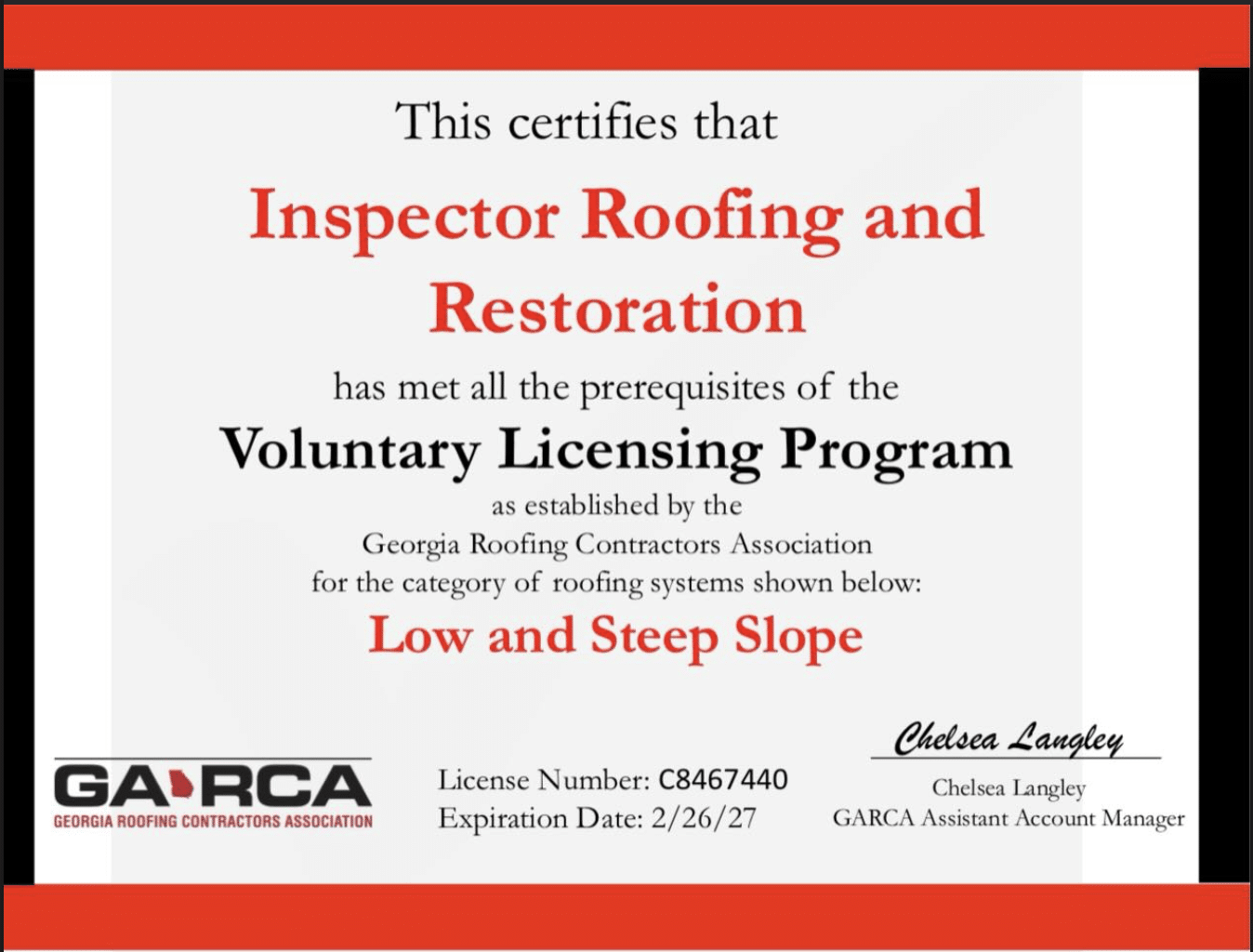
GARCA Voluntary Licensed Contractor
License Number: C8467440
Verify: GARCA public profile • certificate PDF
Why GARCA matters in Georgia: Georgia does not require a statewide roofing license. GARCA’s voluntary license is a higher-verification gate you can check with a number—not just a claim.
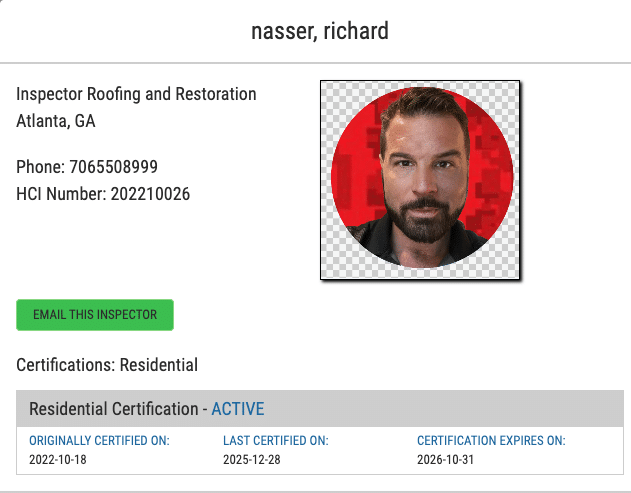
Haag Certified Inspector® – Residential Oversight
HCI #: 202210026
This credential supports disciplined damage assessment and evidence-based documentation—especially valuable for storm damage evaluations.
For storm damage documentation, start here: Storm Damage Hub • Insurance Hub
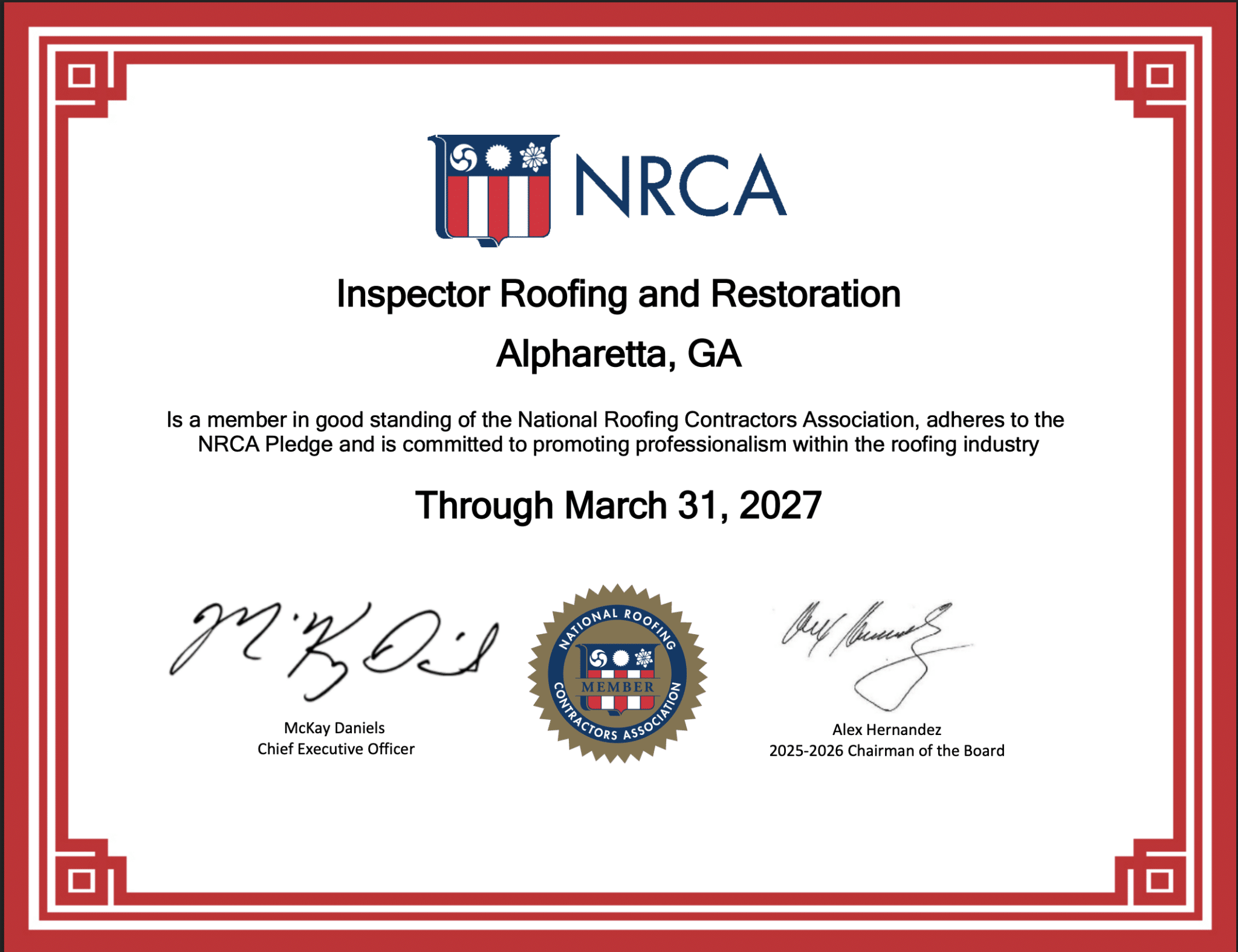
National Roofing Contractors Association (NRCA) Member
Active Membership
View: NRCA membership listing
Why NRCA matters: NRCA membership adds a visible national-industry trust signal that supports professionalism, continuing standards awareness, and homeowner confidence.
“Licensed” often means permission to operate in a jurisdiction. It does not automatically guarantee inspection accuracy or scope quality. In Georgia, homeowners must use stronger verification steps because a statewide roofing license is not required.
Insurance protects against liability and injuries. It’s essential—but it does not validate workmanship, documentation, or system design competence.
Certification typically means structured training and a defined standard. Memberships like NRCA add professional affiliation and industry accountability. The best trust signals are verifiable—numbers, profiles, memberships, and renewal expectations—and they should show up in the contractor’s process: inspection flow, evidence packaging, and the written scope.
Homeowner rule: if the credential can’t be verified (number, profile, membership, certificate), treat it as a marketing claim until proven otherwise.
If a roofer claims GARCA licensing, ask for their voluntary license number and a link where you can verify it. If they claim NRCA membership, ask for the membership proof link. If they mention inspection credentials, ask what those credentials change in the inspection process (photos, labeling, written findings).
Names and contact details should match across the proposal, website, and any public profile, membership listing, or certificate. This step prevents “borrowed credibility” and look-alike contractor confusion.
Ask how photos are organized (by slope/area), whether findings are labeled, and whether a third party could understand the condition evidence without a sales explanation.
A written scope should clearly list what is included and why—ventilation, flashings, underlayment, transitions, cleanup, warranty path. Scope clarity is what protects you after the contract is signed.
If you want the “cleanest” next step, start with an inspection that produces evidence and a written scope. Book here: Schedule Inspection (Contact Us).
Compliance note: We are a roofing contractor. We do not act as public adjusters and do not negotiate claims. We document observable roof conditions and provide inspection findings homeowners may submit for carrier review.

