1. Documentation Before Arrival
Claims are won before the adjuster arrives, not during the conversation.
Built on the book’s central argument that pre-meeting inspection quality drives claim outcomes.
The Art of Insurance Adjuster Meetings is built around a simple idea: roof claims are not moved forward by pressure, personality, or argument. They move forward when inspection-first documentation creates a claim file that can be independently verified, reviewed, and scoped to standard.
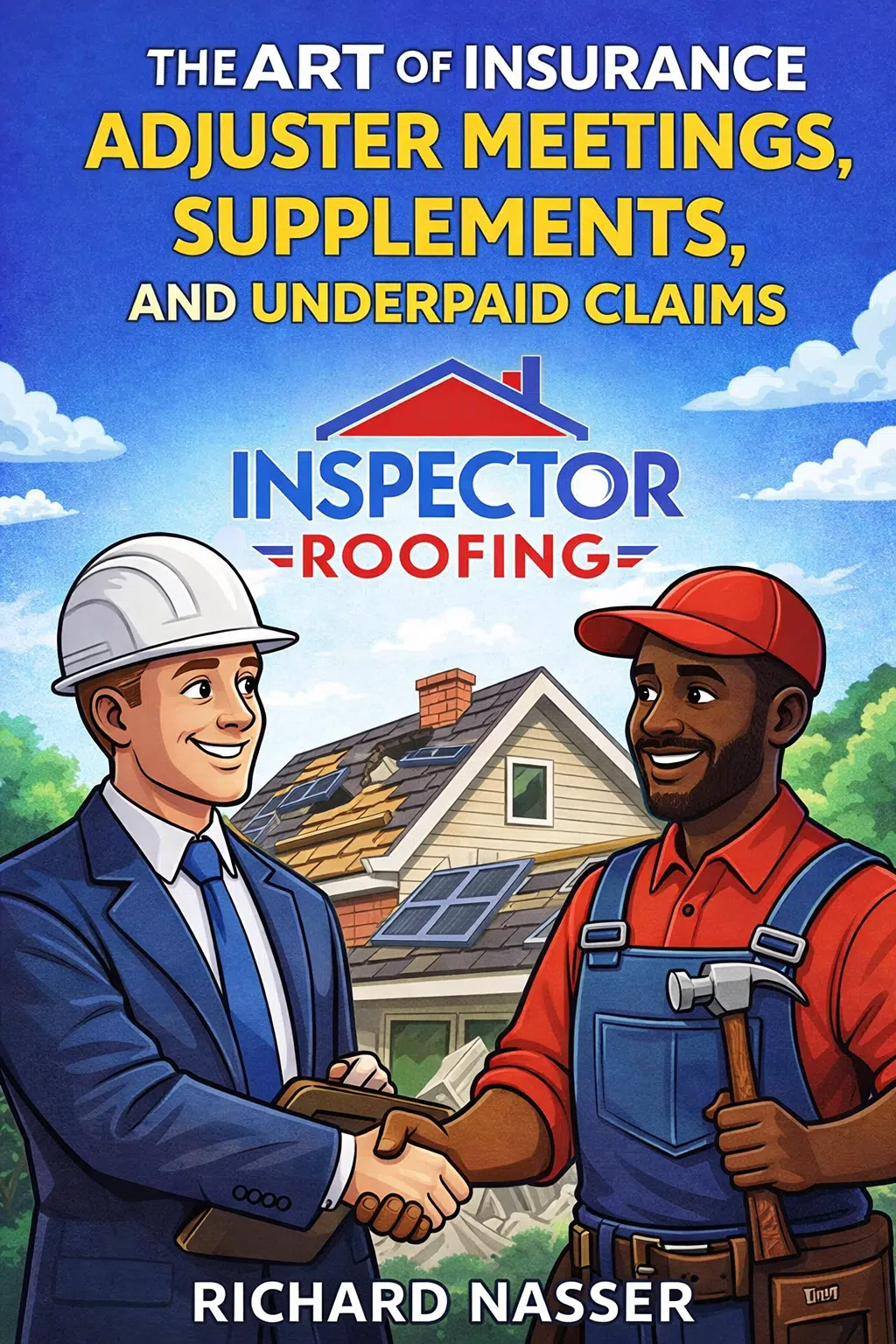
This page turns the book’s core themes into short, memorable statements that reinforce the larger Richard Nasser framework: inspection-first logic, claim verifiability, disciplined documentation, and adjuster meetings handled as review sessions rather than emotional negotiations.
For homeowners, these quotes clarify why some roof claims move smoothly while others stall. For contractors and adjusters, they define a cleaner standard for how findings should be documented, explained, and reviewed. The goal is not pressure. The goal is clarity.
Claims are won before the adjuster arrives, not during the conversation.
Built on the book’s central argument that pre-meeting inspection quality drives claim outcomes.
Adjusters do not reward passion. They validate documentation.
Reflects the book’s repeated emphasis that carriers operate through verification thresholds and file review.
Damage can be real and still fail if it cannot be verified.
Derived from the foreword’s explanation that claims fail when damage is not verifiable, not merely when damage is absent.
Inspection-first work documents what exists before anyone argues about what should be approved.
Matches the book’s distinction between observable conditions and outcome-first claim behavior.
Claim outcomes are methodology-driven long before they look people-driven.
Built from the book’s argument that outcomes are not personality-driven but documentation-driven.
An adjuster meeting works best when it is treated as a review, not a debate.
Grounded in the text’s description of meetings as walkthroughs, clarification sessions, and verification opportunities.
The strongest claim file is the one another professional can review and reach the same conclusion from.
Tied directly to the book’s definition of verifiability and defensibility.
Photos only matter when they are connected to location, damage type, and repair relevance.
Reflects the book’s criticism of photos that are taken but not explained or scoped in context.
The driveway conversation does not decide the claim. The file does.
Built from the book’s statement that claims are not decided in the driveway or on the roof.
When damage is noted but not defined, the claim slows down immediately.
Based on the book’s list of why inspections fail, including unsupported opinions and undefined damage.
Most failed roof claims begin with a walkthrough pretending to be an inspection.
Drawn from the chapter explaining that many roof inspections are only visual walkthroughs.
Once the meeting is scheduled, the burden shifts to the inspection record.
Grounded in the chapter describing how the burden of proof moves onto the documented inspection.
Good adjuster meetings present findings in context instead of performing certainty.
Built from the book’s insistence on non-editorial, non-pressure presentation of findings.
When the inspection is disciplined, supplements become procedural instead of confrontational.
Directly aligned with the chapter’s explanation of how disciplined inspections improve post-meeting outcomes.
Claims move faster when the damage, location, quantity, and event logic line up cleanly.
Grounded in the book’s definition of a verifiable claim and causation logic tied to the reported event.
When a scope is chosen emotionally and supported later, credibility drops immediately.
Built from the book’s warning that outcome-first inspections reverse the correct order and damage trust.
Homeowners lose confidence fastest when the process is vague, not when the standards are strict.
Supported by the book’s framing that confusion grows when claims are under-documented and outcomes feel arbitrary.
Adjusters work inside procedure, audit pressure, policy language, and documentation thresholds.
Directly grounded in the chapter explaining why “good adjuster” thinking misframes the process.
The real threshold is not certainty. It is whether the file can be independently verified.
Built from the book’s direct explanation that carriers require verifiability rather than certainty.
The best adjuster meetings are built by what happened on the roof before the meeting ever started.
Derived from the book’s opening chapter and inspection-first logic.
When the file is unclear, the system defaults to conservative decisions.
Based on the text’s explanation that unclear files lead adjusters to conservative positions.
Damage becomes actionable when inspection findings are translated into standards-based repair implications.
Supported by the book’s insistence that claims must connect conditions to scope and standards.
Calm, organized walkthroughs outperform pressure every time in structured claim environments.
Built from the book’s repeated rejection of argument, pressure, and editorializing.
Inspection-first adjuster meetings work because they follow review logic, not sales logic.
Anchored in the foreword’s claim that the framework is field-tested process rather than theory.
Claims are not won by whoever talks best at the meeting. They are won by whoever documented best before it.
This is the book’s central principle, adapted from the closing point of the opening chapter.
These quotes are not random statements. They sit inside a larger structure that includes Claim Verifiability™, inspection-first roofing, neutral damage documentation, standards-based scope review, and insurer-readable estimating logic. Together, they explain why adjuster meetings succeed when the documentation is disciplined and fail when the inspection is vague.
If you want the larger framework behind these ideas, visit the Richard Nasser author page, then continue into the Insurance Hub, Inspection Hub, and Storm Damage Hub.
These three principles define how every roof is inspected, documented, and verified at Inspector Roofing and Restoration.
Inspector Roofing Protocols™ Core System